2026 Best Mini UPS for WiFi Router Buying Guide
A stable Wi-Fi connection now supports work, learning, security cameras, payments, and everyday communication. The International Telecommunication Union’s Facts and Figures 2024 estimated that 5.5 billion people were online, representing about 68% of the global population. When household power fails, even a reliable fiber or cable service becomes unreachable. The router simply goes dark.
That is where a Mini Ups For Wifi Router can provide practical protection. It supplies short-term battery power during blackouts, voltage interruptions, or accidental plug disconnections. In a home office, this may keep a video meeting active while a nearby lamp remains off. In a small shop, it can preserve the router connection for alarms or cloud-based checkout tools. Small details matter. Battery capacity, output voltage, connector compatibility, recharge time, and thermal design all affect real performance.
Industry evidence also supports careful selection. Uptime Institute’s outage research continues to identify power problems as a significant contributor to infrastructure disruptions. Cloudflare Radar’s 2024 Year in Review reported repeated internet disruptions across many regions, showing that connectivity is not equally dependable everywhere. However, a mini UPS cannot repair an ISP outage or replace a damaged router. That limitation is easy to overlook.
This 2026 buying guide compares runtime, battery chemistry, charging behavior, protection features, noise, warranty coverage, and long-term value. I will not treat the highest capacity as automatically best. A compact unit may outperform a larger model when its voltage matches correctly and its battery remains healthy. Some manufacturer claims also deserve skepticism. Real household testing can reveal more than a polished specification sheet.
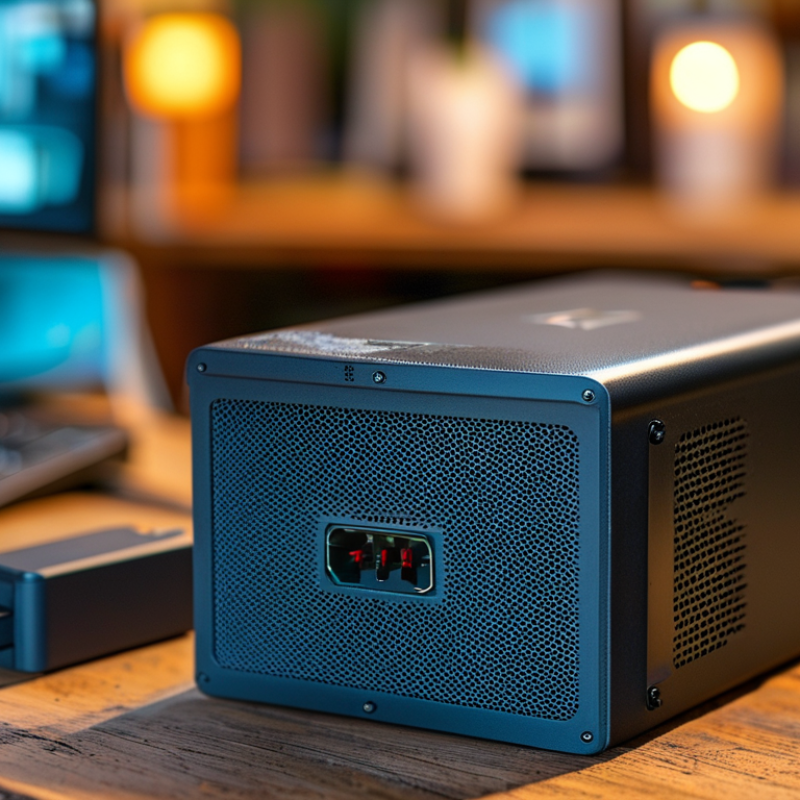
What a Mini UPS Is and Why a WiFi Router Needs Backup Power
A mini UPS is a compact battery system that keeps low-power devices running during an electrical interruption. It usually connects between the wall outlet and a WiFi router, supplying backup power through a compatible DC output. Unlike a large home UPS, it takes little space and often sits beside the router without blocking cables.
A WiFi router needs backup power because internet access can disappear within seconds of an outage. During remote work, online classes, or security monitoring, that interruption can be frustrating and costly. A mini UPS can maintain the router’s signal while lights are off, provided the internet provider’s equipment still has power. It cannot repair a damaged line or restore service from the provider. I have also found that advertised runtime can feel optimistic. Actual performance changes with router power use, battery age, and connected equipment.
Tips: Check the router’s voltage, current, and connector before buying. Match them exactly. Do not assume every mini UPS fits every router. Estimate runtime from real power consumption, not battery capacity alone. Test the unit by unplugging wall power for a few minutes. Watch for heat, unusual noise, or a sudden restart. A model with clear battery indicators makes troubleshooting easier, although indicator accuracy is not perfect. Keep the UPS ventilated and replace it when backup time becomes noticeably shorter.
| Buying Dimension | Entry-Level Mini UPS | Balanced Mini UPS | High-Capacity Mini UPS | Why It Matters for a WiFi Router |
|---|---|---|---|---|
| What It Is | A compact rechargeable battery backup designed for low-power networking devices. | A compact backup unit with multiple DC output options and longer runtime. | A larger mini UPS designed to support a router, optical network terminal, modem, or similar equipment together. | A mini UPS keeps compatible networking equipment powered during short utility interruptions. |
| Typical Rated Energy | 8–12 Wh | 18–24 Wh | 28–40 Wh | Higher watt-hour capacity generally provides longer backup time, although conversion losses and device load affect the actual result. |
| Common DC Outputs | 5 V, 9 V, or 12 V DC | 5 V, 9 V, and 12 V DC | 5 V, 9 V, 12 V, and sometimes 15 V or 24 V DC | The output voltage must match the router or other device. Voltage mismatch can prevent operation or cause damage. |
| Typical Continuous Output | Up to approximately 10 W | Approximately 12–18 W | Approximately 18–30 W | Choose an output rating above the combined wattage of all connected devices, including startup and conversion overhead. |
| Estimated Runtime at 8 W Load | Approximately 45–75 minutes | Approximately 90–150 minutes | Approximately 2–4 hours | Runtime is an estimate based on usable battery energy. Actual results vary with battery age, temperature, efficiency, and router workload. |
| Recommended Connected Devices | One low-power WiFi router | One router plus a modem or optical network terminal, if the combined load is within the output limit | Router, modem or optical network terminal, and possibly a small network switch | Keeping both the router and internet access equipment powered helps maintain connectivity during an outage. |
| Power Interruption Protection | Short interruption support; transfer time depends on the circuit design. | Designed for automatic changeover between utility power and battery power. | Automatic backup with greater capacity for longer interruptions. | A suitable changeover design helps prevent router reboots when mains power briefly drops. |
| Charging Time | Approximately 2–4 hours | Approximately 3–5 hours | Approximately 4–8 hours | Shorter recharge time is useful in areas with repeated outages during the same day. |
| Battery Chemistry | Usually lithium-ion or lithium-polymer | Usually lithium-ion or lithium-polymer | Usually lithium-ion, lithium-polymer, or a larger rechargeable battery pack | Battery chemistry affects size, weight, cycle life, charging behavior, and safety requirements. |
| Protection Features to Look For | Overcharge, over-discharge, short-circuit, and over-current protection | All entry-level protections plus temperature monitoring and clearer battery-status indicators | All standard protections plus thermal management, overload shutdown, and more detailed status indicators | Protection circuits reduce the risk of battery damage and help protect connected networking equipment. |
| Best Use Case | Brief outages, voltage dips, and basic home WiFi coverage | Most homes, remote workers, and small offices requiring reliable short-term connectivity | Longer outages or installations powering several low-voltage networking devices | The best choice depends on the required runtime and the total load, not only on battery capacity. |
| Main Buying Check | Confirm voltage, connector size, polarity, and router wattage. | Confirm total load, output compatibility, and whether simultaneous charging and backup are supported. | Confirm maximum output power, total battery energy, ventilation, and the load of every connected device. | Most compatibility problems result from incorrect voltage, connector polarity, insufficient output power, or an overloaded unit. |
| Why a WiFi Router Needs Backup Power | Prevents loss of WiFi during short interruptions. | Helps preserve internet access for work, calls, smart-home devices, and security systems. | Extends connectivity during longer outages when multiple network devices must remain active. | A router cannot distribute WiFi without power, even if the broadband line itself remains operational. |
| Important compatibility note: Before purchasing, check the original power adapter for voltage, current, connector dimensions, and polarity. The mini UPS output voltage must match the device requirements, and its continuous output current must meet or exceed the combined load of all connected equipment. Runtime figures are practical estimates rather than guaranteed values. | ||||