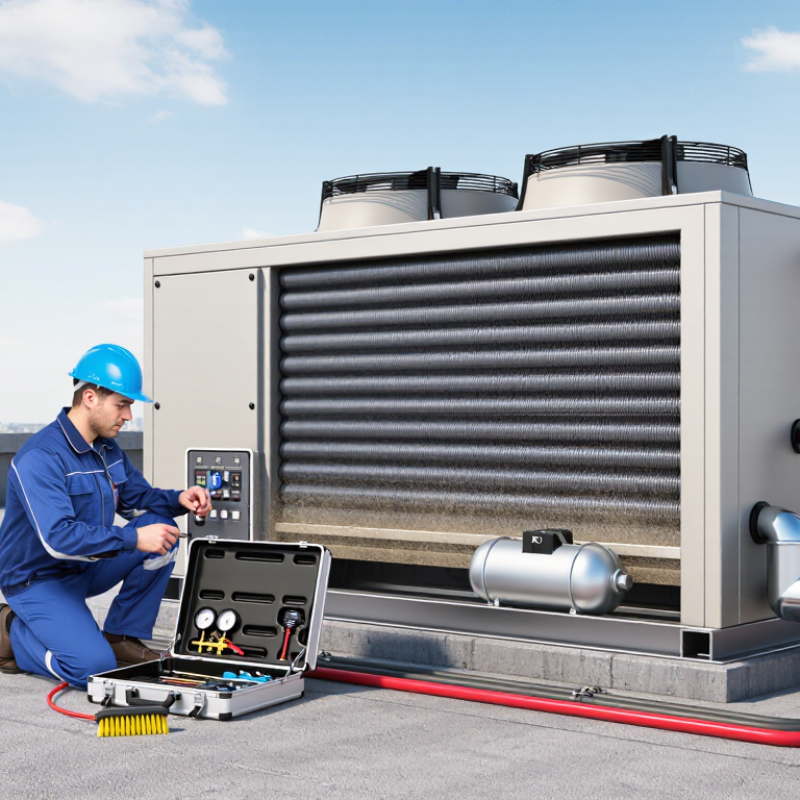
| Medium-Temperature Cold Room | Food, dairy, beverages and produce stored above freezing | Air-cooled condensing unit with scroll or reciprocating compressor; receiver and filter-drier sized for the system | R-448A, R-449A, R-454C or R-290, subject to local codes and equipment approval | Approximately −5°C to +5°C evaporating temperature; commonly 0°C to 5°C room temperature | Use floating head-pressure control, EC condenser fans and correctly sized expansion control to reduce seasonal energy use | Provide adequate airflow, service clearance, condensate management and protection from dirt or corrosive atmospheres | Best general-purpose choice |
| Low-Temperature Freezer | Frozen food, ice cream and products requiring temperatures below 0°C | Low-temperature reciprocating or scroll unit with crankcase heater, liquid receiver and suction accumulator where required | R-448A, R-449A, R-449B, R-454C or R-290, depending on charge limits and regulations | Approximately −35°C to −20°C evaporating temperature; commonly −25°C to −18°C room temperature | Check compressor envelope, discharge temperature, defrost load and the system coefficient of performance at the design ambient condition | Insulate suction lines, install appropriate oil-return piping and provide reliable electric, hot-gas or off-cycle defrost control | Prioritize low-temperature ratings |
| Reach-In or Display Case | Retail cabinets, small refrigerated displays and compact food-service equipment | Compact air-cooled unit, often with a hermetic compressor and integrated controls | R-290 or R-600a for approved self-contained systems; other refrigerants may be used in remote systems | Usually medium temperature, approximately −10°C to −5°C evaporating temperature | Small refrigerant charge, high-efficiency compressor, electronically commutated fans and good door or case sealing are significant | Confirm flammable-refrigerant requirements, electrical classification, ventilation and maximum allowable charge before installation | Efficient for compact systems |
| Walk-In Cooler | Moderate-volume storage with frequent door openings and variable product load | Remote air-cooled condensing unit with receiver, liquid-line solenoid and pump-down control | R-448A, R-449A, R-454C or R-290 where permitted and properly engineered | Approximately −10°C to −5°C evaporating temperature; typical room temperature 0°C to 5°C | Size for pull-down load, infiltration and product load rather than only the steady-state heat load | Use insulated piping, door heaters where necessary, pressure controls and adequate condenser ventilation | Select for peak load |
| Walk-In Freezer | Frozen storage with high infiltration during loading and unloading | Low-temperature condensing unit with receiver, suction accumulator, crankcase heater and defrost controls | R-448A, R-449A, R-454C or R-290, based on local safety and charge requirements | Approximately −30°C to −20°C evaporating temperature; typical room temperature −25°C to −18°C | Consider defrost energy, fan cycling, compressor capacity reduction at low ambient and liquid return protection | Install heated drain lines, insulated suction piping, freezer door heaters and properly coordinated low-pressure controls | Requires careful system design |
| CO₂ Transcritical System | Supermarkets, distribution centers and sites seeking very low-GWP refrigerant options | High-pressure CO₂ rack or dedicated condensing arrangement with gas cooler, flash-gas management and electronic controls | R-744 (carbon dioxide), ASHRAE safety class A1 | High-side pressure is controlled rather than condensed in the conventional way; operating pressures are substantially higher than HFC or hydrocarbon systems | Gas-cooler control, parallel compression, ejectors and heat reclaim can improve performance depending on climate and load profile | All components must be rated for CO₂ pressure; install pressure-relief protection, leak detection where required and trained service personnel | Strong low-GWP option |
| Hydrocarbon Condensing Unit | Small-capacity commercial refrigeration with a focus on low environmental impact | Factory-approved R-290 or R-600a unit with sealed electrical components and limited refrigerant charge | R-290 (propane), ASHRAE safety class A3; R-600a (isobutane), ASHRAE safety class A3 | Application-dependent; commonly medium-temperature or compact freezer duty | Hydrocarbons have very low global warming potential and favorable thermodynamic performance, but charge size and safety design are critical | Use only approved equipment; control ignition sources, follow ventilation rules and observe applicable flammable-refrigerant standards | Use only with qualified design |
| Warm or Hot Ambient Location | Outdoor installation in climates with high summer design temperatures | High-ambient-rated air-cooled unit with oversized condenser, head-pressure control and suitable motor protection | Refrigerant must match the approved compressor and system design; lower-GWP alternatives require compatibility verification | Design ambient may reach approximately 40°C to 46°C, depending on the project location and code basis | Evaluate capacity at the actual design ambient, not only at nominal catalog conditions; condenser cleanliness has a major impact | Provide shade without restricting airflow, maintain coil clearance and protect controls from weather and corrosion | Verify high-ambient capacity |
| Noise-Sensitive Installation | Restaurants, residential-adjacent properties, hospitals and urban retail sites | Low-noise scroll or reciprocating unit with variable-speed condenser fan and acoustic enclosure where appropriate | Refrigerant selection depends on capacity, safety classification, regulation and manufacturer approval | Application-dependent; select based on required evaporating and condensing temperatures | Variable-speed operation, vibration isolation and nighttime fan control can reduce sound and energy consumption | Check sound-pressure data at the property boundary, use flexible connections and avoid transmitting vibration through building structures | Specify sound performance |
| Variable-Load Facility | Multiple rooms or cases with substantial changes in demand throughout the day | Variable-capacity, digital-scroll, inverter or multi-compressor arrangement with electronic system controls | Use a refrigerant approved for the compressor, piping, controls and local regulations | Multiple evaporating temperatures may require separate circuits, suction groups or a rack arrangement | Capacity modulation, suction-pressure optimization, floating condensing pressure and demand-based fan control improve part-load performance | Provide oil management, control coordination, proper sensor placement and commissioning under both minimum and peak load | Best for changing demand |
| Corrosive or Dusty Environment | Coastal areas, food-processing sites, agricultural facilities and industrial locations | Heavy-duty air-cooled condenser with protective coating, corrosion-resistant fasteners and accessible coil design | System-specific; select a refrigerant compatible with the approved compressor and materials | Application-dependent, with capacity derating evaluated for fouling and restricted airflow | Coil protection and regular cleaning help preserve heat transfer and prevent increased condensing pressure | Use suitable coil coatings, install filtration or guards where appropriate and schedule inspection based on site contamination | Specify environmental protection |