2026 Top Cargo Bike Types for Global Buyers
Cargo Bike designs are changing quickly, but the best choice still depends on the work it must do. A parent carrying two children may value a stable frame, secure seats, and room for a rain cover. A small business might need a long, low cargo box for groceries or parcels. Fit matters. The bicycle should suit its rider, route, and parking space—not just its load rating.
This guide introduces the main cargo bike types global buyers are likely to compare in 2026, including front-loader, longtail, and compact utility models. Each layout handles weight differently. Front-loaders make cargo easy to see and reach, while longtails often feel closer to a conventional bicycle. Compact models can suit tighter storage areas, though their carrying capacity may be limited. These are useful distinctions, not guarantees; frame geometry and component quality vary between brands.
When evaluating a model, check its stated payload, braking system, tire size, service access, and battery specifications if it has electric assistance. Ask how those details fit your actual route. A steep street, rough pavement, or frequent stops can change what feels practical. Real routes differ. Published range estimates may not match daily use, especially with heavy loads or cold weather. I would not choose from a specification sheet alone. A test ride with representative cargo can reveal awkward steering, difficult loading, or a frame that feels less stable than expected. There are trade-offs, and some are easy to overlook. The sections ahead offer a grounded starting point for comparing options and asking better questions before purchase.
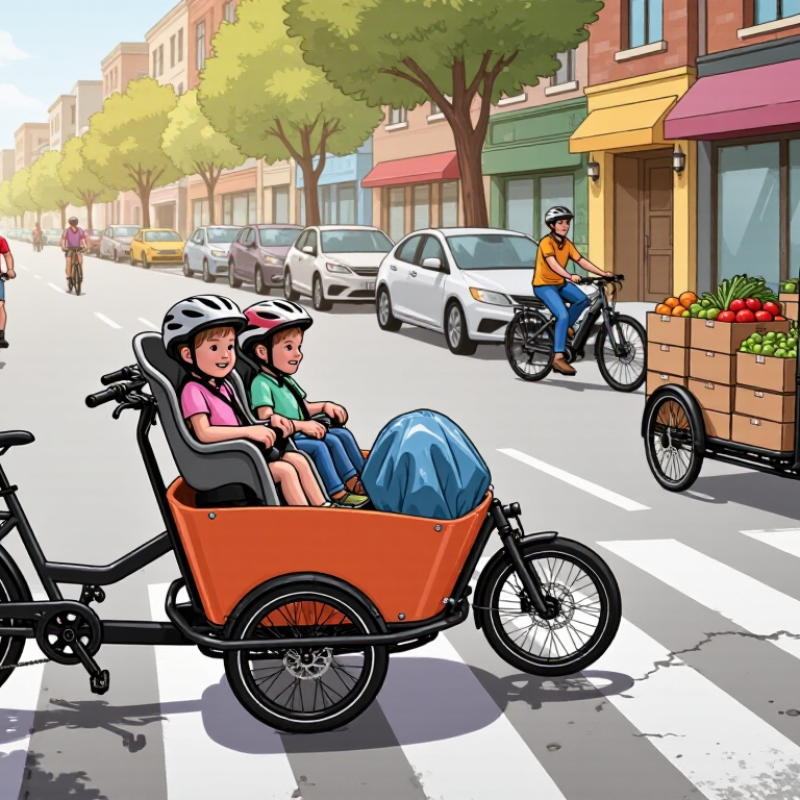
Cargo Bike Types: Longtail, Long John, Box, and Three-Wheel Designs
Cargo-bike types solve different loading problems. A longtail extends the rear rack, keeping the bicycle relatively narrow for errands, child transport, and small parcel runs. Its load sits behind the rider, so heavy cargo can affect balance. A Long John places a low platform between the handlebars and front wheel. The rider can see the load, but the longer frame needs room to turn. A front box is a cargo body, not a separate chassis: it may be mounted on a Long John or a three-wheel design. Open boxes suit bulky parcels; covered ones help shield goods from rain. Small details matter.
Three-wheel designs stand steadily at stops and can carry wide, heavy loads, but their extra width complicates narrow paths and tight corners. The OECD International Transport Forum’s 2020 report on urban freight highlights the emissions and congestion burden of city deliveries. A 2020 Possible and University of Westminster analysis of London operations estimated cargo-bike deliveries could cut emissions by up to 90% compared with diesel vans. That figure depends on route, load, and depot distance; it is not a universal result. For buyers, measure the actual doorway, ramp, and turning space before choosing capacity. A larger box looks useful, but empty volume earns nothing.