What Are the 2026 Top Axial Duct Fans for Global Buyers?
Global buyers entering 2026 need more than a high airflow number when selecting Axial Duct Fans. Real installations expose weaknesses quickly. A fan may move impressive air in an open test, yet struggle inside a long duct with bends, filters, or dampers. Noise can also become uncomfortable in workshops, kitchens, warehouses, and occupied buildings.
This guide examines the leading Axial Duct Fans expected to attract international attention in 2026. The evaluation considers airflow, static pressure, motor efficiency, acoustic performance, construction quality, controls, and service access. Voltage compatibility matters. So do frequency ratings, enclosure protection, corrosion resistance, and available replacement parts. A 315-millimeter fan with a rugged housing may suit a humid plant better than a cheaper model with higher advertised airflow. Manufacturer data provides a useful starting point, but independent testing and verified field feedback deserve greater weight.
No single fan wins every application. That is the uncomfortable part. A quiet model may sacrifice pressure, while a powerful unit may create noticeable vibration. Some specifications also appear difficult to compare across brands. This article therefore separates marketing claims from practical evidence whenever possible. It highlights suitable choices for factories, commercial buildings, agricultural spaces, and temporary ventilation projects. Readers should still confirm local electrical requirements, installation conditions, and professional safety guidance before purchasing. The final selection should fit the duct system, not merely the product brochure. Mistakes happen, especially when buyers compare airflow without examining resistance.
What Axial Duct Fans Are and How They Work
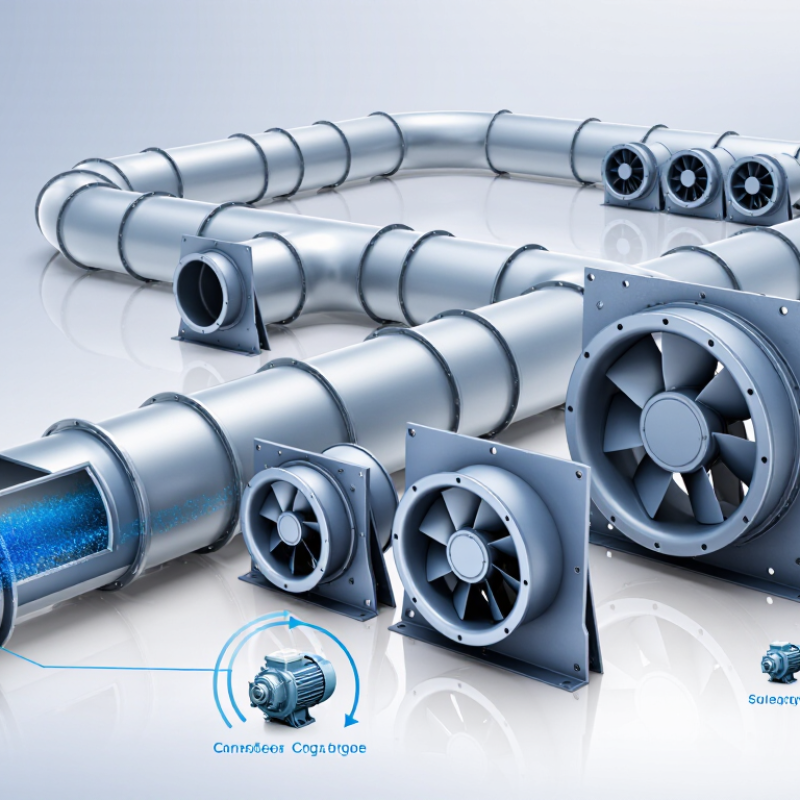
Axial duct fans move air along the same axis as the rotating impeller. Their blades push air forward through a cylindrical housing. The principle is simple. A motor turns the impeller, while the casing guides airflow into the duct.
In a typical installation, air enters through the rear grille and passes across the blades. The fan creates pressure that moves air through ducts, filters, dampers, and room outlets. Air volume is usually measured in cubic meters per hour or cubic feet per minute. Static pressure matters just as much. A fan may advertise strong airflow, yet perform poorly when a long duct or blocked filter increases resistance.
For global buyers, matching the fan to the actual duct system is essential. Check duct diameter, operating temperature, voltage, frequency, noise limits, and available maintenance space. A larger impeller is not automatically better. Oversized equipment can waste energy and produce uncomfortable drafts. Poorly sealed joints can also reduce delivered airflow.
From field experience, installation quality often matters more than a catalog rating. Keep the duct path as straight as possible near the fan. Use flexible connectors where vibration could transfer into walls. Confirm the airflow direction before commissioning. This step is easy to overlook. Fan selection also deserves honest review because laboratory figures may not match dusty, humid, or crowded job sites. Performance should be checked under real operating conditions, not assumed from one number.