


2026 Top Warehouse Racking Systems for Global Buyers?
A warehouse floor can look spacious until forklifts meet deep pallet rows, narrow aisles, and fast-moving stock. Choosing a Warehouse Racking System is therefore a design decision, not just a price comparison. The right structure must fit the building, load profile, handling equipment, and expected growth. Small details matter: pallet dimensions, beam levels, clearances, and the condition of the floor.
MHI and Deloitte’s 2024 Annual Industry Report found that 55% of surveyed supply-chain leaders planned to increase technology investment. That figure is not specific to racking, but it signals wider pressure to make warehouse operations more productive and adaptable. For global buyers, comparing selective, drive-in, pallet-flow, and automated systems means weighing density against access, throughput, installation, and maintenance. There is no universal winner.
MIT supply-chain expert Dr. Yossi Sheffi’s work emphasizes resilience: operations should be designed to withstand disruption, not only perform well under ideal conditions. Applied to rack selection, that means checking whether the layout can handle changing inventory and operating needs. This is a practical interpretation of his broader research, not a direct quotation. One caution: high-density storage can reduce access and complicate picking if the design misses real workflows. The guide ahead compares leading system types, highlights the trade-offs, and identifies the questions buyers should verify with qualified designers and suppliers. A good rack plan starts with measured loads and actual operating data. Not guesswork.
Warehouse Racking Systems in 2026: Types, Uses, and Key Terms
2026 Top Warehouse Racking Systems for Global Buyers?
Warehouse Racking Systems in 2026: Types, Uses, and Key Terms
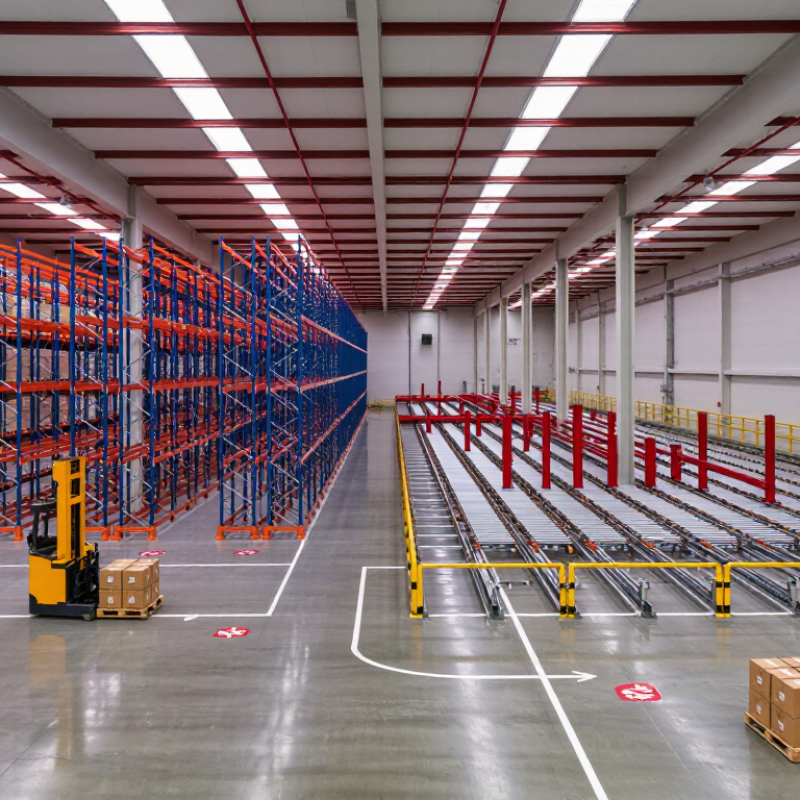
Warehouse racking should match the goods, handling equipment, and picking routine. Selective pallet racks offer direct access to each pallet, making them useful for varied stock. Drive-in racks store more pallets in less floor space but reduce access to individual loads. Push-back and pallet-flow systems suit higher-volume storage. Cantilever racks hold long items such as pipes or timber. Access matters.
Key terms help buyers compare layouts accurately. A bay is a storage section between uprights; beams support the pallet loads. Clear height means usable vertical space, while aisle width must suit the lift truck and its turning path. FIFO means first in, first out; LIFO means last in, first out. These methods affect product rotation. Load ratings depend on the rack configuration, beam levels, and installation details—not just the steel parts.
Picture a worker guiding a loaded truck into a narrow aisle on a busy shift. Small details matter. Check the floor condition, pallet dimensions, sprinkler clearance, and equipment turning space before finalizing a layout. Confirm that capacity labels match the installed configuration, and arrange qualified inspections after impact or visible damage. Requirements vary by site and region, so local engineering advice is sensible. A drawing can look perfect and still miss a real workflow problem.
