

Go to Main Content Go to Footer

660nm 850nm Red Light Therapy 7 Buying Tips?

Choosing a 660nm 850nm Red Light Therapy device can feel simple until specifications become confusing. Both wavelengths are widely studied in photobiomodulation, yet they do not automatically produce better results together. A reliable buying decision requires more than attractive brightness claims. It requires evidence, measurable output, safe design, and realistic expectations.

Dr. Michael R. Hamblin, a leading photobiomodulation researcher, has stated, “The effects of photobiomodulation depend on the dose and treatment parameters used.” That principle should guide every purchase. Check irradiance, treatment distance, session duration, and the manufacturer’s recommended dose. A panel showing 660nm and 850nm wavelengths may still perform poorly if its actual output is unclear. Ask for independent testing when possible. Look for transparent technical data, eye-protection guidance, electrical safety certification, and a clear warranty.

Small details matter. Can the device hang securely on a door? Does it become uncomfortably hot after ten minutes? Are the controls understandable without opening a manual twice? These practical details shape real user experience. Seven buying tips can help you compare wavelength accuracy, power density, coverage area, timer functions, build quality, safety documentation, and customer support. Still, no checklist is perfect. Marketing language can sound scientific while hiding missing measurements. Even experienced buyers may overlook comfort or return policies. Use the device consistently, follow its instructions, and avoid expecting overnight changes. Good light therapy is measured, cautious, and personal. Less hype. More verification.
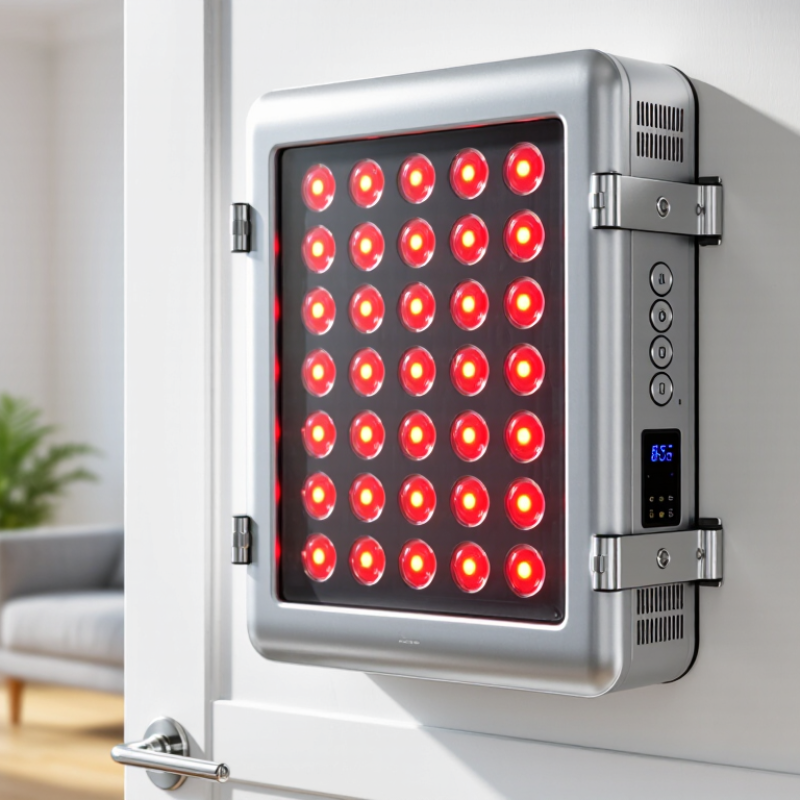
660nm 850nm Red Light Therapy 7 Buying Tips?

Understanding the Roles of 660nm and 850nm Red Light

660nm and 850nm Red Light Therapy: 7 Buying Tips

660nm produces visible red light that mainly interacts with surface tissues. It is commonly considered for skin appearance and superficial support.

850nm belongs to the near-infrared range and penetrates farther into tissue. This difference matters when choosing a device for facial use, muscles, or joints.

Do not judge quality by wavelength alone. Check irradiance, measured in mW/cm², and the recommended treatment distance. A device may list 660nm and 850nm but provide weak output. Look for independent testing or clear technical data.

Treatment time also affects total energy, so stronger output is not automatically better.

More is not always better.

Good controls help. Adjustable intensity, a timer, and separate wavelength settings make personal testing easier. Protective eyewear may be sensible, especially with bright panels.

Keep the device cool and follow its instructions. Photosensitivity, certain medicines, and existing eye conditions require professional advice before use.

Evidence is promising for some applications, but results vary between people.

That part is easy to overlook.

A simple comparison can help:

660nm is like a surface-focused lamp,

while 850nm reaches deeper.

Many buyers assume both wavelengths work identically. They do not. I would record distance, session length, skin response, and comfort for several weeks.

My own buying rule would be cautious, because marketing claims often sound more precise than the research.

Comparing Wavelengths for Different Therapy Goals

660nm 850nm Red Light Therapy: 7 Buying Tips

Comparing wavelengths starts with your therapy goal. Around 660nm, red light mainly targets shallower tissue near the skin’s surface. It may suit cosmetic routines, minor skin support, and visible areas such as the face or hands. Around 850nm, near-infrared light penetrates farther. People often consider it for muscles, joints, or larger treatment areas. Wavelength alone does not prove effectiveness. Dose matters too.

Check the measured wavelength, irradiance, treatment distance, timer, and treatment area. A useful device should provide test data, not vague phrases like “maximum power.” Confirm whether its output combines 660nm and 850nm, or allows separate control. This matters when your skin goal differs from your recovery goal. Look for clear eye-safety guidance, stable construction, and instructions written for ordinary users. Seven buying checks can prevent expensive confusion.

Do not chase the brightest panel. More light is not automatically better. Excess exposure may cause warmth, irritation, or discomfort, especially on sensitive skin. Start with shorter sessions and follow the manufacturer’s distance guidance. People using photosensitizing medicines or managing eye conditions should ask a qualified clinician before use. I would also question dramatic before-and-after claims. Home devices vary widely, and published results may not match your exact product, skin tone, or routine. A simple treatment log can reveal whether the device actually fits your goal.

Checking Power Density, Treatment Area, and Session Time

660nm 850nm Red Light Therapy: 7 Buying Tips

Checking Power Density, Treatment Area, and Session Time

When comparing 660nm and 850nm devices, check the stated wavelengths carefully. A product should identify both wavelengths clearly, not use vague “full spectrum” wording. Power density matters more than lamp brightness. Look for irradiance in mW/cm² at a stated distance, such as 15 or 30 centimeters. Without distance information, the number is difficult to trust. An inexpensive handheld meter can help, although readings may vary between meters.

Treatment area also affects real use. A small panel may suit one knee or the face, while a larger panel can cover the back. Bigger is not automatically better. Measure the usable lit area, not the outer frame. Then check whether light reaches the target evenly. Dark corners and weak edges can make the advertised coverage misleading.

Session time should match the power density. Dose is calculated by multiplying irradiance by time, producing joules per square centimeter. For example, 50 mW/cm² used for 10 minutes delivers about 30 J/cm². Follow the supplied instructions rather than copying another device’s schedule. My first instinct was to choose the highest output, but that was not necessarily the most practical choice. A timer, stable mounting, eye protection guidance, and clear testing data are valuable. Check return policies and electrical certifications too. Claims without measurement details deserve caution.

660nm 850nm Red Light Therapy 7 Buying Tips? - Checking Power Density, Treatment Area, and Session Time
Buying Tip Specification to Check Practical Benchmark Why It Matters Calculation or Verification Method
1Confirm the wavelengths Check whether the device clearly identifies separate red and near-infrared output, rather than using only the phrase “full spectrum.” Red: approximately 660 nm
Near-infrared: approximately 850 nm
660 nm is commonly selected for more superficial skin exposure, while 850 nm penetrates farther because near-infrared light is less visible and generally less absorbed by surface pigments. Look for a wavelength specification, tolerance, or measurement report. A product that only lists “red light” without nanometer information is difficult to compare accurately.
2Check measured power density Find the irradiance at the actual treatment distance, expressed in mW/cm² or W/cm². Many consumer devices are designed around approximately 10–60 mW/cm² at the recommended distance. The useful value is the measured value at the skin, not the LED’s electrical wattage. Power density determines how quickly optical energy reaches the treatment area. A higher electrical wattage does not automatically mean higher light delivery to the skin. Convert units when needed: 10 mW/cm² = 0.010 W/cm². Prefer independent measurements or a clearly stated measurement distance.
3Calculate the light dose Compare the intended energy dose, expressed in J/cm², rather than comparing session length alone. A commonly used starting range for many red-light applications is approximately 4–10 J/cm², although the appropriate dose depends on the goal, device, body area, and individual response. Two devices can require different session times if their irradiance levels differ. Dose provides a more useful comparison than minutes alone. Dose (J/cm²) = Irradiance (W/cm²) × Time (seconds)

Example: 0.020 W/cm² × 300 seconds = 6 J/cm².
4Match session time to output Check the timer range and calculate how long it takes to reach the intended dose at the recommended distance. At 20 mW/cm², a dose of 6 J/cm² requires about 5 minutes. At 10 mW/cm², the same dose requires about 10 minutes. Longer sessions are not automatically better. Excessive exposure may increase warmth, irritation, or discomfort without producing additional benefit. Use the dose formula and follow the device’s exposure schedule. Start conservatively and stop if the skin becomes painful, unusually red, or irritated.
5Evaluate treatment-area coverage Check the illuminated area, panel dimensions, beam angle, and whether the device provides even output across the treatment zone. Small devices may cover approximately 100–200 cm²; larger panels may cover approximately 300–600 cm² or more. These are approximate physical coverage ranges, not guaranteed effective-dose areas. A small treatment area may require repositioning or multiple sessions to cover a larger body region. Uneven illumination can result in uneven dosing. Ask for an irradiance map or measurement grid when available. Confirm whether the stated coverage is measured at the recommended operating distance.
6Check heat, comfort, and eye safety Review surface temperature, cooling method, timer controls, included eye protection, and instructions for both visible red and near-infrared light. The device should feel comfortably warm rather than hot. Use eye protection whenever the manufacturer recommends it, and do not stare directly into bright LEDs. Comfort affects consistent use. Near-infrared light at 850 nm is not visible, so brightness alone cannot indicate exposure. Look for automatic shutoff, ventilation, thermal information, and clear warnings. People with eye conditions, light sensitivity, or photosensitizing medication should seek medical advice before use.
7Assess consistency and documentation Check whether the device provides a clear user manual, recommended distance, session schedule, wavelength details, irradiance data, and electrical safety information. A practical routine often involves several sessions per week, with the exact frequency determined by the device instructions and the intended application. Results generally require consistent use over time. Without a documented distance, irradiance, and schedule, it is difficult to reproduce the intended dose or compare products objectively. Choose documentation that states test conditions and distinguishes optical output from electrical power. Keep a simple record of distance, session time, skin response, and frequency.

Evaluating Device Safety, Quality, and Ease of Use

660nm 850nm Red Light Therapy 7 Buying Tips?

Evaluating Device Safety, Quality, and Ease of Use

Tip one: Confirm the wavelengths.

A reliable device should clearly state 660nm red light and 850nm near-infrared light. Avoid vague labels such as “full spectrum.” Clear specifications matter.

Tip two: Check measured output, not impressive-looking claims.

Look for irradiance data in mW/cm², testing distance, and test conditions. Numbers without measurement details are weak evidence. I would question unusually high figures.

Tip three: Inspect safety features.

Choose eye protection guidance, ventilation, stable wiring, and an automatic timer. The surface should not become uncomfortably hot. Test it briefly first.

Tip four: Review independent documentation.

Electrical safety reports, wavelength testing, and user instructions add credibility. A professional seller should explain expected use without promising to treat every condition.

Tip five: Consider coverage and distance.

A flexible panel may illuminate larger areas, while a compact unit can target smaller zones. Measure your usual treatment space before buying.

Tip six: Judge everyday usability.

Controls should be readable, the cable should feel secure, and cleaning should be simple. Complicated devices often become expensive room decorations.

Tip seven: Read the return policy and warranty carefully.

Keep purchase records and inspect the device when it arrives. My own preference is cautious: convenience matters, but comfort and verified construction matter more.

Choosing the Best 660nm and 850nm Therapy Device for Your Needs

Choosing the Best 660nm and 850nm Therapy Device for Your Needs

Start with the wavelength, not the sales claim. A 660nm diode generally targets more superficial tissue, while 850nm light may reach deeper areas. The difference is practical. Facial use may favor 660nm; muscle recovery may benefit from 850nm. Many devices combine both, but combination does not guarantee better results. A 2024 review in Photobiomodulation, Photomedicine, and Laser Surgery found major differences in study protocols, making direct comparisons difficult. Check the published irradiance, measured in mW/cm², and the recommended fluence, measured in J/cm².

Measure the treatment area. A small panel may suit the face, while a larger panel can reduce session time. Confirm the timer, cooling system, eye protection, and temperature at skin level. Safety information should reference recognized photobiological testing, such as IEC 62471. Look for independent electrical and optical testing, not only laboratory language. The Global Wellness Institute valued the wellness economy at $6.3 trillion in 2023, but market growth does not prove clinical effectiveness. That distinction matters.

I would also check warranty terms, return conditions, and replacement-part availability. Read the instructions carefully. Avoid devices that hide wavelength tolerances or provide only “powerful” as a specification. Personal experience can be useful, but skin sensitivity and treatment goals differ widely. The awkward truth: more minutes and higher intensity are not automatically better. If you use photosensitizing medication or have a diagnosed condition, ask a qualified healthcare professional before treatment.

Logo Access 360