


7 Transparent LED Display Buying Tips for Global Buyers
A glass storefront can keep its daylight and still carry a moving image. That promise makes a Transparent Led Display appealing, but brightness alone cannot predict performance. Buyers must consider viewing distance, transparency, pixel pitch, ambient light, and the building’s glass structure. Small choices matter. A sample that looks vivid in a dark showroom may appear faint beside a sunlit street.
The wider digital signage market offers useful context, though it is not a measure of transparent LED sales. Grand View Research estimated the global digital signage market at USD 28.83 billion in 2023, with projected annual growth of 8.1% from 2024 to 2030. This signals sustained investment in visual communication, not guaranteed returns for any installation. Market growth cannot replace a site survey.
For global buyers, procurement also means checking more than the panel specification. Ask for measured brightness, power consumption, refresh rate, service access, warranty terms, and spare-parts availability. Request operating footage under lighting conditions similar to your site. Confirm how mounting, ventilation, and content control will work before approving a purchase. So does proof. A supplier’s claims deserve independent verification. Even careful comparisons leave uncertainty; transparent displays vary by design, installation, and viewing conditions. These seven buying tips help turn broad promises into practical questions, so teams can compare suppliers with clearer evidence and fewer costly surprises.
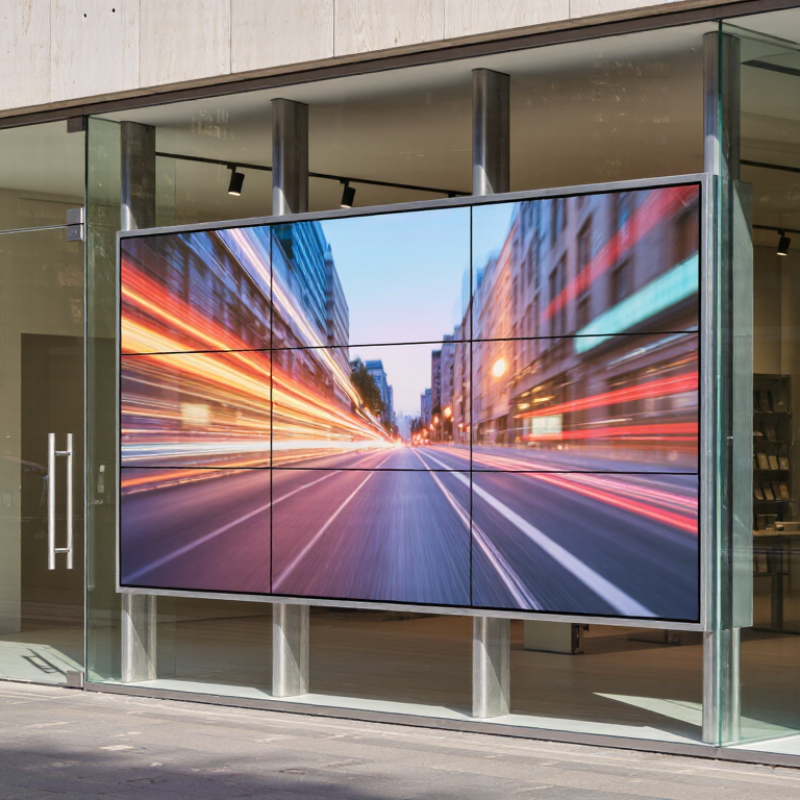
Understanding Transparent LED Displays and Their Core Components
Transparent LED displays are not simply ordinary panels with gaps. They use LED strips or modules arranged on a clear support, leaving open areas for daylight and sightlines. LED chips create the image, while driver circuitry controls when each pixel lights and how brightly. A receiving card and control system process content signals; a power supply delivers stable current. Small components, large consequences.
The supporting structure matters too. Depending on the design, modules may attach to glass-facing frames, aluminum profiles, or custom rails. Check how these parts handle heat, cable routing, and service access. A neat sample can hide awkward maintenance. Ask to inspect the rear side, not just the lit face.
Two specifications need context: pixel pitch and transparency. A tighter pitch can show finer detail at close viewing distances, but it may reduce open area and increase cost. Transparency is not a fixed result; LED spacing, module layout, and viewing angle affect what people see through the screen. Brightness should suit ambient light, especially on sunlit façades, without overpowering the scene at night. There is no perfect setting. Compare a sample at the actual viewing distance, and test content with thin lines and small text. It can look different outdoors.
