


What Is the Best Beverage Can End Type in 2026?
In 2026, the best Beverage Can End is not automatically the newest or easiest to open. It is the end that fits the drink, filling line, package design, and customer’s expectations. A crisp snap matters. So does a secure seal. Cost, opening force, material use, and compatibility with existing equipment can change the answer.
Packaging educator Walter Soroka describes packaging as “the science, art, and technology of enclosing or protecting products for distribution, storage, sale, and use.” He was speaking about packaging broadly, not declaring a winning can end. Still, the principle applies: performance depends on the whole package. A standard stay-on-tab end may suit familiar formats, while resealable or larger-opening designs may serve different needs. None is best in every case.
This guide compares the main Beverage Can End options through practical criteria, including consumer experience, production fit, and design trade-offs. It also considers what buyers should verify with suppliers rather than relying on a headline feature. Small details count. A tab that feels smooth in a sample may behave differently on a fast production line. And the “best” choice can be less obvious than expected. That is worth questioning before making a 2026 decision.
What a Beverage Can End Is and How It Works
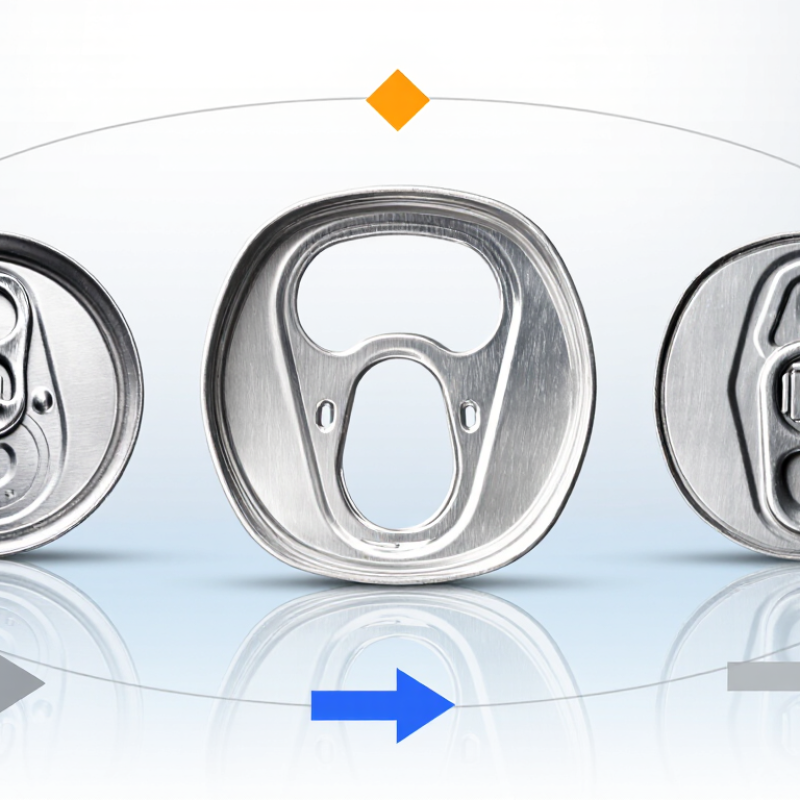
A beverage can end is the shaped metal lid attached after the can is filled. Its curl meets the body flange in a double seam, where the metal folds together to form a tight closure. The seam must withstand handling and the pressure inside carbonated drinks. At the opening, a scored panel creates a controlled weak line. Lifting the tab uses leverage to rupture that score and expose a drinking aperture. The tab stays attached. A small detail, with a practical purpose.
Most beverage cans use stay-on-tab ends, but the “best” design depends on the can’s contents, opening feel, and production requirements. End dimensions and score depth must match the can and filling process; a poorly matched score can make opening difficult or compromise the seal. Ends are commonly made from stronger aluminum alloy than the can body, helping the tab and scored panel work reliably with thin metal. The Aluminum Association and Can Manufacturers Institute reported a 43% U.S. aluminum beverage-can recycling rate for 2023. That figure describes whole cans, not ends alone, but it underlines why material recovery matters. A can end is small. Its performance is not.
