


7 Best Flying Inflatable Boats for Buyers in 2026
Choosing a Flying Inflatable Boat calls for more than comparing speed claims and glossy photos. Buyers need to understand how the craft handles on water, during takeoff, and in changing weather. Payload, hull materials, inflation time, engine support, and storage dimensions can matter more than a headline specification. The category is unusual. That makes careful verification especially important.
The National Marine Manufacturers Association’s 2024 economic-impact report estimates that U.S. recreational boating contributes about $230 billion to the economy and supports roughly 812,000 jobs. Those figures show boating’s scale, but they do not measure demand for flying inflatable craft specifically. The FAA’s Aerospace Forecast for fiscal years 2025–2045 offers broader context on general aviation activity; it does not rank inflatable flying boats. A useful distinction.
This guide compares seven options for buyers in 2026, focusing on published specifications, practical ownership considerations, and the evidence behind each manufacturer’s claims. Look closely at usable payload, assembled dimensions, propulsion compatibility, maintenance needs, and how performance figures were measured. A short takeoff claim, for example, means little without the stated load and test conditions. Manufacturer data is not the same as independent testing. Where public evidence is limited, that uncertainty deserves attention—not guesswork. The best choice is the one that fits your intended use, storage space, experience, and realistic operating conditions.
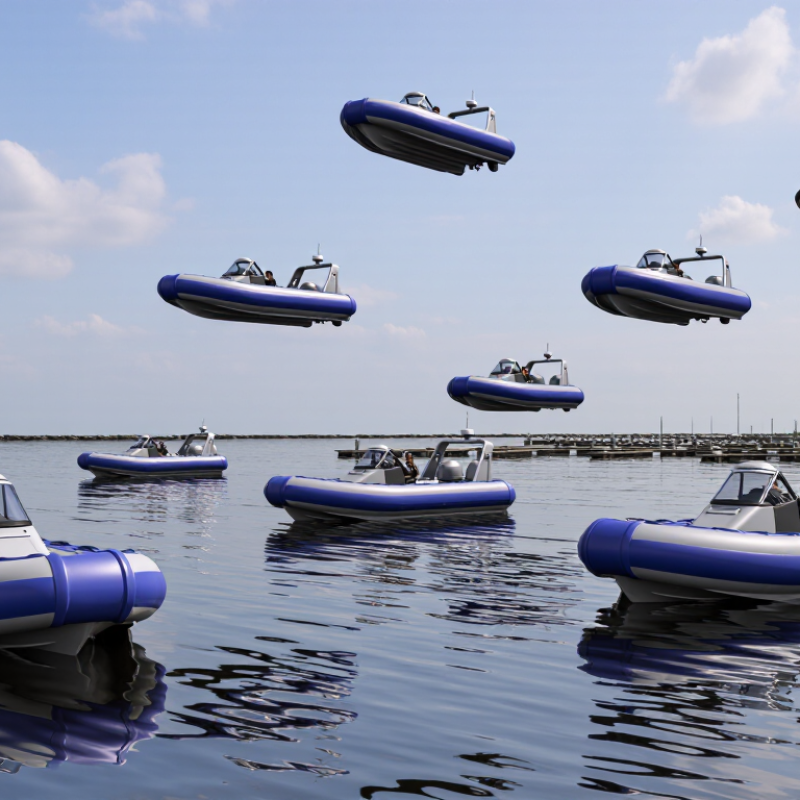
Flying Inflatable Boats Defined: Hull, Wing, and Propulsion Configurations
A flying inflatable boat combines a buoyant tube hull with a fabric wing and motor-driven propeller. The hull carries the craft over water; the wing supplies lift after airflow builds. This is not a conventional seaplane. Buyers should check whether the design uses a flat inflatable floor, rigid panels, or a keel that shapes the ride. Small details matter. Tube diameter, floor stiffness, and load placement can change handling, especially when a passenger shifts weight.
Wing and propulsion layouts vary. A flexible overhead wing is common, while the motor may drive a rear-mounted pusher propeller or a forward tractor propeller. The pusher arrangement keeps the propeller behind occupants, but it can complicate inspection and access. Ask how the wing is packed, attached, and controlled, and whether the motor’s rated output matches the loaded craft. There is no universal “best” setup. A light hull may launch readily, yet feel less forgiving in choppy water.
Safety data deserves attention, too. The U.S. Coast Guard’s 2023 Recreational Boating Statistics reported 564 recreational-boating deaths. That figure is not specific to flying inflatable boats, but it underscores the value of flotation, personal life jackets, and reliable recovery plans. ISO 6185 standards classify inflatable boats by construction and operating conditions; compare the applicable category with the maker’s documented capacity. A tidy specification sheet is not a water test. Check the craft’s behavior at realistic passenger and fuel loads, and scrutinize any performance claims that omit those conditions.
