

Go to Main Content Go to Footer

Best J1772 Charging Station 2026 Which Type Is Best?

Choosing the best J1772 charging station in 2026 is less about buying the most powerful unit and more about matching the charger to your vehicle, home, and daily routine. The International Energy Agency’s Global EV Outlook 2025 reports that electric car sales exceeded 17 million worldwide in 2024, representing more than one in five new cars sold. That growth makes practical charging choices increasingly important.

For many North American drivers, a J1772 charging station offers broad compatibility with non-Tesla electric vehicles and plug-in hybrids. The U.S. Department of Energy’s Alternative Fuels Data Center identifies SAE J1772 as a common connector for Level 2 charging. Yet the connector alone does not determine the best choice. Charging speed depends on the vehicle’s onboard charger, available electrical capacity, and installation quality. A 48-amp station may look impressive on paper, but it cannot deliver its full output if the car or home circuit cannot support it.

Small details matter. A cable that reaches the driveway, weather protection suited to the installation site, and dependable scheduling features can shape everyday satisfaction. This guide compares portable and hardwired models, power levels, safety certifications, and smart controls. It also considers price and installation needs. One caveat: product specifications can change, and advertised charging rates may not reflect real-world use. The best station is the one that fits your actual setup—not simply the one with the longest feature list.
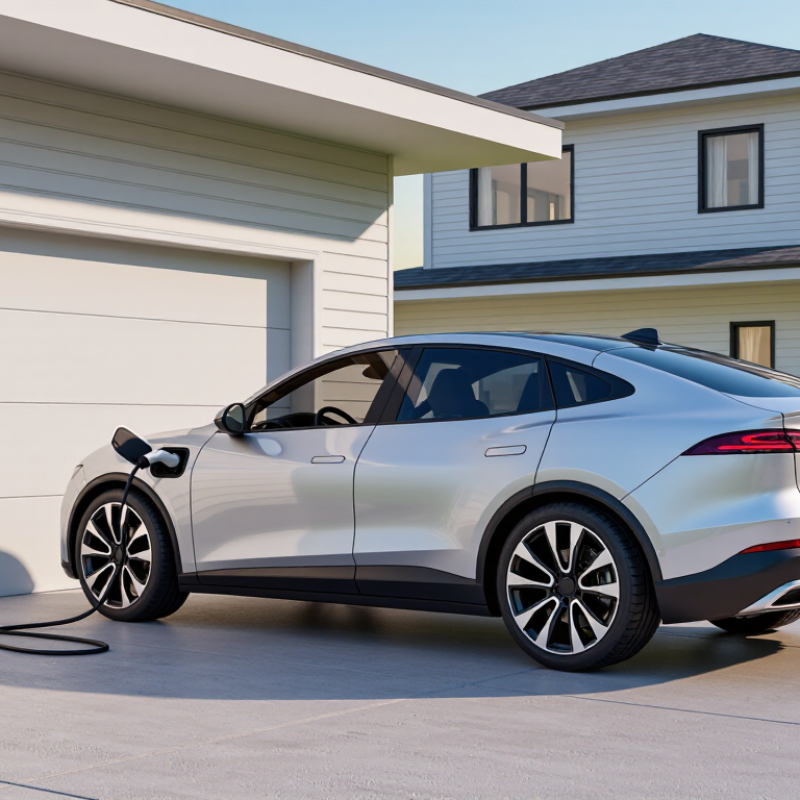
Best J1772 Charging Station 2026 Which Type Is Best?

J1772 Explained: Type 1’s Five-Pin Connector and AC Charging Role

A J1772 Type 1 connector is a five-contact plug designed for AC charging. Two contacts carry power, one provides grounding, and two support communication and proximity detection. The control pilot helps the vehicle and charging station coordinate before current flows. That small signaling step matters; the plug is not simply a power socket.

During AC charging, the station supplies alternating current, and the vehicle’s onboard charger converts it for the battery. Charging speed depends on the station’s electrical supply and the vehicle’s onboard charger, not the connector alone. A higher-rated station may not make a compatible car charge faster. Type 1 is common in some regions, but connector standards vary. Check the vehicle manual and charging-port label before choosing equipment. Compatibility can be easy to misread.

Tips: Inspect the connector for damage, then insert it firmly until it locks. Keep the cable off wet ground where practical. If charging starts slowly, check the vehicle’s charge limit and the station’s available power. Small detail, big difference. A connector fit does not guarantee the fastest possible charge.

Level 1 vs. Level 2: 120 V/1.9 kW Compared with 240 V/19.2 kW

At 120 V, Level 1 charging is slow but simple. A 16-amp supply provides about 1.9 kW before charging losses, though many household outlets support less. After plugging in overnight, a driver may see only a modest range increase by morning. That can work for short daily trips. It feels less reassuring after a long commute.

At 240 V, Level 2 charging can reach 19.2 kW at 80 amps, but that figure is a ceiling, not a promise. The charging station, electrical circuit, and vehicle must all support that rate. Many cars accept less, often because their onboard charger sets the limit. Check the vehicle specifications before comparing equipment. A higher-rated station cannot make a lower-capacity car charge faster.

For a home installation, Level 2 often makes sense when daily driving uses a large share of the battery, or when quick overnight recovery matters. A 19.2 kW setup may require substantial electrical capacity, so an electrician should assess the panel and wiring. Level 1 avoids that upgrade in many cases, but recovery can take several days after heavy use. Real charging time also varies with temperature, battery condition, and charging losses. The neat power figures leave out those details.

Home or Public Charging: Match Station Output to Your Driving Needs

Best J1772 Charging Station 2026 Which Type Is Best?

Home or Public Charging: Match Station Output to Your Driving Needs

Choosing a J1772 station starts with your daily routine, not the highest number on a product label. At home, a 240-volt Level 2 unit can add useful range while you sleep. A lower-output unit may still work if your commute is short and the car sits plugged in overnight. Check your vehicle’s onboard charger rating, too; it limits how quickly the battery can accept AC power. More station capacity does not always mean faster charging.

Public charging calls for a different calculation. If you park for two hours at a workplace or shopping center, moderate AC output may be plenty. For a brief stop, it can feel painfully slow. J1772 stations generally provide AC charging, so they are not a substitute for DC fast charging on a long trip. That distinction is easy to miss. Look at the station’s actual power, your car’s charging limit, and the time you expect to stay parked.

Installation matters at home. A long cable across a garage can be awkward, while an outdoor unit needs a suitable weather rating and a properly installed circuit. Ask a qualified electrician to check the panel before choosing a high-output model. I would also leave room for changing routines; my own estimate of weekly driving could be wrong. Choose output that fits real parking time, not an optimistic guess.

Installation and Safety: Circuit Capacity, NEC Article 625, and Certification

A safe J1772 installation starts with the panel, not the charger’s advertised maximum. Under NEC Article 625, equipment must be listed and labeled, and local rules may differ by adopted code edition. A 40-amp charging setting generally calls for a 50-amp branch circuit because EV charging is treated as a continuous load. The electrician must also verify conductor size, breaker rating, panel capacity, and the actual service load.

Capacity matters. The U.S. Department of Energy’s Alternative Fuels Data Center reports that Level 2 charging can add roughly 10 to 60 miles of range per hour, depending on the vehicle and equipment. That wide range is a useful reminder: selecting the highest amperage is not always practical. A load calculation can reveal whether a panel upgrade or managed charging is needed. A full panel schedule can still miss real-world loads, so ask how major appliances were accounted for.

Before energizing the unit, confirm its certification from a recognized testing laboratory and use an appropriately rated outdoor enclosure where needed. Keep the installation record, permit documents, and inspection results. Small details matter. A warm breaker, loose termination, or undersized circuit is not a harmless shortcut; stop charging and have a qualified electrician investigate it.

Best J1772 Type for Most Homes: 32–48 A Level 2 at 240 V

For most homes, a 32–48 A J1772 Level 2 station at 240 V is a practical sweet spot. It delivers about 7.7–11.5 kW before charging losses. The U.S. Department of Energy’s Alternative Fuels Data Center says Level 2 equipment generally provides 2.9–19.2 kW, adding roughly 10–60 miles of range per hour. A 32 A unit can comfortably refill many cars overnight; 48 A may help drivers with larger batteries or shorter parking windows. Your car’s onboard charger sets the real limit.

More power is not always better. A 48 A station often needs a dedicated 60 A circuit, while a 32 A unit may be easier to fit into an existing electrical plan. Have a qualified electrician check panel capacity, wiring, and the route from the panel to your parking spot. Also check your vehicle’s charging limit and J1772 compatibility before buying. Cold weather and charging losses reduce real-world range; the published figures are not guarantees.

Tips: Measure cable reach to the charge port. Leave room for a future vehicle, but avoid paying for amperage your car cannot use. A little inconvenient, perhaps—but useful.

Best J1772 Charging Station 2026: Which Type Is Best?

Best for most homes: a 32–48 A Level 2 J1772 charger on a 240 V circuit, selected to match the home’s electrical capacity and vehicle limits.

The chart shows estimated power at nominal 240 V: charging power is voltage multiplied by current. Actual power can vary with supply voltage, vehicle limits, and charging conditions. Installation should be sized and completed in accordance with local electrical codes.

Logo Access 360