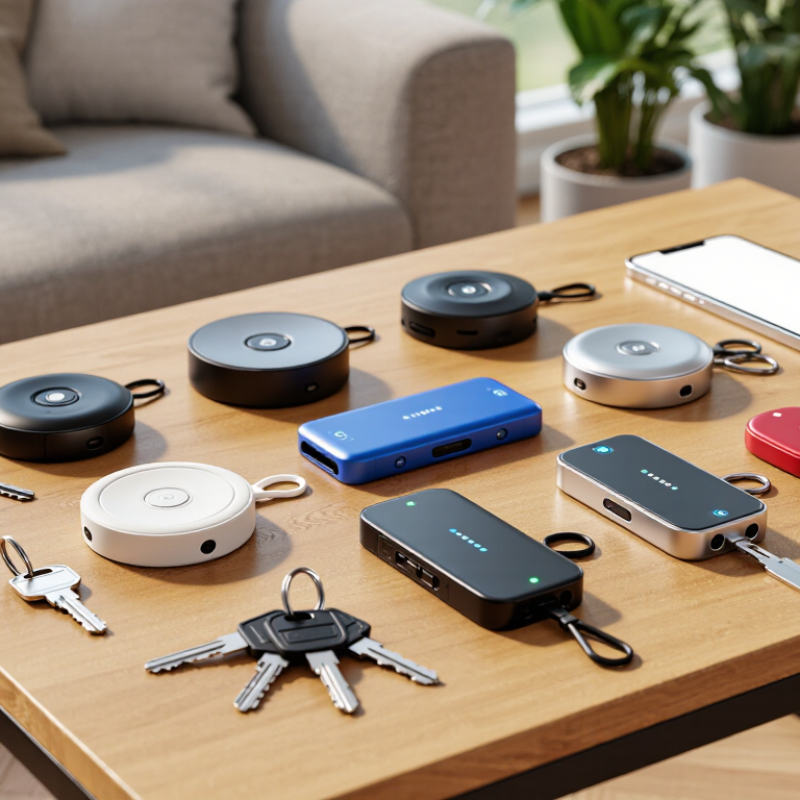
| 1. Bluetooth network tracker | Bluetooth signal for nearby searches; participating phones can report its last detected location. | Often about 10–60 m in open conditions; less indoors. | Possible through a compatible crowdsourced finding network when another participating device comes nearby. | Commonly uses a replaceable coin cell; service life varies by model and alert use. | Requires a compatible phone, app, and supported finding network for remote updates. | Everyday keys lost at home or in places where the network has good coverage. | Remote finding depends on nearby network users and regional service support. |
| 2. Ultra-wideband (UWB) tracker | Bluetooth discovery plus UWB direction and distance guidance with compatible hardware. | Usually room-scale; practical precision depends on the environment and compatible phone. | May use a compatible crowdsourced network, like other network-enabled Bluetooth trackers. | Typically coin-cell powered; battery life varies with hardware and use. | Precise direction finding requires a UWB-capable phone and supported software. | Users who want guided, close-range searches and have compatible phones. | UWB benefits are unavailable on phones without compatible UWB hardware. |
| 3. Bluetooth tracker with replaceable coin cell | Bluetooth connection to a phone app; some versions also support a finding network. | Often about 10–60 m in open conditions; indoor range is typically shorter. | Only if the particular device and app support remote network finding. | Coin cell can be replaced by the user; check battery type and availability locally. | Needs Bluetooth and a compatible app; network features vary by device ecosystem. | Buyers who prefer replaceable batteries and simple everyday use. | A replacement battery is eventually needed; remote coverage is not universal. |
| 4. Rechargeable Bluetooth tracker | Bluetooth proximity alerts and app-based sound or last-seen location; some support a finding network. | Often about 10–60 m in open conditions; walls and interference reduce range. | Available only where the tracker’s app or supported network provides it. | Built-in rechargeable battery; charge interval varies, and the battery may not be user-replaceable. | Requires a compatible phone and charging access; check app and network availability. | Users who want to avoid buying disposable coin cells. | Needs periodic charging; a flat battery prevents tracking. |
| 5. RF remote-and-receiver key finder | A dedicated handheld remote activates a sound or light on the paired receiver using radio frequency. | Often about 20–60 m in open conditions; obstacles can shorten it. | No general remote location; works when the receiver is within radio range. | Remote and receiver use batteries; types and replacement intervals vary by set. | Does not require a smartphone, app, internet, or account. | Home use, including households that prefer a dedicated physical button. | The remote itself must be available, and it cannot locate keys far away. |
| 6. Multi-receiver RF key-finder set | A single remote selects among several radio receivers, each with its own sound or light alert. | Often about 20–60 m in open conditions, subject to obstacles and interference. | No remote network finding; the selected receiver must be within range. | Battery-powered remote and receivers; check whether batteries are included and replaceable. | No smartphone or internet needed. | Families or shared homes that want to label and locate several items. | More receivers mean more batteries and a larger set to manage. |
| 7. Smartphone-only Bluetooth tag | A phone app connects directly by Bluetooth and can trigger an alert or show the last connected location. | Often about 10–30 m in open conditions; shorter indoors. | Usually no crowdsourced remote finding unless explicitly supported by the product and app. | May use a coin cell or built-in battery; verify the specific design before purchase. | Requires a compatible phone and the manufacturer’s app; internet may be needed for some features. | Low-complexity nearby searches and basic separation alerts. | Limited usefulness when keys are far from the phone. |
| 8. GPS / cellular key tracker | Uses satellite positioning and a cellular connection to send location updates to an app. | Not limited to a short Bluetooth radius where GPS reception and cellular service are available. | Can report location remotely when powered, connected, and covered by its service. | Usually rechargeable; frequent location updates can require more charging. | Often requires a cellular plan or service fee; international roaming and frequency compatibility matter. | Situations where remote, long-distance location is more important than compact size. | Typically larger, more power-hungry, and more costly to operate than a simple key tag. |
| 9. Waterproof / rugged Bluetooth tracker | Bluetooth sound and app-based proximity search; remote network support depends on the model. | Often about 10–60 m in open conditions, with shorter indoor range. | Possible only if the device supports a compatible crowdsourced finding network. | Battery type varies; sealed rugged designs may make battery replacement difficult. | Requires a compatible phone and app; verify the stated water-resistance rating and test conditions. | Outdoor use or keys exposed to rain, dust, or rough handling. | Rugged housing can add bulk; water resistance does not mean the device is indestructible. |
| 10. Compact, loud-alert Bluetooth tag | Bluetooth app connection with an audible alert intended to help find keys nearby. | Often about 10–30 m in open conditions; walls and background noise affect usability. | Generally limited to last-seen information unless network finding is explicitly supported. | Coin-cell or built-in battery; confirm replacement options and expected service life. | Needs a compatible phone and app; check alert controls and operating-system support. | Users who commonly misplace keys nearby and value an audible search. | Sound may be harder to hear inside bags, drawers, or noisy spaces. |