


China Best Inflatable Air Dancer Manufacturer?
Choosing the best inflatable air dancer manufacturer in China takes more than comparing catalog photos and prices. A reliable supplier should explain how it builds each unit, what materials it uses, and how it checks finished products. Ask for clear details on fabric weight, seam construction, blower specifications, printing, and the stability of the base. These features affect how the display looks and performs during everyday use.
Look for evidence, not broad promises. Request recent product photos, a sample video, written specifications, and information about quality checks before shipment. A practical test is to compare the sample with the approved artwork and measurements. Check that the print is legible, the seams appear even, and the blower fits securely. Details matter. A polished catalog can still hide a weak seam; photos alone are not proof.
The right manufacturer should answer questions clearly and describe what it can and cannot customize. Confirm production timing, packaging dimensions, replacement-part availability, and how defects are handled. These details can prevent avoidable surprises, especially when ordering several units. Still, no single supplier is best for every buyer. Budget, design complexity, order size, and support needs all change the decision. A lower quote may be useful, but only when the specifications match. Compare the same requirements across suppliers, keep the agreement in writing, and allow time to review a sample. Not every detail will be perfect. Careful checks make the choice more dependable.
What Defines a Leading Inflatable Air Dancer Manufacturer in China?
What Defines a Leading Inflatable Air Dancer Manufacturer in China?
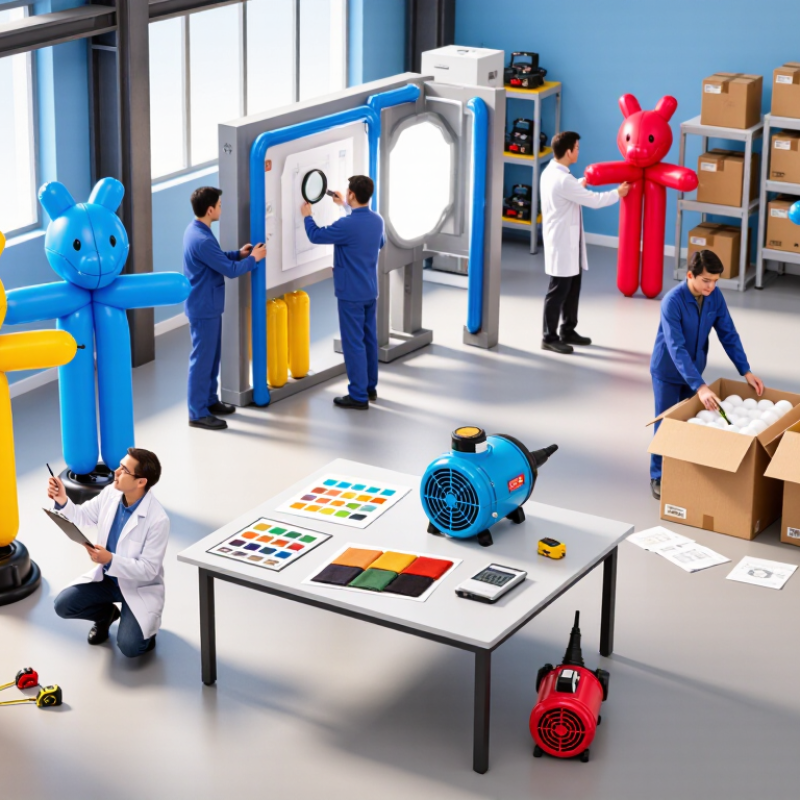
A leading manufacturer makes performance measurable, not just a sample attractive. Ask for fabric specifications, blower details, seam-test results, and print durability checks. The ISO Survey 2022 reported 1,265,216 valid ISO 9001 certificates worldwide. This figure does not prove product quality, but it shows how widely documented quality systems are used. A certificate matters only when factory records connect it to actual production.
Look closely at construction. Reinforced seams should feel even, without loose threads or puckered corners. A finished dancer should inflate consistently, stand upright, and keep its printed design readable in moving air. ASTM D5034 and ASTM D751 provide recognized methods for evaluating textile strength and coated fabrics. Ask which tests the supplier uses, and request dated results for the actual material. A polished showroom sample is not enough.
Experience shows up in small details: clear packing instructions, spare-part guidance, and practical answers about repair. Ask how the team checks blower fit and inspects each unit before packing. Then compare the written specification with a production sample. Gaps happen. That is worth admitting. A capable supplier explains what failed, what changed, and what still needs testing. If answers stay vague, keep asking.
