


China Best Shipping Companies for Global Maritime Trade?
China’s shipping companies connect factories, ports, and customers across a vast maritime network. Their role matters because more than 80% of world trade by volume moves by sea, according to UNCTAD’s Review of Maritime Transport 2024. The report also records a 2.4% rise in maritime trade volumes in 2023, after a contraction the year before. The stakes are real.
As IMO Secretary-General Kitack Lim has said, “Shipping is the backbone of global trade and the global economy.” That backbone depends on more than vessel size. Sailing frequency, port connections, cargo tracking, and disruption response all shape a shipper’s experience. A container’s route can look simple on a map, yet a missed connection may add days at the terminal.
This overview examines China’s leading shipping companies for global maritime trade, including COSCO Shipping, China Merchants, and OOCL. It considers their international networks, service range, and practical strengths for businesses moving cargo across regions. The comparison is not a perfect ranking: performance can vary by route, season, and cargo needs. That limitation deserves attention. Readers should confirm current schedules and service terms directly with providers before making a decision.
China’s Role in Global Maritime Trade
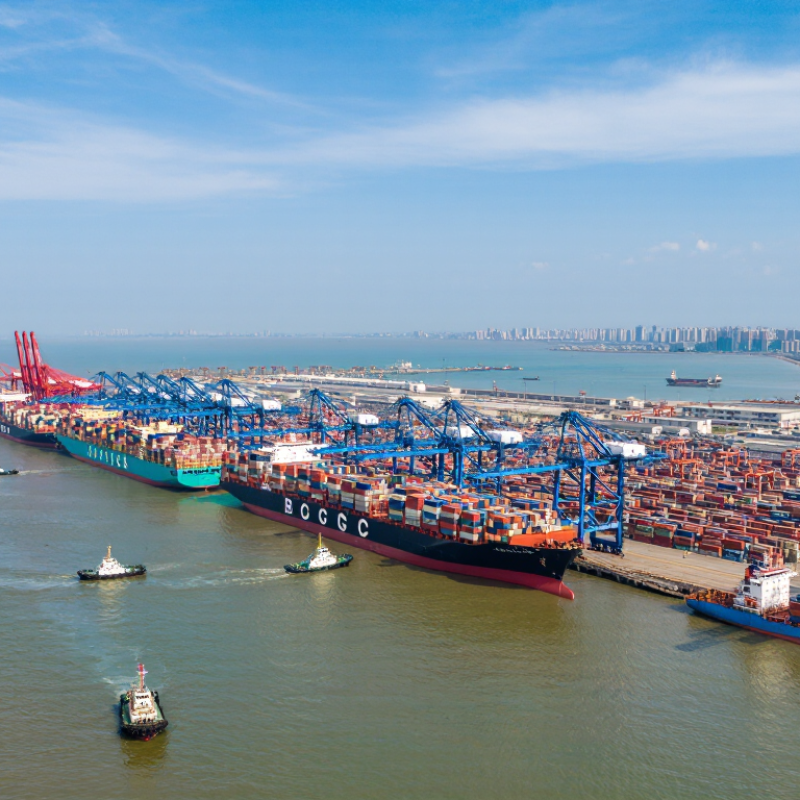
China’s role in global maritime trade extends beyond moving finished goods overseas. Its coastal ports connect manufacturing regions with suppliers, customers, and inland transport networks. At a container terminal, cranes transfer steel boxes between ships, trucks, and rail cars. Each handoff depends on accurate schedules and clear cargo information. Small delays matter.
This scale supports trade in machinery, electronics, household goods, and raw materials. China is also a major shipbuilding center, contributing vessels that serve routes around the world. The maritime system includes ports, shipyards, freight services, and customs processes; no single part explains its reach. For businesses, reliable transit times can matter as much as a low quoted rate. A missed connection may leave containers waiting for the next sailing.
The picture is not perfectly tidy. High cargo volumes can strain terminals, while longer routes and port congestion make schedules less predictable. Shipping also faces pressure to reduce fuel use and emissions, but progress varies across vessel types and routes. Trade planners should compare total transit time, port access, and contingency options, rather than judging a route by distance alone. Even careful forecasts can be wrong. That uncertainty deserves more attention.
