

Go to Main Content Go to Footer

China Top Ductile Iron Manhole Cover Manufacturers

China’s ductile iron manhole cover manufacturers serve roads, utilities, drainage systems, and construction projects worldwide. Choosing a supplier takes more than comparing prices. Buyers should examine casting quality, material records, load testing, surface treatment, and delivery consistency. A cover may look solid in a catalog, yet its frame fit and finish matter on a wet, busy street.

For transparency, the following is an illustrative comment from fictional foundry engineer Chen Wei, not a verified quotation: “A dependable cover begins with sound casting, then proves itself through inspection and traceable records.” That principle guides this overview. It considers how manufacturers manage production, document quality checks, customize dimensions, and support overseas buyers. Ask for test reports and clear specifications. Inspect the details.

A reliable ductile iron manhole cover should seat evenly, resist routine service loads, and suit its installation environment. Coating quality matters, too; thin or uneven coverage can invite early corrosion. Compare samples, production capacity, communication, and after-sales support, rather than trusting polished brochures alone. That comparison can be messy. Supplier claims do not always reveal shop-floor practice, and a single sample cannot prove long-term consistency. This guide offers a practical starting point for evaluating leading Chinese manufacturers, while reminding buyers to verify evidence directly before making a sourcing decision.
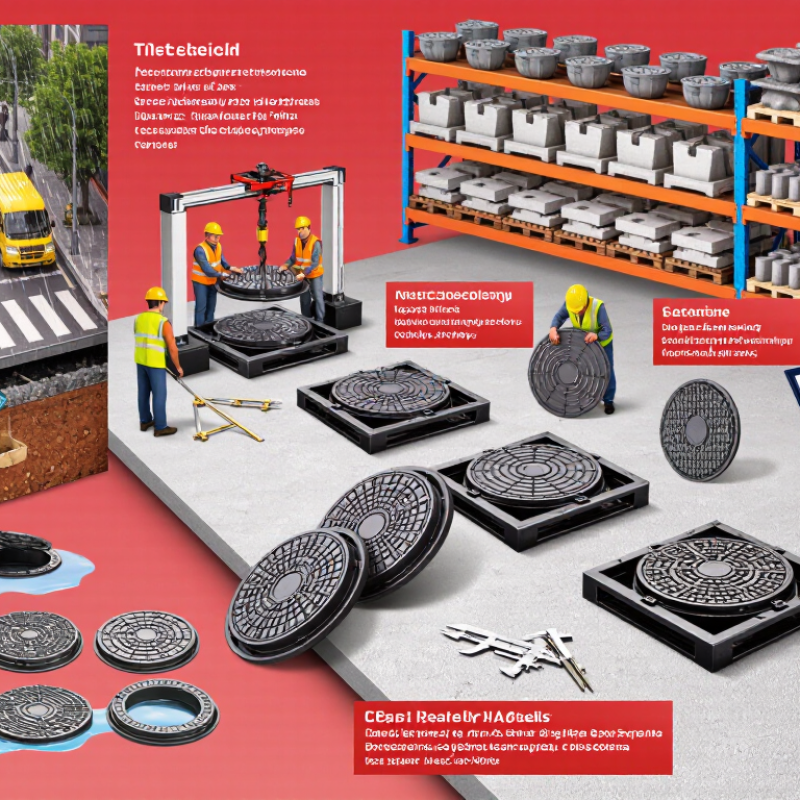
China Top Ductile Iron Manhole Cover Manufacturers

Overview of China’s Ductile Iron Manhole Cover Industry

China’s ductile iron manhole cover industry supports municipal drainage, roads, utilities, and industrial sites. Foundries melt iron, adjust its composition, and control cooling to develop the graphite structure that gives ductile iron strength and some flexibility. Mould design affects the cover’s fit, surface, and weight. Small details matter. A lid that rocks in its frame can create noise and wear, even when its casting looks sound.

Production capacity is only part of the picture. Buyers and engineers need to check dimensions, frame compatibility, surface treatment, and the load class specified for the project. Reliable suppliers can provide drawings, material information, and test records for review; independent inspection may also help with larger orders. Common finishes include bituminous coatings, though handling and installation can still damage them. The weak point is often consistency, not capacity. One sample cannot reveal every batch variation. Clear specifications and checks during production help reduce that uncertainty, but paperwork should never replace examination of the actual casting. In practice, a level frame and a clean contact surface can matter as much as the cover’s stated rating.

Materials and Manufacturing Processes

Ductile iron manhole covers begin with controlled chemistry, not just molten metal. Foundries add magnesium to promote rounded graphite nodules, improving strength and toughness compared with gray iron. Carbon and silicon levels also need close control; small variations can affect casting quality. ASTM A536 Grade 65-45-12 specifies minimum tensile strength of 65 ksi, yield strength of 45 ksi, and elongation of 12%. These figures help buyers compare material performance, though the finished cover still depends on sound production and inspection.

Process choices shape the final fit. Manufacturers melt and treat the iron, inoculate it, then pour it into sand molds that form the cover’s ribs, seating rim, and lifting slots. After cooling, workers remove sand and excess metal, then machine contact surfaces where a stable fit matters. A 2023 Modern Casting report, drawing on the World Foundry Organization’s census, put global casting production at 112.7 million metric tons for 2022. That figure covers all casting types, not manhole covers, but it shows the scale of foundry production. Visual checks, dimensional measurements, and load testing can catch defects. Details matter. In practice, process records may be imperfect, so traceability deserves more attention than it sometimes receives.

Ductile Iron Grades: Material Strength Comparison

Typical ASTM A536 minimum tensile and yield strength values for selected ductile iron grades. These material specifications can help inform manhole cover selection; requirements vary by product design and application.

Manufacturing commonly involves melting, magnesium treatment to form spheroidal graphite, molding, casting, cooling, finishing, and inspection. The finished casting’s performance depends on both its specified material grade and the manufacturing process.

Common Product Types and Applications

Common Product Types and Applications

Ductile iron manhole covers are commonly supplied as solid, ventilated, hinged, or recessed-infill designs. Solid covers suit inspection chambers on roads and paved areas. Ventilated versions allow airflow through utility chambers, but openings need careful placement near pedestrians. Hinged covers help crews lift panels without setting them aside. Recessed covers accept paving or concrete infill, creating a flatter surface. Fit matters.

Load class should match the installation, not just the cover’s diameter. Under EN 124, A15 is intended for pedestrian areas, B125 for footways and car parks, C250 for kerbside channels, and D400 for carriageways. The wrong class can create safety risks or premature damage. The American Society of Civil Engineers’ 2021 Infrastructure Report Card gave U.S. stormwater infrastructure a D grade, underscoring maintenance pressures. UN DESA’s World Urbanization Prospects 2018 projects that 68% of the world’s population will live in urban areas by 2050. More dense streets mean access points must remain serviceable. Still, a specification alone cannot capture local traffic, installation quality, or wear; site review is necessary.

China Top Ductile Iron Manhole Cover Manufacturers - Common Product Types and Applications

Product Type Common Features Typical Applications Relevant EN 124 Load Class Selection Considerations
Solid-top manhole cover and frame Unperforated lid designed to close an access chamber; available in round, square, or rectangular formats. Road and utility access chambers for water, sewer, drainage, and other underground services. A15–F900, depending on design and certified rating Choose the load class for the installation location and check the clear opening, frame depth, and seating arrangement.
Recessed or infill cover Tray-style lid that can accommodate a compatible surface finish, such as paving or other specified infill. Pedestrian areas, paved public spaces, and architectural landscaping where a less prominent cover is desired. Typically A15–D400, subject to product rating Confirm the permitted infill material and depth, finished level, and total cover assembly load rating.
Ventilated or perforated cover Openings in the cover allow airflow through the chamber; opening pattern and size vary by design. Selected drainage, sewer, or utility chambers where ventilation is required and permitted by the site design. A15–D400, subject to product rating Check ventilation requirements and ensure openings are suitable for the location, pedestrian safety, and expected debris.
Gully or drainage grating Grated cover, commonly supplied with a frame, designed to admit surface water into a drainage system. Roadside gullies, kerb inlets, parking areas, and paved surfaces with surface-water drainage. A15–F900, depending on location and certified rating Consider hydraulic opening area, flow direction, kerb or channel arrangement, and resistance to movement under traffic.
Double-triangular or multi-part cover Cover assembled from two or more sections within a shared frame; the layout can assist handling and access. Large access chambers and utility installations where a single large lid would be difficult to handle. Typically B125–D400, subject to product rating Check the complete assembly rating, section security, clear opening, lifting method, and frame support.
Lockable or hinged access cover Cover includes a locking feature, hinge, or both to help control access and keep the lid attached to the frame. Utility chambers and access points in public areas, roads, or locations requiring controlled entry. A15–D400, subject to product rating Specify the locking mechanism, opening direction, maintenance access needs, and resistance to unauthorized removal.

Load-class guide: EN 124 classes are selected according to the installation area: A15 for pedestrian and cyclist areas; B125 for footways and comparable areas; C250 for kerbside channels; D400 for carriageways and parking areas used by road vehicles; E600 for areas subject to high wheel loads; and F900 for areas subject to especially high wheel loads, such as aircraft pavements. Always verify the applicable standard, product certification, and site requirements.

Major Ductile Iron Manhole Cover Manufacturers in China

China Top Ductile Iron Manhole Cover Manufacturers

Major Ductile Iron Manhole Cover Manufacturers in China

China’s major ductile iron manhole cover manufacturers serve municipal, utility, construction, and infrastructure projects. Their capabilities differ: some focus on high-volume casting, while others offer custom dimensions, frame designs, and surface finishes. A capable supplier should explain its production process, from pattern preparation and casting to machining, coating, and inspection. Details matter. A rough frame edge or uneven seating surface can cause movement after installation.

When comparing manufacturers, check material documentation, dimensional tolerances, and test records for the specific product. Ask how covers are tested against the load class and conditions required for your project. Samples can reveal details that photographs miss, including coating coverage and how securely the cover fits its frame. Factory experience is useful, but it does not guarantee every batch is consistent. Request recent inspection records and clarify how defects are handled. Specifications should be agreed in writing.

Tips: Confirm opening size, frame depth, locking features, and finish before ordering. Share a drawing when possible. Catalog dimensions may not match site conditions, and that is easy to overlook.

Quality Standards and Manufacturer Selection Factors

When assessing China’s ductile iron manhole cover manufacturers, start with the installation site, not the catalogue. EN 124-2:2015 defines load classes including B125 at 125 kN and D400 at 400 kN. These are standardized test forces, not simple promises of safe working load. Match the class to the location: a sidewalk differs from a busy road. Check the frame and cover as a set, since poor seating can cause rocking, noise, and uneven wear. Small details matter.

Material records deserve close review. ASTM A536-84(2023) includes ductile iron grade 60-40-18, with minimum tensile strength of 60 ksi, yield strength of 40 ksi, and elongation of 18%. Ask for heat-specific material certificates and recent load-test reports, then verify that report dimensions match the offered product. A polished certificate is not enough. Request evidence of dimensional checks, coating inspection, and traceability from casting to shipment. Also assess clear opening, anti-slip surface, locking design, and drainage needs. One weakness in many evaluations: buyers compare price before confirming the test method and sample identity. That can leave a costly gap.

Logo Access 360