


China Top 10 Industrial Managed PoE Switch Manufacturers?
An Industrial Managed Poe Switch does more than connect devices. It delivers power and data across factory networks, while giving operators tools to monitor traffic, separate network segments, and respond to faults. On Ethernet’s broader role, co-inventor Bob Metcalfe has called it “the plumbing of the Internet.” That image fits industrial networks: cables and switches may be out of sight, but a weak link can stop a camera, access point, or control device from communicating. Small details matter.
Choosing a manufacturer takes more than comparing port counts. Buyers should examine operating-temperature ratings, enclosure options, surge protection, power budgets, redundancy features, management interfaces, and documented test results. A dusty cabinet beside a production line is not a quiet office environment. Nor does a long list of features prove reliability. Ask how products are tested, what support is available, and whether specifications match the intended site. Those questions can expose gaps that a polished brochure might hide.
This overview of China’s top 10 manufacturers is a starting point, not a universal ranking. Product lines and capabilities change, and supplier claims deserve independent review. Some comparisons will remain imperfect. That is worth admitting. The most suitable choice depends on the devices, installation conditions, maintenance skills, and network design at each facility. Use the list to narrow the field, then verify current datasheets and service terms before making a decision.
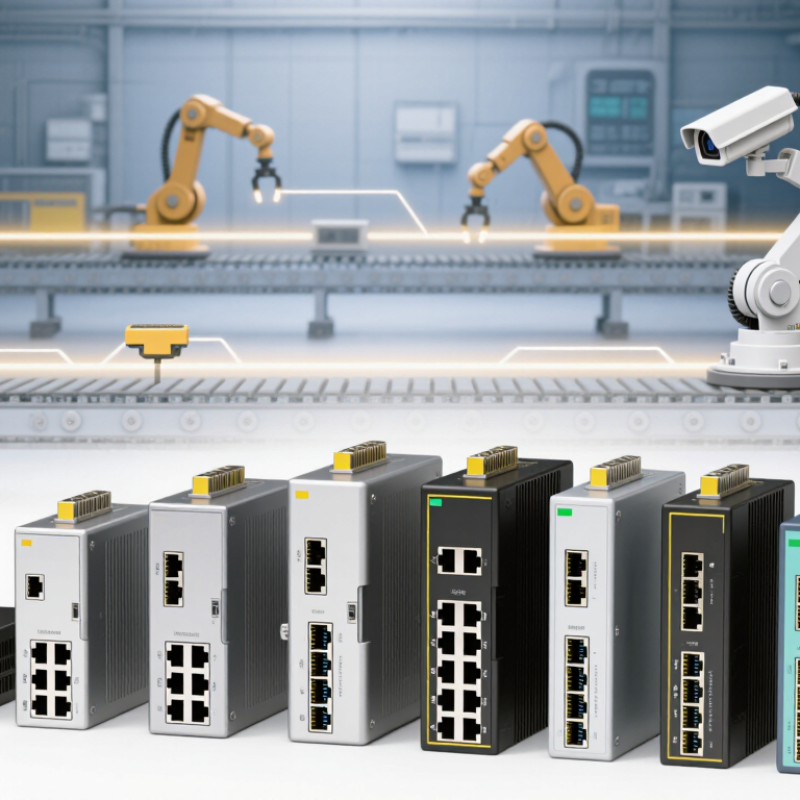
Industrial Managed PoE Switches: Functions and Key Specifications
Industrial managed PoE switches combine Ethernet connectivity with power delivery for cameras, wireless access points, and sensors. They can reduce separate power cabling in control cabinets and across factory floors. Useful management features include VLANs, QoS, port mirroring, and SNMP monitoring. These help operators separate traffic, prioritize time-sensitive data, and diagnose faults remotely. Keep it practical.
Port capacity matters, but total PoE budget matters just as much. IEEE 802.3af, 802.3at, and 802.3bt support different power levels, while cable length and device demand affect what reaches an endpoint. Check both the per-port limit and the switch’s overall budget. A unit with many PoE ports may not power every device at full load. That detail is easy to miss.
For harsh environments, review the specified operating temperature, shock and vibration ratings, and mounting method, such as DIN rail. Dual DC inputs can improve power resilience, while ring redundancy can help restore connectivity after a link failure. Confirm the recovery behavior rather than relying on a protocol name alone. Security features such as access controls, HTTPS, and event logs also deserve attention. A spec sheet can look perfect; real wiring conditions still surprise you.
