


China Best Karting Kart Manufacturers for Global Buyers
Choosing the right Karting Kart manufacturer requires more than comparing prices or browsing polished factory photos. Global buyers need evidence of engineering quality, production consistency, safety practice, and dependable after-sales support. These details matter when a fleet faces repeated braking, vibration, heat, and demanding rental schedules.
Industry reports show why this market deserves careful evaluation. Grand View Research estimates that the global go-kart market will continue expanding through the decade, supported by leisure parks, racing facilities, and experience-based entertainment. Fortune Business Insights also identifies indoor entertainment centers and organized motorsport as important growth drivers. However, these reports use different market definitions. Their figures should guide research, not replace supplier verification.
A useful expert perspective comes from Dino Chiesa, a respected karting engineer and former CRG team manager. He has described karting as “the purest form of motorsport.” That purity exposes weak design quickly. Poor steering alignment, inconsistent welds, or fragile bodywork become visible after only a few operating days.
For international purchasers, the strongest manufacturers combine tested chassis geometry, reliable engines or electric systems, accessible spare parts, and documented quality control. They should explain battery safety, maintenance intervals, warranty coverage, and compliance with destination-market requirements. Factory audits and sample testing remain essential. A brochure cannot prove durability.
This guide examines leading China-based Karting Kart manufacturers for global buyers. It focuses on measurable capabilities, export experience, customization, technical communication, and long-term operating value. Some rankings may remain subjective. That limitation deserves honesty. Supplier performance can change, and independent verification is still necessary before signing a large order.
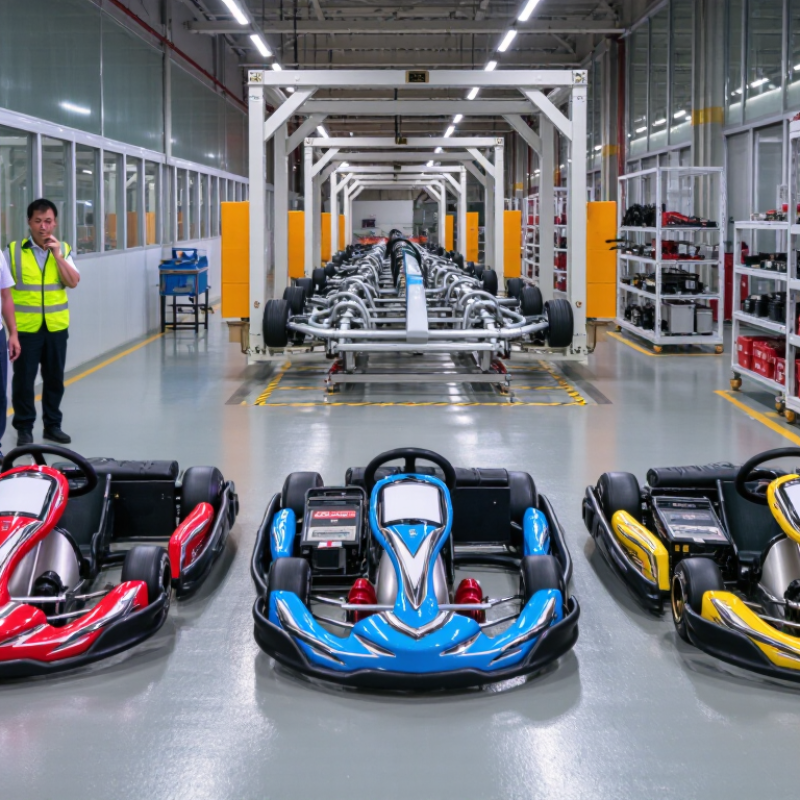
Karting Manufacturers in China: Industry Scope and Product Categories
China’s karting manufacturing sector covers OEM production, custom assembly, components, and export support. Product categories include electric rental karts, gasoline racing karts, youth models, off-road karts, and track-control systems. Electric models increasingly use lithium battery packs, regenerative braking, and programmable speed limits. Racing versions usually require stronger frames, adjustable pedals, hydraulic brakes, and replaceable body panels.
Market estimates differ. Fortune Business Insights reported continued growth in the global go-kart market through 2030, while Grand View Research identified electric propulsion as a major growth direction. These reports combine recreational, commercial, and racing applications, so buyers should read their definitions carefully. China’s strength is manufacturing depth. A single supplier may coordinate welding, powder coating, wiring, battery integration, and spare parts. The categories overlap. That matters.
Tips: Ask for frame material, motor rating, battery chemistry, charging time, brake-test records, and spare-part availability. Request sample inspection before volume production. Check whether published range data reflects track conditions or laboratory testing. I would not trust unusually high speed claims without load, slope, and endurance results. Safety documentation should match the destination market and operating environment. Small details matter. A loose connector can stop an entire rental fleet.
