How to Choose the Best Rainfall Shower Head
A rainfall shower can make an ordinary bathroom feel calmer. Water falls across your shoulders instead of striking one small spot. Yet a beautiful spray is only part of the decision. The best choice should suit your plumbing, ceiling height, and daily routine. A broad 10- to 12-inch showerhead may feel enveloping, but it can reveal weak water pressure. Small details matter. Check the product’s flow-rate information and installation requirements before buying. A handheld option can help rinse shampoo or clean the tub, though it changes the minimalist look. Bigger is not always better.
This guide explains how to choose a Shower Head Rainfall model by comparing coverage, materials, mounting style, and upkeep. It distinguishes ceiling-mounted and wall-mounted designs, which suit different bathroom layouts. Look for durable finishes, easy-to-clean nozzles, and clear warranty terms—not just polished product photos. If hard water leaves chalky spots on your current fixtures, nozzle maintenance deserves extra attention. No single model works for everyone. That is worth remembering. Even a careful comparison cannot predict exactly how a spray will feel in your own shower. Use the details ahead to match features to your room, budget, and expectations. Before ordering, verify dimensions and compatibility with the manufacturer or a qualified installer.
How Rainfall Shower Heads Differ from Standard Shower Heads
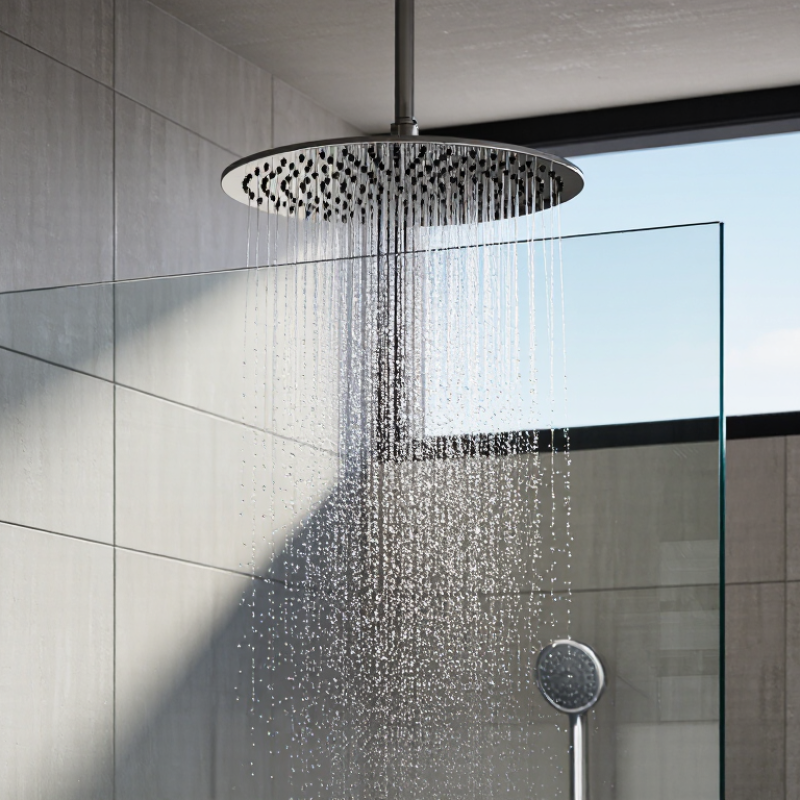
A rainfall shower head spreads water across a wider face, usually from an overhead position. Its droplets fall gently over the shoulders and head, creating a less focused spray. A standard shower head often directs water from a wall-mounted arm, with a narrower pattern that can be aimed at specific areas. The contrast is noticeable. One feels broad and calm; the other can feel more direct.
A wide spray does not automatically mean stronger water pressure. The perceived force depends on the head’s design, household pressure, and flow rate. Some rainfall models feel soft, especially if the spray plate is large or the water supply is modest. Standard heads may feel more forceful because their smaller jets concentrate the water. Check product specifications, but remember that real performance can vary with your plumbing.
Placement also changes daily use. An overhead rainfall head may need enough ceiling or wall height to leave comfortable space above your head. A standard head is often easier to adjust, and some designs include a handheld sprayer for rinsing hair or cleaning the tub. Hard water can leave mineral spots on either type, though a broad plate may take longer to wipe down. It is tempting to choose by appearance alone; that deserves a second look. Consider who uses the shower, how easily the controls can be reached, and whether the spray suits your routine.