


How to Choose an Inverter Voltage Stabilizer
Choosing an Inverter Voltage Stabilizer starts with understanding what your equipment actually needs. A refrigerator in a warm workshop, a desktop computer beside a noisy motor, and a small office network face different risks. Note the appliance ratings, the site’s input-voltage range, and the load during startup. A label alone may not tell the whole story.
A fictional power-quality specialist, Elena Morris, offers this practical reminder: “Match the stabilizer to the real load, not just the number on the box.” Treat that as an illustrative quotation, not a verified statement from a real expert. Check rated capacity, output-voltage accuracy, response time, waveform compatibility, and overload protection. Also confirm that the unit suits your local supply and installation conditions. Small details matter. A motor can draw much more current at startup than during steady operation.
This guide explains how to compare those specifications without treating one feature as a magic fix. It also considers ventilation, service access, and the space available near the equipment. A stabilizer cannot correct every wiring fault or replace sound installation practices. That distinction is easy to miss. Real-world conditions vary, and product claims deserve careful checking against the manual and the connected load. The best choice is usually the one that fits the measured problem, leaves sensible capacity headroom, and can be maintained when something goes wrong. No single model suits every site. That is worth remembering.
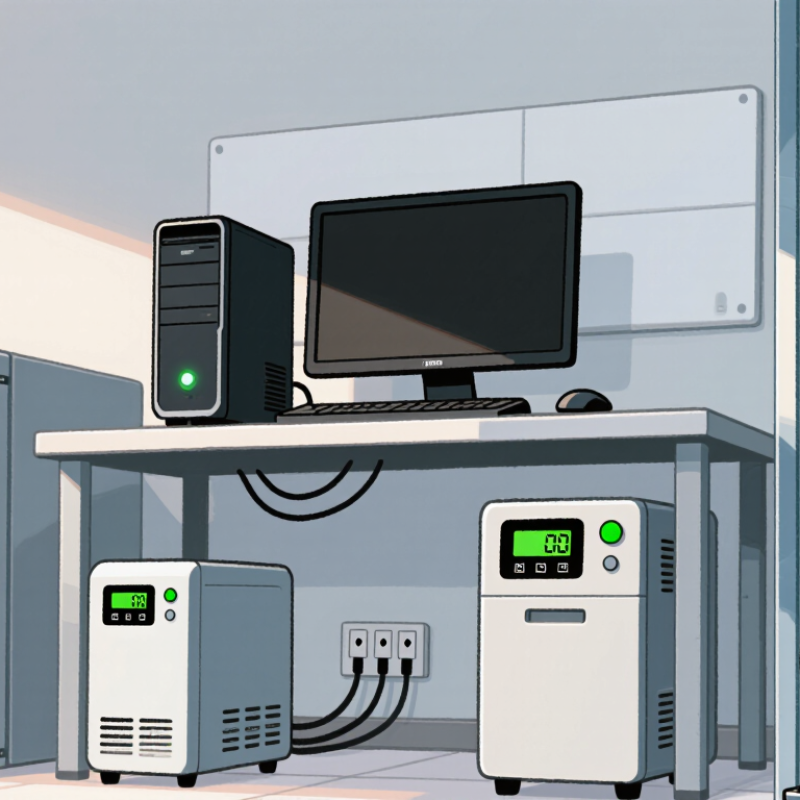
Identify the Load and Its Voltage Requirements
Begin with the load, not the stabilizer. Read each appliance nameplate and note its rated voltage, frequency, watts or VA, and power factor where listed. Add the loads that may run at the same time, not every device in the building. Small details matter. A pump, refrigerator, or air conditioner may draw a brief starting surge that exceeds its running demand. Use the manufacturer’s starting-current data when available, and check that the stabilizer can handle both continuous and surge loads.
Separate sensitive electronics from heavy motor loads when assessing requirements. A computer may need steady voltage, while a pump may need extra capacity during startup. The U.S. Department of Energy’s Improving Motor and Drive System Performance: A Sourcebook for Industry estimates that motor-driven systems account for about 54% of electricity use in U.S. manufacturing. That figure is a useful reminder: motor loads can be substantial, though a household’s actual needs depend on its equipment.
Check the equipment’s permitted input-voltage range against voltage measured where it will operate. Record low and high readings during normal use; a single reading can miss evening dips. Also confirm the stabilizer’s output voltage, frequency compatibility, and overload protection. If the nameplate is unclear, don’t guess. Ask a qualified electrician to verify the load and starting current.
How to Choose an Inverter Voltage Stabilizer - Identify the Load and Its Voltage Requirements
Use this table as a planning guide, not as a substitute for the appliance nameplate or manual. Actual input-voltage limits, power factor, and starting current vary by model. Check that the stabilizer supports the required output voltage, frequency, phase, continuous load, and startup surge.
| Load type | What to check on the load | Typical operating characteristics | Voltage requirement to verify | Stabilizer selection guidance |
|---|---|---|---|---|
| Resistive heater or kettle | Rated watts (W), rated voltage, and whether more than one heating element can run at once. | Usually draws close to its rated power while heating; generally has little motor-like startup surge. | Match the appliance’s stated voltage and frequency. A 220–240 V appliance must not be supplied with an incompatible output voltage. | Size for the combined running load in watts or volt-amperes (VA), with suitable continuous capacity. Allow for other loads operating at the same time. |
| LED lighting | Total input watts of all lamps and drivers; check whether the drivers are dimmable. | Low running power per lamp; electronic drivers may have brief inrush current when switched on. | Read the input-voltage range printed on each lamp or driver. Some are single-voltage; others accept a wider range. | Add the loads that may be on together. Check the stabilizer’s compatibility with electronic loads and any dimmer or control system. |
| Computer, monitor, or router | Power-supply input voltage range, maximum input current, and any power-factor information on the label. | Electronic power supplies can have short inrush current. Actual power draw may be well below the adapter’s maximum rating. | Use the range printed on the power supply; do not assume all electronics accept 100–240 V. | Check continuous VA capacity and output-voltage accuracy. For sensitive equipment, also verify output waveform and transfer behavior if the unit includes backup power. |
| Refrigerator or freezer | Compressor rated current or watts, voltage range, and any specified starting current. | The compressor motor can draw substantially more current during startup than during normal running. | Follow the appliance nameplate and manual, including frequency requirements and permitted voltage limits. | Select a unit that supports both the running load and compressor-start surge. Confirm the stabilizer’s overload duration and recovery behavior. |
| Air conditioner | Rated input current or power, phase, frequency, and whether the unit is inverter-driven or fixed-speed. | Fixed-speed compressors can have a high starting current. Inverter-driven models vary their operating power, but still have defined input limits. | Check the exact voltage range and supply configuration on the outdoor-unit nameplate or manual. | Use the manufacturer’s recommended stabilizer capacity where provided. Otherwise, size from rated input and verified startup requirements—not cooling capacity alone. |
| Water pump | Motor voltage, phase, rated current, power, and starting method. | Motor starting current can be several times the running current; the actual value depends on the motor and starting method. | Match the pump’s nameplate voltage, frequency, and single- or three-phase supply. | Check the stabilizer’s motor-starting or surge rating and how long it can sustain that surge. Consider other loads that start at the same time. |
| Workshop motor or compressor | Rated current, phase, power factor if stated, duty cycle, and starting or locked-rotor current. | Starting demand may be high, and repeated starts or heavy duty can increase thermal stress. | Verify the motor’s permitted voltage range, frequency, and connection configuration. | Choose by motor-starting requirements and duty rating. Seek qualified guidance for large motors or three-phase installations. |
