How to Choose a Type 1 or Type 2 Charging Cable?
Choosing the right Type 1 or Type 2 charging cable can seem simple, but connector details matter. A cable that fits your car may not suit every public charger, wall box, or electrical supply. The correct choice depends on your vehicle inlet, charging station socket, region, and required power rating.
In practical use, Type 1 connectors are commonly associated with many vehicles from North America and Japan. Type 2 connectors are widely used across Europe and other markets. However, regional patterns are not perfect. Always check the vehicle handbook and charger label before purchasing. A Type 1 Type 2 Charging Cable should match the connector on both ends, unless an approved adapter is specifically suitable for the system.
Power ratings deserve close attention. A cable rated for 32 amps may support faster charging than a 16-amp version, but the vehicle may limit the actual speed. Cable length also affects daily convenience. A five-metre cable can reach a driveway wall box, while a shorter cable may leave awkward tension around the car. Weather-resistant insulation, secure locking, and clear safety markings are valuable details, especially outdoors.
Do not choose by appearance alone.
Real-world charging is less predictable than product pages suggest. Check compatibility, electrical ratings, and certification information from reputable manufacturers. If your vehicle, charger, or local installation is unusual, ask a qualified electrician or the vehicle manufacturer. A careful decision may take a few extra minutes, but it can prevent poor fit, wasted money, and unsafe charging conditions.
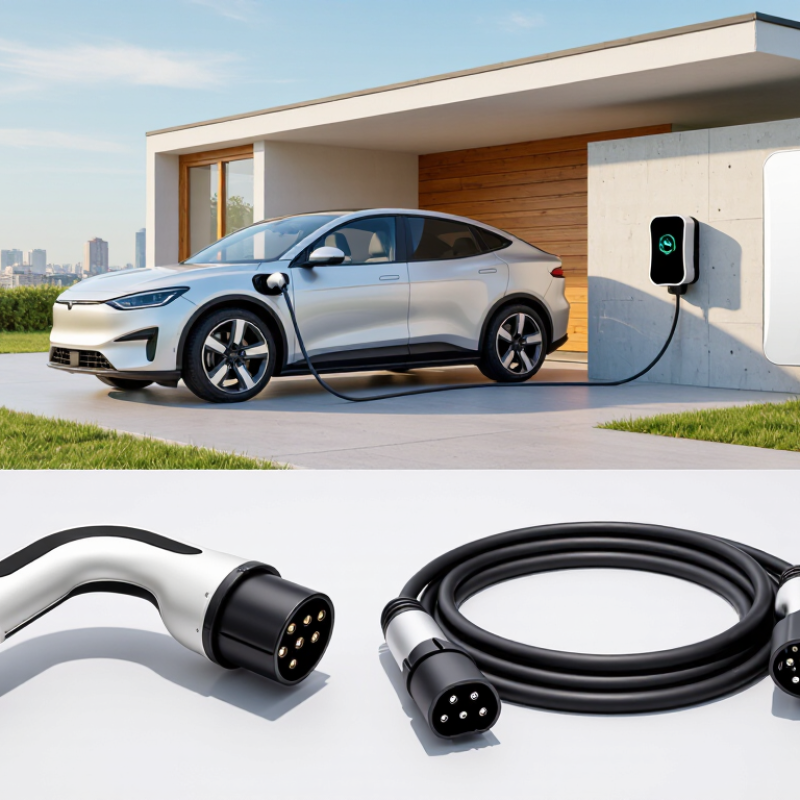
Charging Cable Standards: Type 1 and Type 2 Explained
Type 1 and Type 2 are AC charging standards, not simply different plug shapes. Type 1 follows SAE J1772 and is common in North America and Japan. It usually has five pins and supports single-phase charging. Type 2 follows IEC 62196-2 and is widely used across Europe and other regions. Its seven-pin design can support single-phase or three-phase AC charging.
The vehicle inlet must match the cable connector. A Type 1 car generally needs a Type 1-to-Type 2 cable when using a Type 2 charging station. Check both ends carefully. A loose fit, damaged latch, or exposed pin can interrupt charging and create a safety concern. The cable’s current rating also matters. A 32-amp cable cannot make a vehicle charge faster than its onboard charger allows. The charging station sets another limit.
Cable length changes daily convenience. A five-metre cable reaches many driveway sockets, while a longer cable helps when parking is awkward. However, extra length adds weight and storage trouble. Do not assume every public socket supports the same power. Confirm the vehicle manual, station label, and cable specification. Adapters can be useful, but uncertified products deserve caution. Standards reduce confusion, yet real installations are not always perfect. Check the details twice.