


7 Tips for Choosing a Wheelchair Accessible SUV?
Choosing a wheelchair accessible SUV starts with the person who will use it, not the vehicle brochure. The U.S. Department of Transportation’s Bureau of Transportation Statistics reported that 25.5 million Americans aged five and older had travel-limiting disabilities, based on the 2017 National Household Travel Survey. That figure makes one point clear: accessible travel needs are not rare. They are personal, too. A chair’s dimensions, transfer method, and daily equipment can change which vehicle works.
Physicist and disability advocate Stephen Hawking said, “Disability need not be an obstacle to success.” His words speak to independence, though they do not replace practical vehicle advice. For this guide, we’ll look at seven considerations: entry height, door and ramp layout, interior space, wheelchair securement, seating and transfers, safety features, and long-term service support. Measure the chair, doorway, and garage before arranging a test drive. Small details matter.
A low ramp angle may ease entry. A narrow turning space may undo that benefit. Ask a qualified mobility-equipment dealer to demonstrate the conversion with the actual wheelchair and user, and check how the SUV handles everyday items, such as a folded stroller or grocery bags. Compare the full cost, including conversion, maintenance, and warranty coverage. No checklist can guarantee a perfect fit. I would still test the vehicle in person; specifications alone can feel reassuring, but they may miss a difficult transfer or awkward reach.
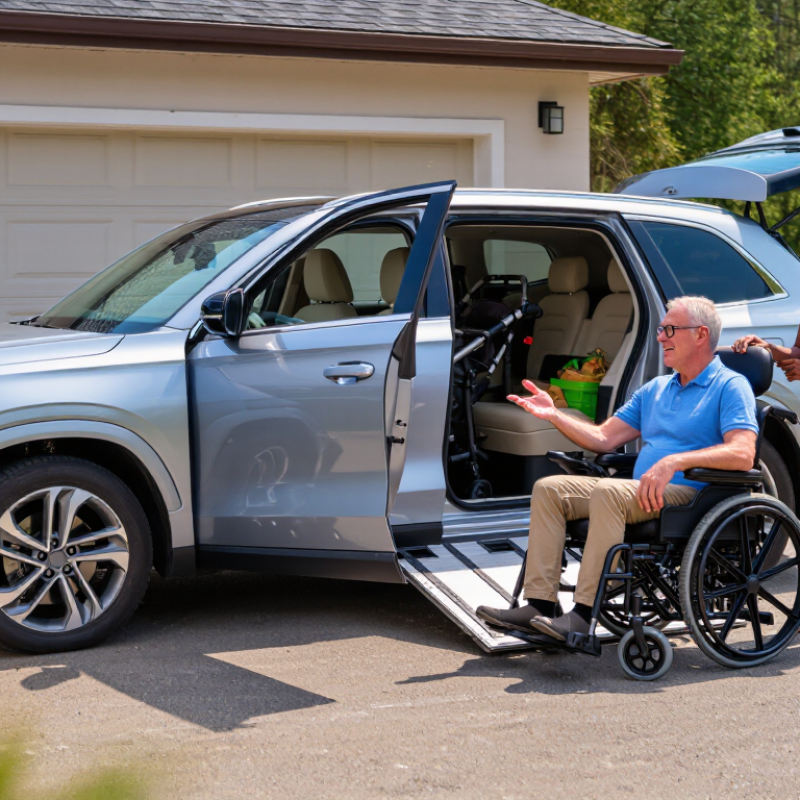
Assess Mobility Needs and Daily Travel Requirements
Choosing an accessible SUV starts with the person’s real routine, not a feature checklist. Note how they transfer, where they sit, and whether they use a manual or powered wheelchair. Measure the chair’s overall width and height, including wheels and accessories. Then compare those figures with the vehicle’s doorway, interior space, and ramp or lift capacity. Measurements can be easy to get wrong, so confirm them with a qualified mobility specialist and test the actual chair when possible.
Think through a typical day. Does the passenger travel alone with a caregiver, or ride with family and groceries? A bulky power chair may need more turning space and securement room than expected. Check whether the person can enter comfortably, sit with suitable headroom, and reach essential controls. Small details matter. A driveway slope, a narrow parking stall, or a low garage ceiling can complicate everyday use. Consider the longest regular trip, too; comfort and safe wheelchair securement matter more when travel lasts an hour. Needs may change over time, and planning for that is sensible. Still, it is easy to overestimate future needs and overlook today’s routine. Write down the awkward parts of current trips before comparing vehicles.
| Tip | What to Assess | Daily Travel Questions | What to Check in the SUV | Practical Decision Guide |
|---|---|---|---|---|
| 1 | Identify who will use the vehicle | Who travels most often: the wheelchair user, a caregiver, or both? How many other passengers usually ride along? | Check seating positions, passenger capacity after any conversion, and whether the wheelchair user can travel comfortably in the intended position. | List the usual occupants and seating needs before comparing vehicles. Confirm the final passenger capacity for the specific converted vehicle. |
| 2 | Measure the wheelchair and mobility equipment | Is the chair manual or powered? Do you also carry a charger, walker, oxygen equipment, or other mobility aids? | Measure the chair’s overall width, height, and length, including accessories. Compare those measurements with the accessible entry and interior space. | Use the actual equipment measurements rather than relying on a general wheelchair size. Have the vehicle and conversion checked for fit before purchase. |
| 3 | Consider entry and exit needs | Will the user remain seated in the wheelchair during travel, or transfer to a vehicle seat? Can the user enter and exit independently? | Evaluate the entry opening, ramp or lift operation, interior clearance, and the space needed for a caregiver to assist. | Test the complete entry and exit routine with the user and caregiver. A suitable setup should work comfortably in the places where the vehicle will be parked. |
| 4 | Match the vehicle to typical destinations | Are regular trips to work, school, medical appointments, shops, or community activities? Are parking spaces often tight? | Check the vehicle’s overall length and width, turning and maneuvering needs, and whether the ramp or lift can be deployed in common parking situations. | Test access at a typical driveway, parking space, or pickup area. Consider where the ramp or lift needs room to operate. |
| 5 | Estimate trip frequency and distance | How many trips are made on a typical day or week? Are longer journeys common, and are charging or rest stops part of the routine? | Consider fuel or energy use, driving range where applicable, storage for travel equipment, and the convenience of loading for frequent trips. | Write down a typical week of travel. Choose a vehicle that can handle regular journeys without making routine loading, refueling, or charging difficult. |
| 6 | Check comfort and securement | How long are typical rides? Does the user need a particular seating posture, extra headroom, or access to controls and personal items? | Ask a qualified mobility-vehicle professional to demonstrate the wheelchair securement system and occupant restraint, and to confirm compatibility with the chair. | Test comfort on a representative journey. Confirm that the wheelchair and occupant can be secured according to the system instructions. |
| 7 | Plan for caregivers and changing needs | Who will drive and assist? Could the user’s mobility, equipment, or travel routine change over time? | Check that drivers can operate the ramp or lift and securement equipment, and ask how servicing, repairs, and equipment changes are handled. | Have every regular driver practice the process. Compare the total ownership and maintenance needs, and allow for reasonable future changes. |
Related Posts
-

What Are the 7 Best Wheelchair Accessible Cars?
-

Why Choose a Wheelchair Accessible SUV for Global Buyers?
-

Top 10 Best Wheelchair Accessible SUVs to Buy?
-

Top Mobility Vans for Global Buyers?
-

Innovations in Accessible Transportation for 2025 Empowering Mobility with Wheelchair Lifts
-

Rising Above Tariffs How Chinese Made Best Handicap Vans Thrive in a Competitive Market
