How to Choose Flex Neon Strip Lights in 2026?
Choosing a Flex Neon Strip in 2026 requires more than comparing brightness and price. The market is expanding, but product quality remains uneven. Grand View Research reports that the global LED lighting market reached approximately USD 81 billion in 2023, with continued growth expected through 2030. However, this broader figure does not represent every neon-style strip equally. Buyers still need to inspect construction, certification, and real operating performance.
Energy efficiency matters. The U.S. Department of Energy states that LED products can use at least 75% less energy than incandescent lighting and last considerably longer. Yet efficiency alone does not guarantee a reliable installation. Check the strip’s wattage per metre, operating voltage, heat dissipation, and expected lumen output. A bright sample on a showroom wall may perform differently inside a narrow aluminium channel. It may also show uneven colour after several months.
Look for a clear IP rating, especially around kitchens, storefronts, balconies, or covered outdoor signs. Review the bend direction and minimum bending radius before cutting. Confirm whether the power supply matches the total load, including voltage-drop losses on longer runs. UL, CE, RoHS, and relevant local approvals can strengthen confidence, but labels should be verified rather than assumed. A manufacturer’s technical sheet, testing report, warranty terms, and installation guidance reveal more than attractive product photography. Some choices remain subjective, too. Colour temperature, diffusion, and silicone finish should be judged under the actual viewing conditions, not only through online images.
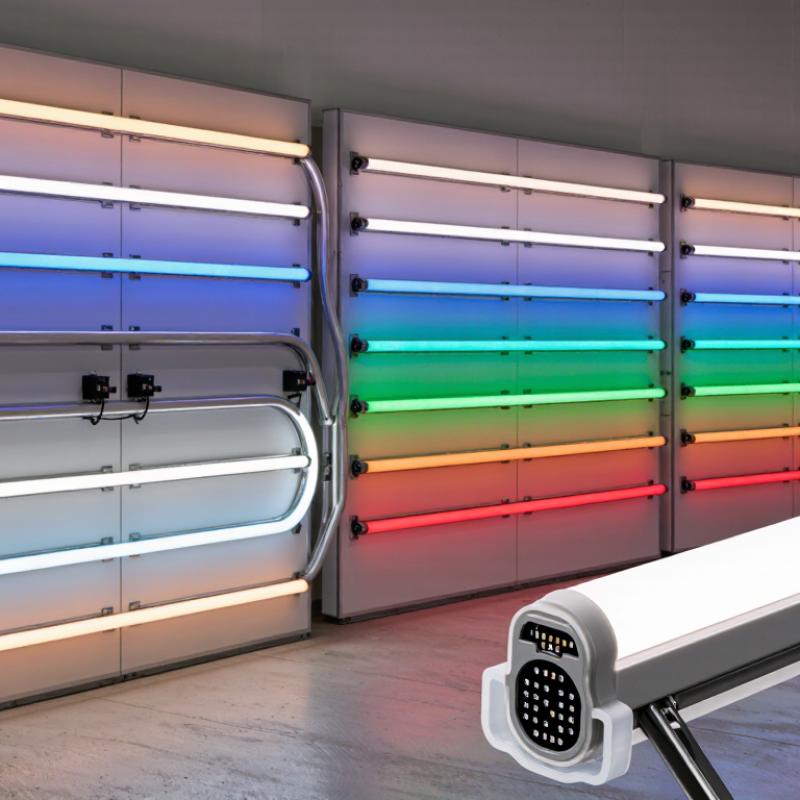
What Flex Neon Strip Lights Are and How They Work
Flex neon strip lights are flexible LED assemblies sealed inside a silicone or similar diffuser. Unlike bare LED tape, they produce a continuous neon-like line with fewer visible light spots. Electricity reaches small LEDs mounted along a narrow circuit board. The diffuser spreads and softens their light. Some models bend vertically, while others bend sideways. This detail matters around signs, curves, and architectural edges.
The U.S. Department of Energy reports that LED products can use at least 75% less energy than incandescent lighting and last up to 25 times longer. That figure does not guarantee every neon strip will perform equally. Heat, poor power supplies, and incorrect installation can shorten its life. Check wattage per metre, voltage, colour rendering, and rated lifetime. For wet locations, use an enclosure with an appropriate IP rating. IEC 60529 defines the IP protection system, but the rating applies to the complete installation, not only the strip. This is often misunderstood.
Tips: Measure the route before buying. Confirm the bend direction and cutting intervals. Choose a power supply with spare capacity, rather than running it at its limit. For indoor displays, a high-CRI version usually shows colours more naturally. For outdoor use, inspect connectors, end caps, and seals carefully. A brighter strip is not always better; excessive brightness can create glare, waste energy, and expose weak heat management. My practical mistake was judging only the colour sample. The diffuser changed the result. Check it in the actual space.