


How to Choose Large Outdoor Ceramic Flower Pots in 2026
Choosing large outdoor ceramic flower pots in 2026 means balancing appearance with weight, drainage, and weather exposure. A tall glazed planter can brighten a patio, but its size and finish alone do not guarantee a good fit. The right pot should suit the plant’s mature roots, the available space, and the conditions where it will sit. Wind matters, too. A lightweight plant in a broad pot may still tip in an exposed corner.
When comparing ceramic flower pots large outdoor, check the dimensions, drainage holes, and care guidance from the maker. Ceramic varies: some pots are designed for outdoor use, while others may be vulnerable to cracking in freezing, wet conditions. Look for clear frost-resistance information if winters are cold, and avoid letting water collect beneath the pot. Heavy when filled. That detail is easy to overlook. Consider where the planter will live before adding soil, since moving it later can be difficult.
This guide explores how to match pot size and shape to plants, assess construction and finishes, and choose a suitable location. It also considers practical details such as saucers, liners, and safe placement on decks or balconies. No single pot suits every garden. A choice that looks perfect in a showroom may feel oversized on a narrow path, or too small once roots grow. A little measuring—and a second look at local weather—can prevent an expensive mismatch.
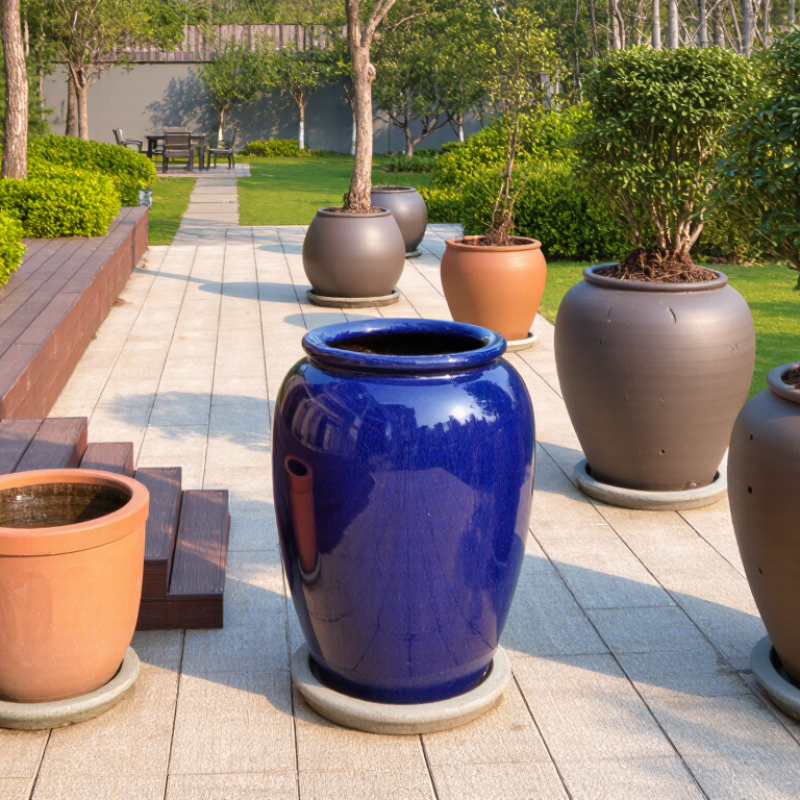
Assess Your Outdoor Space, Climate, and Planting Needs
Measure the planting area before choosing a pot: note its width, overhead cover, and the route you will carry the filled container. A large ceramic pot can be difficult to move once wet soil is inside. Check how many hours of direct sun reach the spot, then match that exposure to the plant’s needs. USDA’s 2023 Plant Hardiness Zone Map uses 30-year averages of annual extreme minimum temperatures; use your zone as a cold-risk guide, not a guarantee for one exposed patio. NOAA’s 1991–2020 Climate Normals offer local temperature and precipitation records that help you judge heat, rain, and seasonal swings.
Climate changes the pot choice. In freeze-prone areas, look for ceramic rated for outdoor freeze-thaw conditions, and keep drainage holes clear; trapped water can expand as it freezes. For hot, sunny locations, check soil moisture more often, since small root volumes can dry quickly. Match pot depth to the plant’s mature root system, and leave room for a saucer or runoff that will not stain paving. I would not rely on appearance alone. A beautiful pot can still be impractical in a windy corner or on a narrow balcony.
Tips: Measure twice. Check the pot’s empty weight, drainage, and placement before filling it. If unsure, test the site with a smaller container for a week.
