How to Choose Power Transmission Parts for Your Business?
Choosing Power Transmission Parts is a practical engineering decision, not a simple purchasing task. Gears, bearings, belts, chains, couplings, and shafts must transfer power reliably under real operating conditions. A dusty conveyor, a high-speed packaging line, and a refrigerated warehouse demand different solutions. The wrong component may create vibration, heat, unexpected downtime, and costly production losses.
Industry data shows why this decision deserves attention. Fortune Business Insights estimates that the global power transmission components market exceeded USD 70 billion in 2023, with continued growth expected through the decade. The U.S. Department of Energy also reports that motor-driven systems consume a significant share of industrial electricity. Efficient transmission components can therefore influence both equipment performance and operating costs. These figures provide useful direction, but they cannot replace a site-specific assessment.
A reliable selection process starts with measurable requirements. Check torque, rotational speed, shock loading, alignment, temperature, contamination, and available installation space. A chain drive may tolerate harsh conditions, while a synchronous belt can reduce lubrication needs. A sealed bearing may perform well in a clean factory but fail early near abrasive dust. Specifications matter. So does field experience.
No catalog can predict every failure. Supplier documentation, recognized standards, maintenance records, and application testing should support the final decision. Buyers should compare service life, replacement access, energy efficiency, and total ownership cost rather than focusing only on purchase price. That step is often overlooked. A careful review helps businesses choose components that remain dependable when production pressure, environmental changes, and imperfect maintenance become part of daily operations.
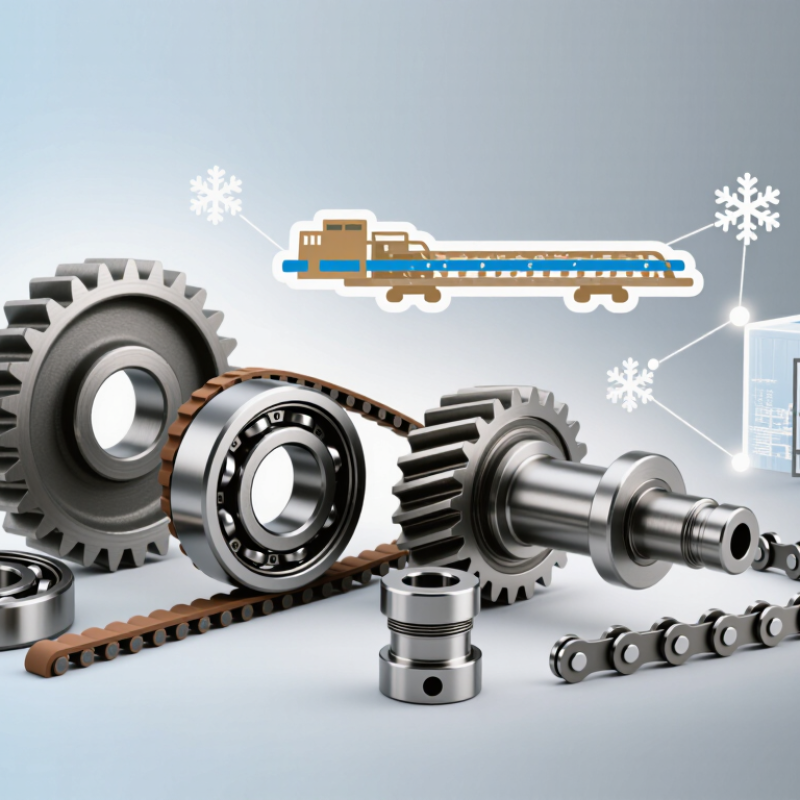
Define Required Power, Speed, Torque, and Duty Cycle
Choosing power transmission parts starts with four operating facts: required power, speed, torque, and duty cycle. These figures should come from the machine, not guesswork. Measure motor output under normal load, then record peak loads during starting, stopping, or product jams. Torque can be estimated from power and rotational speed, but measured shaft torque is more reliable. Small errors become expensive at high speed.
Duty cycle describes how hard the part works over time. A conveyor running eight hours continuously needs different capacity from an indexer moving for ten seconds each minute. Note starts per hour, reversing, shock loads, ambient temperature, and contamination near the drive.
I usually create a simple load table and compare normal torque with peak torque. Leave a practical service margin, but do not oversize blindly. Oversizing can increase cost, inertia, and energy use.
A coupling, gearbox, chain, or belt must match shaft speed and torque together. Check rated torque, allowable speed, radial loads, lubrication needs, and maintenance access. A part that fits on paper may still fail in a dusty, poorly aligned installation. I have seen alignment overlooked during rushed replacements. That mistake taught me to verify shaft dimensions and alignment after installation, not only before ordering. Recheck the calculations with an engineer when the load profile remains uncertain.