How to Choose the Best 3.5t Forklift for Your Business?
Choosing the best 3.5t Forklift is not simply a matter of comparing prices, lifting heights, or brand names. It is a decision about daily movement, operator safety, floor conditions, and long-term operating cost. A 3.5-ton load may involve steel coils, palletized building materials, or uneven outdoor surfaces. Each application demands different stability, tire, mast, and power specifications.
Recent industry research supports a careful, application-led approach. Grand View Research’s Forklift Market Size, Share & Trends Analysis Report, 2024–2030, identifies warehouse expansion, manufacturing activity, and electrification as major market drivers. MHI’s 2024 Annual Industry Report also highlights labor shortages and technology adoption across material handling. These trends matter. However, a market forecast cannot tell you whether your loading bay has a 2.8-meter doorway or polished concrete that becomes slippery after rain. Small details often decide performance.
Martin McVicar, Managing Director of Combilift, has repeatedly emphasized a practical principle: “There is no one-size-fits-all solution in material handling.” That idea should guide every purchase. Review actual load dimensions, travel distance, aisle width, shift length, charging access, and operator visibility. Check the manufacturer’s rated capacity at the required lift height, not only the headline capacity. OSHA’s Powered Industrial Trucks standard, 29 CFR 1910.178, also reinforces the importance of training, inspections, and safe operating conditions.
No checklist is perfect. A spreadsheet may miss turning resistance or poor drainage. A site trial can reveal more than a brochure. The right 3.5t Forklift should fit your work realistically, safely, and with room for changing business needs.
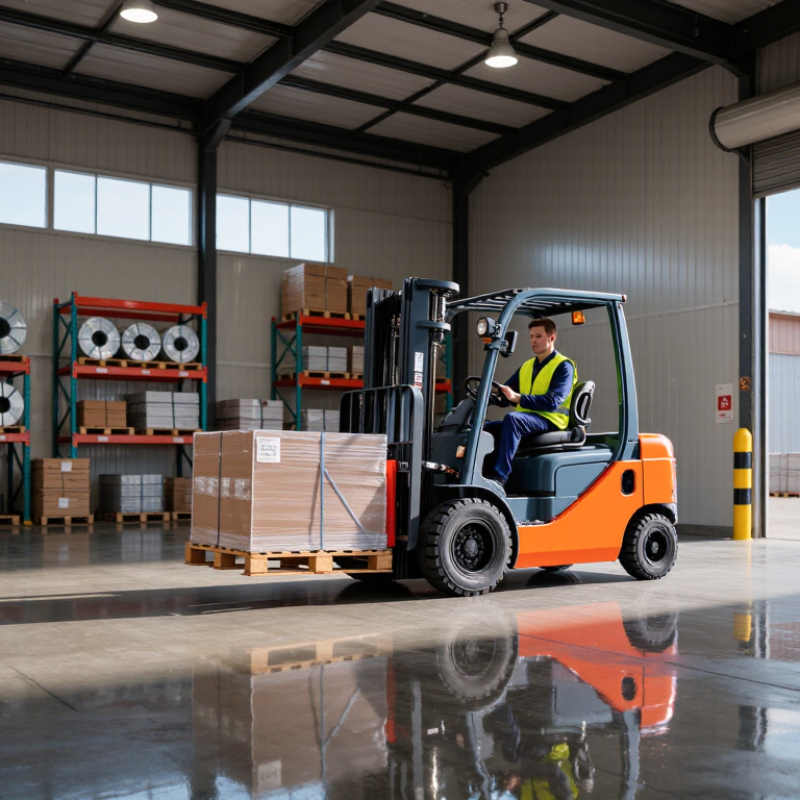
Define Your Business’s 3.5t Forklift Requirements
Define your business’s 3.5t forklift requirements before comparing equipment. A 3.5-ton rating usually applies at a specific load center, often 500 mm. Longer or uneven loads can reduce real capacity. Record your heaviest pallet, dimensions, lifting height, and load frequency. Also measure aisle width, doorway clearance, floor strength, ramp gradients, and turning space. A forklift that fits the warehouse may still fail at the loading dock.
Power choice depends on the working environment. Electric trucks suit indoor operations and may reduce local exhaust exposure. Internal-combustion models can support outdoor yards and longer shifts, but fuel storage and ventilation need careful planning. OSHA reports around 85 forklift-related workplace fatalities and 34,900 serious injuries each year in the United States. Therefore, visibility, braking, stability, operator training, and pedestrian separation should be written into the requirement, not added later. I have seen specifications focus too heavily on lifting capacity. That is an easy mistake.
Tips: Build a one-day duty profile. Record operating hours, peak loads, travel distance, charging or refueling pauses, and the number of operators. Compare these observations with ISO 3691-1 safety principles and local workplace guidance. Leave a capacity margin for unusual loads. A perfect calculation is unlikely, but a documented assumption is safer than a confident guess. Review maintenance access, spare parts availability, battery charging space, and service response before purchase.