


Go to Main Content Go to Footer

How to Choose the Best Adhesive Coating Machine?

Choosing the right Adhesive Coating Machine is not simply a matter of comparing speed, price, or brand reputation. The machine must match the adhesive, substrate, coating width, production volume, and required coating weight. A water-based adhesive may demand different drying control than a solvent-free formulation. Hot-melt materials introduce another challenge.

Small details matter.

Dr. Steven C. Abbott, a recognized adhesive science expert and author of Adhesion Science: Principles and Practice, states, “Adhesion is all about the interface.” That principle also guides equipment selection. A sophisticated machine cannot compensate for poor surface preparation, unstable viscosity, uneven tension, or unsuitable curing conditions. The coating head, metering system, pump, heating unit, drying section, and web-control system must work as one process.

This guide examines how to choose the best Adhesive Coating Machine for practical production needs. It considers coating accuracy, operating speed, material compatibility, cleaning requirements, energy use, automation, and long-term service support. It also looks beyond impressive specifications. A machine rated for high speed may perform poorly when coating a delicate film. A low-cost model may create hidden expenses through waste, downtime, and difficult maintenance.

There is no perfect machine.

The final decision should come from tested evidence, not sales language alone. Request sample trials, inspect coating uniformity, measure actual adhesive consumption, and question after-sales support. Even experienced buyers can overlook changeover time or operator training. That weakness deserves attention. The best choice is usually the machine that delivers stable results under your real production conditions, not the machine with the most impressive brochure.
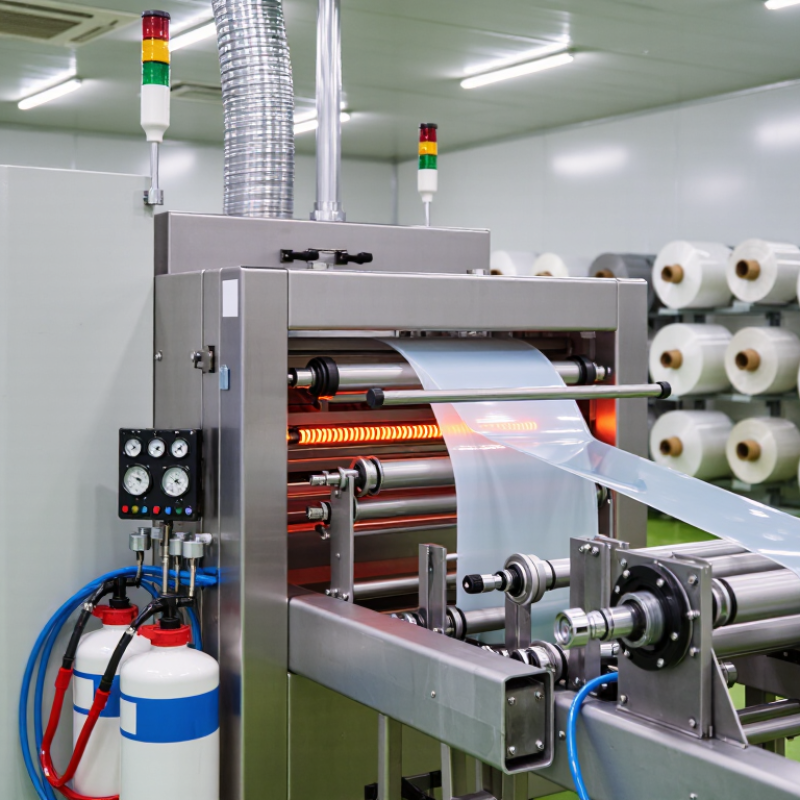
How to Choose the Best Adhesive Coating Machine?

Classify Adhesives by Chemistry, Viscosity, and Solids Content

How to Choose the Best Adhesive Coating Machine?

Classify adhesives by chemistry before comparing machine features. Water-based adhesives often need controlled drying and corrosion-resistant fluid paths. Solvent-based formulas require suitable ventilation, sealed delivery components, and careful temperature control. Hot-melt adhesives need heated tanks, hoses, and coating heads. Reactive adhesives may demand precise mixing and short residence times. Chemistry changes the machine’s design.

Viscosity is equally important. A low-viscosity adhesive can flood a coating gap or create uneven edges. A high-viscosity adhesive may need heated lines, stronger pumps, or a wider metering gap. Solids content also affects coating weight and drying load. High-solids formulas reduce evaporation but can challenge filtration and flow stability. Always test the real adhesive, not only its technical data sheet. Laboratory values can shift after storage, mixing, or temperature changes. That detail is easy to miss.

Tips: Record viscosity at actual operating temperatures. Measure solids content from a fresh sample. Inspect the coated web under bright, angled light. Look for streaks, pinholes, and wet edges. Run a short production trial before final selection. A simple test is valuable. It may reveal an expensive assumption. Also, cleanability deserves attention; a machine that coats well but takes hours to clean may reduce practical output.

Match Coating Technology to 5–200 m/min Line-Speed Requirements

Choosing an adhesive coating machine starts with line speed, not a catalog of features. At 5–20 m/min, accurate wetting and stable low-flow delivery usually matter most. Slow lines expose defects, including pinholes, edge build-up, and uneven adhesive stripes. Operators can spot these problems quickly under strong inspection lighting. I have found that simple adjustment access often saves more time than advanced automation. Small details matter.

At 20–80 m/min, coating weight must remain consistent as web tension changes. Metering rolls, slot systems, or spray heads can work, but each suits a different adhesive. High-viscosity materials may need heated circulation and wider flow passages. Water-based formulas can demand careful drying control.

A machine trial should use your actual substrate, adhesive temperature, width, and target coat weight. Otherwise, results may look impressive but mislead production planning. This is where many decisions go wrong.

Tips: Map the full speed range before choosing the applicator. Test at 5, 50, and 200 m/min when possible. Check start-up waste, splice recovery, cleaning time, and coating uniformity. At 100–200 m/min, small delays become expensive, so tension response and drying capacity deserve close attention. Ask for measured data, not only sample photos. Keep a margin below the claimed maximum speed.

Real factories are rarely perfect. Humidity shifts, operators change, and adhesive batches vary. A cautious design may outperform a faster one.

Specify Web Width, Coat Weight, and ±3–5% Cross-Web Uniformity

Choosing an adhesive coating machine starts with three measurable requirements: web width, coat weight, and cross-web uniformity. Web width determines the usable coating area, edge control, and machine frame size. Measure your real production range, not only the widest roll. A machine designed for 1,600 mm material may perform poorly at 400 mm without suitable edge adjustment.

Coat weight must match the adhesive, substrate, and bonding target. Specify the range in grams per square meter, then request test data at both minimum and maximum settings. A stable machine should maintain consistent application speed and pressure. Cross-web uniformity of ±3–5% is a practical target for many applications. However, the result depends on viscosity, temperature, tension, and drying conditions. Do not trust one laboratory reading. Measure samples across the web, including both edges, during continuous operation.

Tips: Ask for a coating trial using your actual adhesive and substrate. Check five or more positions across the web. Record coat weight, line speed, temperature, and tension. Small differences matter. Also review cleaning access and sensor calibration. These details are easy to overlook, yet they affect daily reliability. A machine may meet specifications on paper but still need adjustment after installation. Leave room for that learning curve.

How to Choose the Best Adhesive Coating Machine? — Specify Web Width, Coat Weight, and ±3–5% Cross-Web Uniformity
Selection Dimension Typical Specification or Target Why It Matters Recommended Verification
Web Width Match the usable coating width; allow approximately 50–150 mm total edge margin. The machine should accommodate the widest production web without excessive unused area or edge instability. The usable coating width is normally smaller than the maximum mechanical web width. Confirm maximum web width, minimum web width, edge-margin requirements, and whether future products require wider tooling.
Coating Weight Define the target in g/m² and specify the acceptable tolerance, commonly within approximately ±3–5% of the setpoint. Coat weight affects bond strength, release performance, drying load, material consumption, and final product thickness. Use gravimetric measurement: weigh a known coated area, remove the adhesive, reweigh, and calculate dry or wet coat weight as required.
Cross-Web Uniformity ±3–5% target Uniform coating across the web reduces weak-bond areas, adhesive squeeze-out, blocking, curl, and variation in downstream converting. Measure multiple locations across the web, including both edges and the center, under stable production conditions.
Machine Speed Select a rated speed above the required production speed, with practical allowance for adhesive type and drying capacity. Higher line speed can reduce residence time, making metering stability, web handling, and drying performance more demanding. Request a trial at the intended substrate, coat weight, adhesive viscosity, and target production speed.
Coating Method Choose gravure, reverse-roll, slot-die, knife, or another method according to coat-weight range and product tolerance. Gravure and reverse-roll systems are commonly used for controlled thin coatings; slot-die systems can provide precise, low-waste application when the fluid and process window are suitable. Compare usable coat-weight range, setup time, cleaning requirements, speed capability, and sensitivity to adhesive rheology.
Adhesive Viscosity Specify the operating viscosity range at the actual coating temperature. Viscosity influences pump selection, flow stability, metering, coating defects, and the achievable coat-weight range. Record viscosity with a defined test method and temperature; verify compatibility with pumps, hoses, filters, and coating hardware.
Adhesive Chemistry Identify water-based, solvent-based, hot-melt, or UV/EB-curable adhesive requirements. Each chemistry requires suitable temperature control, drying or curing, ventilation, materials of construction, and safety provisions. Confirm operating temperature, solvent or water load, curing requirements, exhaust needs, and applicable workplace regulations.
Drying or Curing Capacity Size the dryer or curing unit for adhesive solids, web speed, coating weight, and required residual solvent or moisture level. Insufficient drying may cause blocking, odor, poor winding, and unstable bond performance; excessive heat can damage heat-sensitive films. Check temperature zones, airflow, exhaust volume, residence time, and substrate temperature limits during a production-representative trial.
Web Tension Control Use closed-loop tension control appropriate for the substrate and web width. Stable tension helps prevent wrinkles, lateral movement, stretching, registration errors, and uneven coating caused by web flutter. Review unwind, infeed, coating, drying, and rewind tension ranges, along with load-cell or dancer-control capability.
Substrate Compatibility Define film, paper, foil, nonwoven, or laminate structure, including thickness and surface treatment. Surface energy, porosity, stiffness, thickness, and heat sensitivity affect wetting, adhesion, web transport, and drying behavior. Provide representative substrate samples and verify wetting, adhesion, curl, blocking, and dimensional stability.
Edge Control Specify edge guides, edge-bead management, side dams, and trim or masking requirements. Controlled edges improve product yield and prevent adhesive buildup on rollers, dryers, and downstream slitting equipment. Inspect edge profile at the target speed and coat weight; evaluate startup, shutdown, and splice behavior.
Process Measurement Include flow, pressure, temperature, speed, tension, and coat-weight monitoring. Real-time measurements help detect drift before it creates a large quantity of nonconforming material. Confirm sensor accuracy, calibration intervals, alarm limits, data logging, and access to production trends.
Cleaning and Changeover Specify cleaning time, solvent or water handling, removable components, and product-change frequency. Fast, repeatable changeovers reduce downtime and lower the risk of dried adhesive, contamination, and coating defects. Run a changeover demonstration using the actual adhesive family and review waste, flushing, access, and operator safety.
Quality Acceptance Criteria Document web width, coat weight, cross-web uniformity, defects, adhesion, drying, and winding requirements. Clear acceptance criteria prevent performance claims from being based only on maximum machine speed or nominal specifications. Use a signed factory or site acceptance test based on representative materials and the agreed operating window.
Practical specification note: Treat the values above as starting points for equipment selection. Final limits should be confirmed through trials using the actual adhesive, substrate, web width, coat-weight range, production speed, and required product performance.

Size Drying or Curing Systems for Adhesive Load and Residence Time

How to Choose the Best Adhesive Coating Machine?

Drying and curing capacity should follow adhesive load, not machine width alone. Calculate wet coating weight, web width, line speed, and solids content before selecting a system. For example, a 40 g/m² coating running at 100 meters per minute across a one-meter web carries 4 kilograms of wet adhesive each minute. With 50% solids, the dryer must remove roughly 120 kilograms of water per hour. That load is easy to underestimate.

Residence time matters just as much. A 20-meter drying chamber at 100 meters per minute provides only 12 seconds of exposure. Water-based adhesives may need staged heating and controlled exhaust. Reactive systems can require longer thermal or moisture-driven curing. MarketsandMarkets projected the global adhesives and sealants market to grow from about USD 78.6 billion in 2024 to USD 95.5 billion by 2029. This expansion increases pressure for faster lines, but higher speed does not replace adequate residence time.

Use production trials to measure outlet moisture, bond strength, surface temperature, and residual solvent where applicable. The European Commission’s energy-efficiency guidance for industrial drying emphasizes airflow control, heat recovery, and avoiding excessive exhaust. A practical design may use several short zones instead of one extremely hot chamber. Excess heat can skin the adhesive surface while trapping moisture underneath. It happens. Lowering line speed may sometimes improve quality more than increasing heater power. Recheck calculations after changing coating weight, substrate, or adhesive formulation.

Compare Energy Use, ATEX Safety, Maintenance, and Payback per 1,000 m²

Choosing an adhesive coating machine starts with measured energy use, not brochure ratings. The International Energy Agency reports that motor systems consume roughly 70% of industrial electricity. Fans, pumps, drives, and exhaust systems therefore deserve close attention. Request energy data in kWh per 1,000 m², including drying and ventilation. A lower coating speed may increase energy per square metre.

ATEX safety must match the actual solvent and ventilation conditions. The EU ATEX Directives 2014/34/EU and 1999/92/EC distinguish equipment requirements from workplace risk control. Ask for the zone classification, temperature class, ignition protection, and inspection records. Do not accept “ATEX-ready” as technical evidence. It is too vague. A competent engineer should review the complete line, especially ovens, ducts, sensors, and electrical cabinets.

Maintenance changes the real payback. Track nozzle cleaning, filter replacement, belt access, spare-part lead times, and unplanned downtime. Calculate payback using savings per 1,000 m²: energy reduction, labour, maintenance, and rejected material, minus added consumables. The European Commission’s Best Available Techniques reference documents support evaluating energy and emissions across the whole process, rather than one component. A spreadsheet may show a fast return, but it can hide production losses and seasonal demand. Pilot testing with identical adhesive, coat weight, web speed, and drying conditions gives more credible evidence.

Energy use
Enclosed solvent-based systems typically require more energy because of exhaust and solvent-recovery equipment.
ATEX safety
The readiness score reflects enclosure, ventilation, grounding, ignition control, and hazardous-area protection requirements.
Payback
Indicative payback assumes 1,000 m² throughput, stable production demand, energy at $0.12/kWh, and routine labor costs.

Planning benchmark only: values represent typical engineering assumptions for comparable machine configurations and should be validated against the final line speed, adhesive chemistry, ventilation design, labor rate, and local ATEX requirements.

Article Source:

Logo Access 360