How to Choose the Best Beacon Light With Siren?
Choosing a Beacon Light With Siren starts with the job it must perform. A unit for a service vehicle may need a different beam, sound level, and mounting style from one used at a fixed worksite. Brightness matters, but so do visibility from different angles, daylight performance, and whether the sound remains clear around engines or machinery. Small details matter.
This guide explains how to compare those features without relying on a single headline specification. It looks at light color and flash patterns, siren tones and controls, power requirements, weather resistance, mounting options, and build quality. Check the product documentation for operating limits and compatibility before buying. Confirm that the chosen signals and installation suit your intended setting and applicable local requirements.
Consider who will operate the system. Controls should be easy to identify, reachable, and practical when attention is divided. A compact unit may fit neatly, yet provide less flexibility for placement. A louder siren is not automatically a better choice; the environment and the people nearby matter. Still, a specification sheet cannot tell the whole story. Actual visibility can change with glare, mounting height, and surrounding surfaces. Think through these conditions before comparing prices. The right choice balances reliable signaling, durable construction, and straightforward operation—not features you may never use. No model is perfect. That is worth remembering.
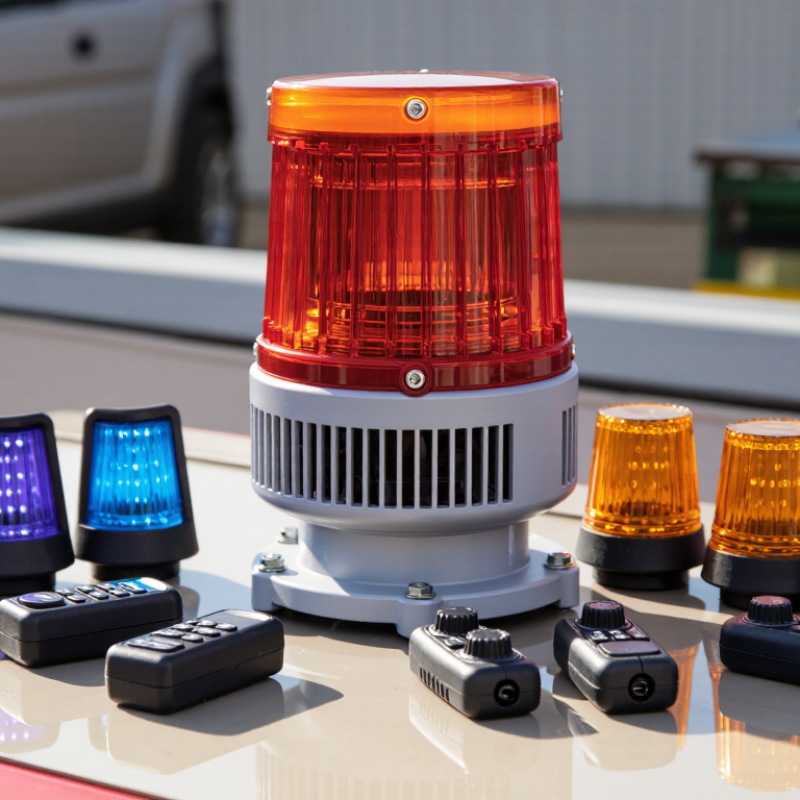
Understand Beacon Light and Siren Types
Beacon lights generally use rotating, flashing, or strobe patterns. Rotating beacons create a sweeping signal, while flashing and strobe units produce sharper, repeated bursts. LED models often draw less power and can offer several patterns, but visibility still depends on placement, lens condition, and surrounding light. Bright daylight is demanding. A light mounted behind tinted glass or low on a vehicle may be harder to see than expected. Check the viewing angle and mounting position, not just the stated brightness.
Sirens also vary. Common warning tones include wail, yelp, and rapid pulse patterns; some units add a voice announcement function. A slower tone may be easier to distinguish at a distance, while quicker changes can draw attention nearby. Sound can reflect off walls or become masked by traffic, so the loudest setting is not automatically the clearest. Test the sound from realistic positions, at a safe volume, and consider how the controls work when wearing gloves. A simple control layout helps. Match the siren’s output and tone options to the setting, and pair them with a beacon pattern that remains visible without becoming distracting. There is no perfect pairing; field conditions can make a sensible choice feel less obvious.