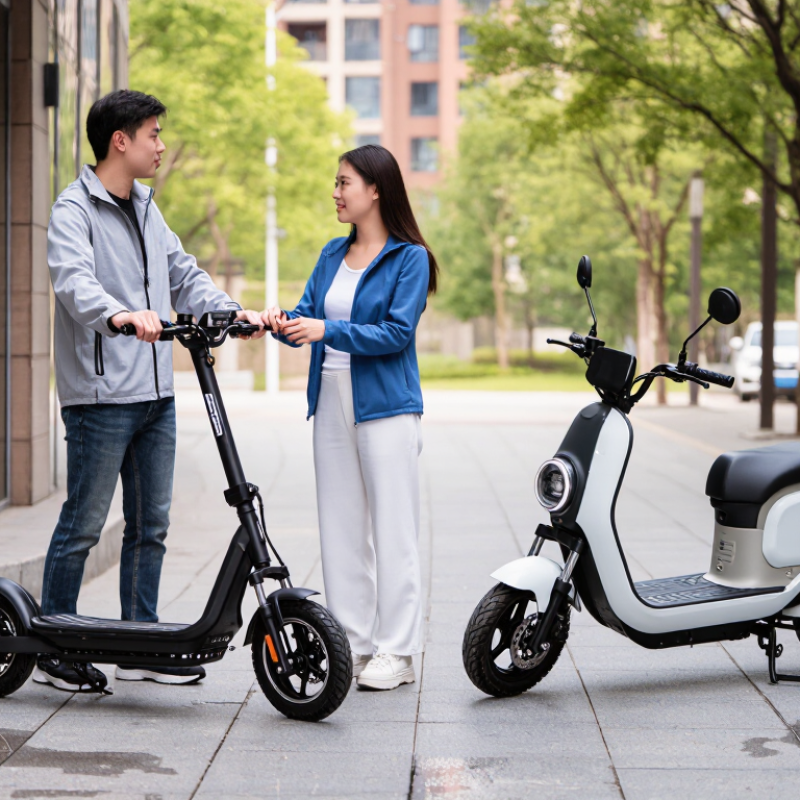
| Brakes | Electric two-wheelers may use mechanical or hydraulic disc brakes, drum brakes, or other braking systems. Braking distance changes with speed, rider weight, tires, road surface, and weather. | Look for dependable front and rear braking, easy-to-reach controls, and a clear way to check brake wear. Test the brakes at low speed in a safe area before regular use. | Can the brakes stop the vehicle smoothly? Are replacement pads or other wear parts available? Does the owner’s manual specify routine inspection? |
| Lights and visibility | Front and rear lights help other road users see the rider. Reflectors and reflective clothing can improve visibility, especially in low light. | Choose working front and rear lights, plus reflectors where required. Check whether lights run from the main battery and whether they remain usable as the battery charge falls. | Are the lights bright and positioned so they are visible? Are additional reflectors or a bell required where you ride? |
| Tires and traction | Tire pressure, tread, width, and condition affect grip and handling. The recommended pressure is usually printed on the tire or stated in the manual. | Choose tires suited to your usual surfaces. Inspect them for cuts, embedded objects, and wear, and keep pressure within the manufacturer’s stated range. | Are the tires suitable for wet pavement or rough paths? Can you obtain the correct replacement size? |
| Battery and charging | Lithium-ion batteries need compatible chargers and careful handling. Battery range varies with rider and cargo weight, speed, hills, temperature, tire pressure, and battery age. | Use only the supplied or approved charger. Charge on a stable surface away from exits and combustible materials, and stop using a battery that is swollen, damaged, unusually hot, or leaking. | What charging and storage instructions does the manual give? Is the battery removable, and how can it be inspected or serviced safely? |
| Frame and load limit | Every vehicle has a maximum load limit set by its manufacturer. The total load may include the rider, clothing, bags, and accessories. | Stay within the stated limit and check that the frame, folding mechanism, handlebars, and fasteners are secure before riding. | Does the published load limit cover your expected total load? Are there clear instructions for checking the folding latch and fasteners? |
| Rider fit | A comfortable riding position depends on rider height, handlebar reach, deck or pedal position, and the vehicle’s adjustment range. | Stand or sit in a relaxed posture with a secure grip and room to steer. For a bicycle-style model, check that the saddle height allows controlled pedaling and a safe stop. | Can the handlebar or saddle be adjusted? Can you reach the controls without stretching or losing a stable stance? |
| Stability and handling | Wheel size, wheelbase, steering geometry, suspension, and total weight affect how a vehicle feels. A heavier model can be harder to carry or maneuver when not powered. | Try turning, braking, and mounting or dismounting at low speed in a permitted, low-traffic area. Choose a model you can control and move comfortably. | Does it feel stable at the speeds you expect to use? Can you lift or store it safely if needed? |
| Helmet and protective gear | Helmet requirements differ by location, vehicle type, and rider age. A properly fitted, undamaged helmet designed for cycling or the applicable vehicle category can reduce the risk of head injury. | Wear a correctly fitted helmet and consider gloves and visible clothing. Replace a helmet after a significant impact and follow its care instructions. | What helmet standard and age rules apply locally? Does the helmet sit level and stay secure when fastened? |
| Speed and vehicle classification | Legal speed limits, power limits, age rules, and permitted vehicle categories vary by country, state, province, and municipality. A model’s advertised top speed does not determine where it may legally be used. | Check the official transport authority’s rules for the exact vehicle type before buying. Confirm whether modifications can change its legal classification. | Is this model classified as an electric scooter, powered cycle, moped, or another vehicle locally? Are registration, licensing, insurance, or age requirements applicable? |
| Where you can ride | Access rules for roads, cycle lanes, sidewalks, shared paths, and parks differ between jurisdictions and may also depend on signs or local restrictions. | Check local government and transport-authority guidance for your intended routes. Do not assume that a route open to bicycles is automatically open to every powered vehicle. | Which roads and paths permit this vehicle? Are there local parking, carrying, or no-ride-zone rules? |
| Weather and water exposure | Water-resistance ratings, if provided, describe specified test conditions; they do not make a vehicle suitable for every storm, submersion, or wet-road situation. | Follow the manual’s limits for rain and cleaning. Reduce speed on wet surfaces, avoid standing water, and dry the vehicle as instructed before charging. | Does the manual state an ingress-protection rating or wet-weather restrictions? Are the brakes and tires suitable for your typical conditions? |
| Maintenance and support | Brakes, tires, lights, fasteners, and battery condition need periodic checks. Service intervals and repair procedures depend on the model. | Review the manual and confirm that essential parts and qualified service are accessible before purchase. Keep a record of inspections and repairs. | Are maintenance instructions available? Can the tires, brake components, and battery be serviced or replaced safely? |