


How to Choose the Best Floating Mat for Wholesale?
Choosing the right Floating Mat for wholesale requires more than comparing prices and colorful product photos. Buyers must examine material quality, buoyancy, dimensions, safety features, and supplier consistency. A mat that looks impressive online may feel unstable under real use. It may also show weak seams after repeated folding, dragging, or exposure to sunlight.
Practical evaluation should begin with the intended setting. A resort may need large connected sections for groups, while a marina may prefer compact mats that store easily. Check the foam structure, surface texture, connection points, carrying handles, and repair options. Ask suppliers for test reports, product specifications, sample units, and clear warranty terms. Reliable manufacturers should explain weight limits honestly, including how performance changes with several users. Small details matter.
Wholesale decisions also depend on logistics and customer expectations. Confirm packaging dimensions, minimum order quantities, lead times, replacement parts, and color consistency across batches. A low unit price can become expensive when damaged goods, delayed shipments, or unclear support are involved. No checklist is perfect. Even experienced buyers can overlook storage conditions or local weather patterns. A short water trial can reveal more than polished marketing language. This guide explores how to compare Floating Mat suppliers with practical judgment, professional standards, and attention to long-term value. The goal is not simply to find the cheapest option. It is to select a dependable product that performs safely, supports resale confidence, and reflects the actual needs of end users.
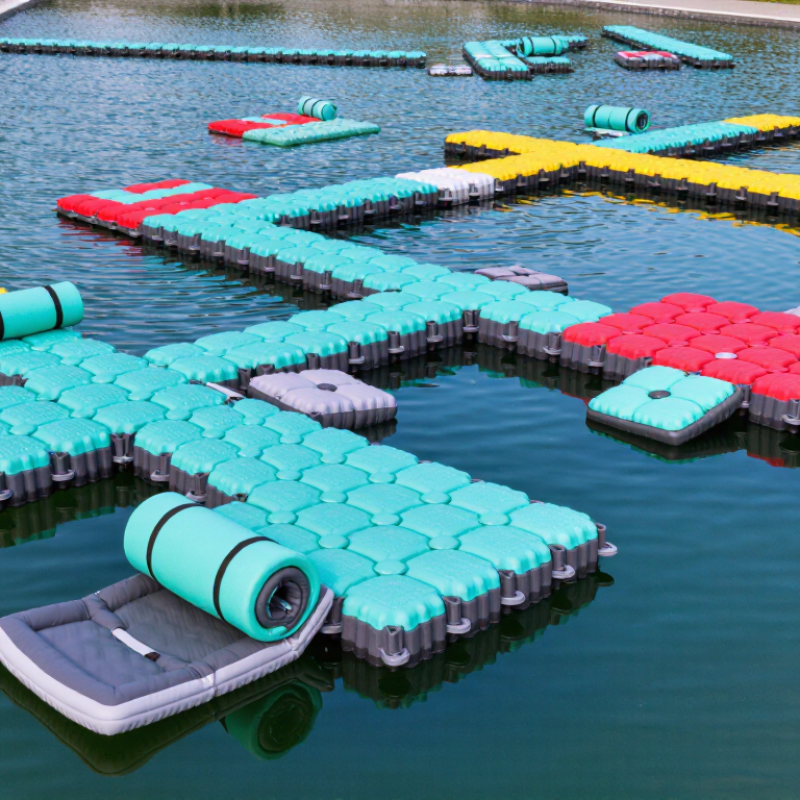
Set Wholesale Specs: 30–50 mm Thickness, 150–250 kg Load, and MOQ
Wholesale buyers should set thickness at 30–50 mm for a practical balance between comfort, buoyancy, and freight volume. A 30 mm mat may suit calm pools, while 40–50 mm offers better stiffness near docks or moderate movement. ISO 25649:2017 provides a useful reference for floating leisure articles, including buoyancy, stability, and user safety. Do not treat thickness as proof of capacity.
Specify a total load rating of 150–250 kg, based on documented tests rather than advertising estimates. State whether the rating covers people, coolers, and accessories together. A 200 kg rating should not automatically mean two adults are safe in rough water. Ask for seam-strength records, valve testing, UV exposure results, and inflated-pressure checks. The 2024 Grand View Research water-sports equipment analysis highlights distribution and product durability as important market factors, which supports requesting repeatable quality records. Small details matter.
MOQ should match your sales forecast and packaging plan. For a first order, 50–100 units may reduce inventory risk, but custom colors or tooling can raise the minimum. Confirm carton size, spare-part ratios, and inspection costs before approval. My practical concern is simple: a low MOQ can hide a high unit cost. Review the numbers twice.
