How to Choose the Best Food Cooler for Global Sourcing
Choosing the right Food Cooler for global sourcing requires more than comparing capacity, color, and supplier pricing. A cooler may look strong in a showroom, yet fail after twelve hours in a hot container. Temperature retention, sealing quality, insulation thickness, empty weight, and cleaning access directly influence product protection. The FAO’s State of Food and Agriculture reports that approximately 14% of food is lost between harvest and retail. That figure shows why practical cold-chain equipment matters. Small temperature failures can become expensive quality problems.
Reliable sourcing begins with evidence. Ask suppliers for thermal test results, material specifications, production samples, and batch-quality records. The Global Cold Chain Alliance emphasizes temperature control, handling discipline, and equipment performance across the cold chain. Meanwhile, the World Bank’s Logistics Performance Index 2023 shows that infrastructure and shipment reliability vary considerably between markets. Your Food Cooler should therefore match the route, not only the product. A frozen seafood shipment may require thicker insulation and dry-ice compatibility. Fresh produce may need ventilation and controlled humidity instead. Check the details.
A useful starting point.
Review payload size, stacking strength, drainage, odor resistance, and repair options. International buyers should also verify food-contact materials, labeling requirements, and recycling considerations in destination markets. No single specification wins every route. Even experienced purchasing teams can overvalue appearance or underestimate last-mile exposure. That is worth questioning. A careful supplier comparison, supported by documented testing and realistic transit trials, creates a more dependable decision. The best cooler is not necessarily the largest or cheapest. It is the one that protects food consistently, travels efficiently, and remains practical for workers at every handling point.
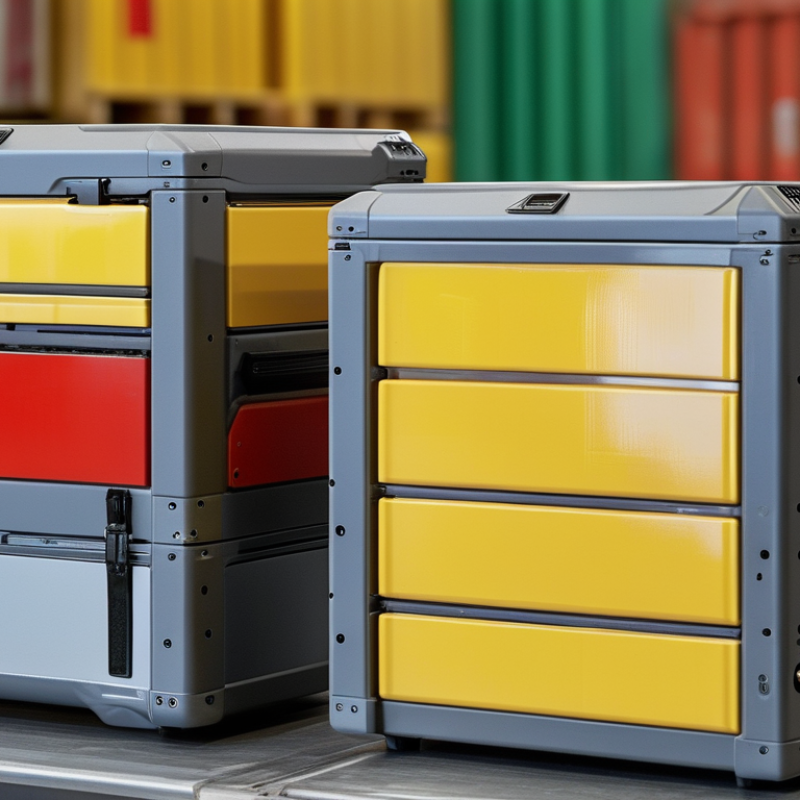
Define Food Cooler Types and Their Global Sourcing Uses
Choosing a food cooler begins with defining its type and sourcing role. Passive insulated coolers use foam or vacuum panels with ice packs or phase-change materials. They suit short domestic deliveries, sample shipments, and markets with unstable electricity.
Active compressor coolers maintain tighter temperatures for longer routes. They require reliable power, maintenance, and spare parts. Temperature-sensitive seafood, dairy, and fresh meat usually need this control.
For international sourcing, insulated pallet boxes and reefer containers serve different scales. Pallet boxes protect consolidated cargo during port handling and inland transfers. Reefer containers support high-volume ocean freight, but they add monitoring, energy, and plug-in requirements.
The Food and Agriculture Organization reported that 14% of food is lost between harvest and retail globally in The State of Food and Agriculture 2019. Cooler selection therefore affects both product quality and sourcing risk.
Ask for tested holdover time, internal volume, tare weight, drain design, and sensor accuracy. Review performance at the hottest route temperature, not only in a laboratory.
A cooler that holds 4°C in a warehouse may fail beside a sun-heated loading dock. The UNEP Food Waste Index Report 2024 estimated 1.05 billion tonnes of food waste in 2022.
That figure makes weak cold-chain decisions difficult to defend. Still, the largest model is not always best. Excess capacity can raise freight costs and leave empty space around the product. A practical trial with real packaging, route delays, and cleaning routines can reveal uncomfortable gaps before a global purchase order.