


How to Choose the Best RFID Locker in 2026?
Choosing the best Rfid Locker in 2026 requires more than comparing prices and screen designs. It demands careful attention to security, daily usability, maintenance, and long-term value. A modern locker may use RFID cards, mobile credentials, PIN codes, or several access methods together. Each option affects how quickly users collect belongings and how easily staff manage access.
Real experience matters. In a busy workplace, a locker door may open dozens of times each day. A school environment may require simple instructions and strong resistance to rough handling. Fitness centers often need moisture-resistant materials, clear status lights, and fast user turnover. Look closely at reader performance, locking strength, battery backup, software reporting, and emergency access procedures. Small details matter.
Ask practical questions.
Can the system record access events accurately? Can administrators change permissions without replacing hardware? Is the interface understandable for new users? Does the supplier provide installation guidance, spare parts, training, and responsive technical support? These answers reveal more than polished product images.
Reliable manufacturers should explain testing methods, warranty terms, compatibility, and expected service life. Independent certifications can also support a careful evaluation, but certification alone does not guarantee a perfect installation. That point is easy to overlook. Even an advanced Rfid Locker can perform poorly when network planning, user training, or maintenance is neglected. This guide compares the essential selection factors, while acknowledging an uncomfortable truth: the cheapest option may become the most expensive after repeated repairs and replacement.
What Is an RFID Locker and How Does It Work?
How to Choose the Best RFID Locker in 2026?
What Is an RFID Locker and How Does It Work?
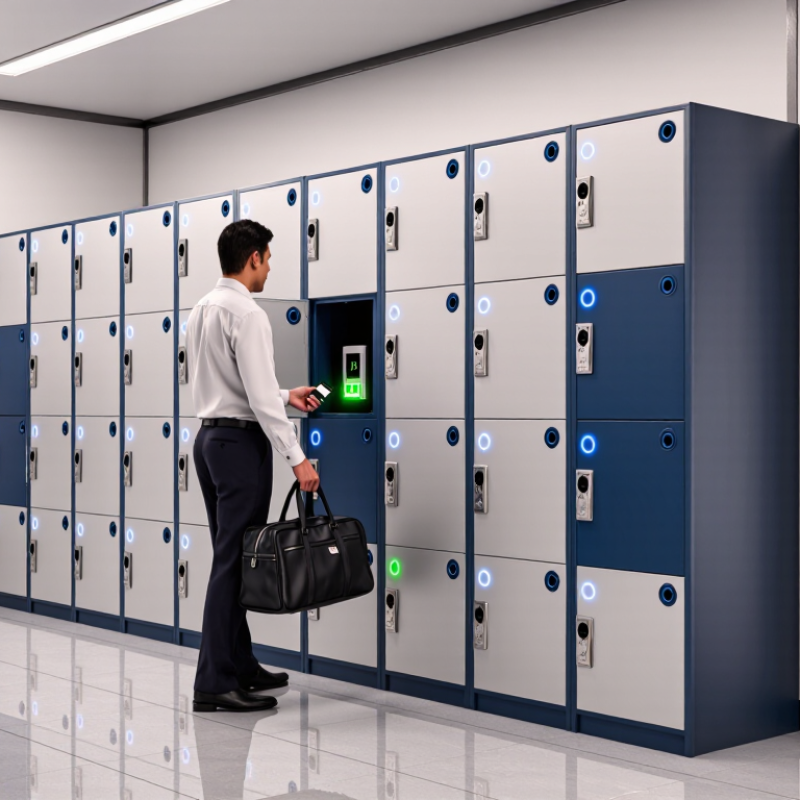
An RFID locker stores items behind electronically controlled doors. Each item carries a small RFID tag. A reader sends radio waves, captures the tag’s unique identification number, and passes it to the locker controller. Approved users then unlock a compartment through a card, mobile credential, PIN, or biometric check. The system records access time, locker number, and user identity.
It sounds simple. It is not always simple.
A practical RFID locker needs more than a strong reader. Antennas must limit cross-reading between nearby compartments. Software should manage permissions, alerts, audit logs, and offline access. Metal objects, liquids, and tightly packed items can weaken signals. Testing real items remains essential. Computer simulations may miss these problems.
Market evidence supports careful selection. Grand View Research valued the global RFID market at approximately 14.5 billion US dollars in 2023, with projected growth through 2030. MarketsandMarkets also forecasts strong RFID expansion, driven by asset tracking and automated operations. These figures show growing adoption, not guaranteed locker performance.
For 2026, compare read accuracy, tag compatibility, cybersecurity controls, battery backup, and maintenance access. UHF RFID suits multiple-item identification, while HF systems may offer tighter reading zones. Ask for independent testing data. Also check recovery procedures when networks fail. A cheaper locker can become expensive when one missed scan disrupts daily operations.
