10 Tips for Choosing a Digital Signage LED Wall
Choosing a digital signage LED wall is no longer a simple brightness comparison. It affects visibility, energy use, maintenance, content quality, and customer experience. A wall behind a reception desk faces different demands from one installed beside a sunlit highway.
Industry forecasts show why this decision deserves care. Grand View Research projects continued global growth in digital signage through 2030, driven by retail, transportation, hospitality, and corporate communication. MarketsandMarkets also forecasts sustained expansion, estimating the digital signage market will grow from more than USD 31 billion in 2023 to over USD 45 billion by 2028. These figures indicate strong demand, but market reports use different definitions and data sources. The numbers should guide planning, not replace technical judgment.
A reliable selection process examines pixel pitch, viewing distance, brightness, contrast, refresh rate, cabinet design, power consumption, warranty, and service access. AVIXA research consistently highlights the importance of lifecycle value in professional audiovisual projects, not merely the initial purchase price. That principle matters here. A cheaper wall may require more frequent module replacement or consume more electricity during long operating hours.
Details matter.
Look closely at the installation environment. Measure sunlight, ventilation, cable routes, and viewing angles before requesting quotations. Ask suppliers for real operating data, independent certifications, spare-parts policies, and installation references. A specification sheet never tells the whole story. I may be overly cautious, but ignoring heat, moisture, or maintenance access can turn an impressive display into an expensive interruption. The following ten tips provide a practical framework for choosing performance, reliability, and long-term value with fewer surprises.
Define the Purpose and Location of the LED Wall
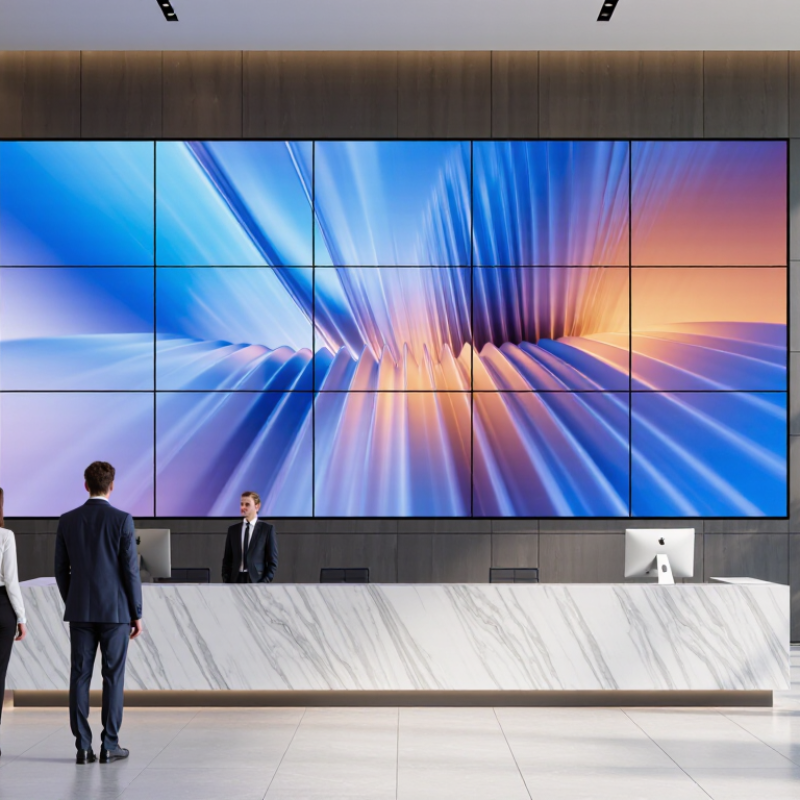
Before selecting an LED wall, define its job and physical setting. A retail display may drive promotions, while a lobby wall may support wayfinding or brand storytelling. These goals require different brightness, pixel pitch, content timing, and viewing distances. A wall beside a sunlit entrance needs stronger luminance than one inside a dim conference room. Measure the nearest and farthest viewer positions. Do not rely on appearance alone.
Industry data supports careful planning. Grand View Research estimated the global digital signage market at over 27 billion U.S. dollars in 2023, with continued growth expected through 2030. MarketsandMarkets identifies retail, transportation, and hospitality as major application areas in its 2024 market report. These figures show expanding demand, but they do not justify installing a large screen everywhere. Poor placement can create glare, blocked sightlines, or content that viewers cannot read.
Walk the site at different times. Check sunlight, ceiling height, ventilation, power access, and maintenance clearance. Content should match the audience’s dwell time. A commuter may see a message for five seconds. A visitor in a lobby may stay longer. I would also test real content before final approval. Text that looked clear in a design file may fail from ten meters away. The first plan is rarely perfect. Recheck it.
10 Tips for Choosing a Digital Signage LED Wall: Define the Purpose and Location
Recommended pixel pitch depends largely on the typical viewing distance. Smaller pixel pitches provide finer detail for close-up audiences, while larger pitches are generally suitable for viewers farther away.
Guideline: pixel pitch in millimeters should generally be no greater than the typical viewing distance in meters. Final selection should also consider content detail, camera viewing, brightness, and installation conditions.
Evaluate Brightness, Viewing Distance, and Image Quality
Choosing a digital signage LED wall starts with the light around it. Indoor retail areas often need 800–1,500 nits, while sunlit façades may require 5,000 nits or more. These figures are practical industry ranges, not universal rules. The 2024 AVIXA Industry Outlook valued the professional AV market at about $332 billion in 2023, showing how quickly display deployments are expanding. Growth does not guarantee a good viewing experience.
Measure the audience distance before selecting pixel pitch. A common field rule places the minimum viewing distance, in metres, near the pixel pitch, in millimetres. A 2.5 mm wall may look sharp from roughly 2.5 metres, but 4K content, text size, and eyesight still matter. For close viewing, choose finer pixels. For highways or large halls, excessive resolution can waste money. It happens often.
Image quality depends on more than resolution. Check grayscale performance, refresh rate, contrast, colour consistency, and viewing angle. SMPTE and ITU-R evaluation guidance both treat viewing conditions as part of perceived image quality. High brightness can also produce glare and washed-out colours. Lower it when possible. Ask for measured data, not only a showroom video. The Digital Signage Federation’s industry guidance also stresses content readability, service access, and environmental testing. I would test the wall at dawn, noon, and evening. One indoor demo is never enough.
Compare Installation, Maintenance, and Energy Requirements
Choosing a digital signage LED wall requires more than comparing pixel pitch. Installation conditions can determine long-term cost. Measure wall structure, viewing distance, ventilation, and electrical capacity before selecting a panel.
A front-service design may reduce access time in crowded lobbies. Rear-service systems can simplify large installations with clear maintenance space. According to the U.S. Department of Energy’s Solid-State Lighting R&D Opportunities report, LED efficiency continues improving, but system performance depends on drivers, controls, and thermal management. Heat matters. Poor airflow can increase brightness loss and shorten component life.
Energy estimates should use actual operating schedules, not maximum wattage alone. Ask for average consumption at typical brightness and standby consumption. The International Energy Agency’s Electricity 2024 report highlights continuing pressure to improve electricity efficiency across commercial facilities. This makes automatic dimming and scheduling practical requirements, not decorative extras. A 30% brightness setting may look adequate indoors, while outdoor content may require more power. That assumption often fails.
Maintenance also needs a measurable plan. Request module replacement time, spare-part availability, cleaning access, and diagnostic records. IEC 62368-1 compliance supports product safety, but it does not guarantee easy servicing. I would compare a five-year maintenance forecast beside the purchase price. The cheapest wall can become expensive when one failed module requires lifts, road closures, or overnight labor. Real-site testing remains worthwhile.
Assess Durability, Control Systems, and Total Ownership Cost
Choosing an LED wall starts with durability, not pixel pitch. The U.S. Department of Energy reports that quality LED products can exceed 50,000 hours of useful life. However, heat, dust, humidity, and continuous brightness can shorten that figure. Inspect cabinet sealing, cooling design, spare modules, and front-access maintenance. A wall beside a sunny entrance needs different protection from one inside a controlled lobby.
Tip: Request a documented burn-in test and thermal report. Ask how many spare modules the supplier recommends. This is practical, not glamorous. It can prevent a visible dark square during an event.
Control systems also shape ownership cost. NIST’s Cybersecurity Framework 2.0 encourages asset inventories, access control, monitoring, and recovery planning. Apply those principles to media players, processors, and remote management accounts. Check scheduling, brightness automation, offline playback, alerting, and software update policies. A cheap controller may become expensive when technicians must visit every site. Yet remote control is not automatically safer; weak passwords and forgotten accounts remain common risks.
Tip: Calculate total cost over five years. Include electricity, content software, calibration, labor, replacement parts, network fees, and disposal. The U.S. Department of Energy links lower brightness and efficient operation with reduced energy use, but real savings depend on schedules and ambient light. I would also test the system during a power interruption. Specifications rarely show that messy moment. Records should include service dates, fault history, and measured power consumption, not only purchase price.



