


How to Choose an Inflatable Boat Platform in 2026
Choosing an Inflatable Boat Platform in 2026 requires more than comparing prices and glossy product photos. Water conditions, passenger weight, storage space, and transport habits all affect the right decision.
A platform may look stable beside a calm marina, yet behave differently in wind or small waves. Experienced boaters usually inspect fabric thickness, seam quality, valve design, and deck stiffness before checking extra accessories. Drop-stitch construction can improve rigidity, but it may also increase weight and repair complexity. Think carefully.
Real-world testing matters. Place the inflated platform on a level surface, check for uneven pressure, and examine every connection point. A reliable model should include clear load ratings, maintenance instructions, and accessible replacement parts. Manufacturer claims deserve attention, but they should not replace independent reviews or guidance from qualified marine professionals.
In 2026, smart buyers should also consider portability and responsible use. Measure your vehicle, storage area, and launch route before ordering. A heavy platform can become frustrating after repeated carrying, even when it performs well on water. That detail is easy to miss.
No single design fits every trip. A fishing platform may need quiet movement and attachment points, while a family platform may prioritize stability and generous space. Personal experience helps, but it can also create bias. Recheck your assumptions against current specifications, safety guidance, and local waterway requirements. The best choice balances performance, durability, comfort, and honest limitations.
Define Platform Use by ISO 6185 Boat-Length and CE Load Ratings
How to Choose an Inflatable Boat Platform in 2026
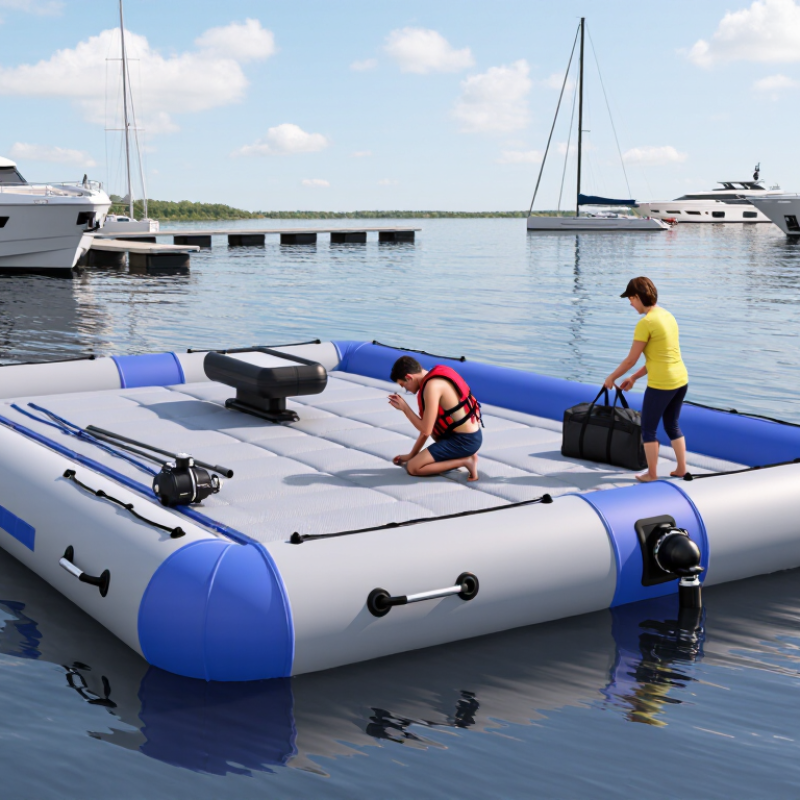
An inflatable platform should match its certified use, not only its deck size. ISO 6185 classifies inflatable boats through length, construction, and propulsion requirements. Check the applicable section before comparing floor layouts or tube diameters. A 3.2-metre platform may feel spacious beside a dock, yet become crowded with four adults, a motor, fuel, and safety equipment.
CE load ratings provide the practical limit. The capacity plate should state maximum persons, total load, and often maximum engine power. Total load includes passengers, luggage, fuel, batteries, and the motor. It is not a comfort estimate. A 2023 NMMA U.S. Recreational Boating Statistical Abstract recorded approximately 11.6 million registered recreational boats, showing how common small-watercraft use has become. However, registration numbers do not prove that every platform suits family transport or fishing. Real use remains more specific.
Tips: Measure the heaviest items first. Leave free floor space around the fuel container. Compare the ISO 6185 length category with the CE plate, then reduce the rated load for rough water. A simple test helps: place filled bags on the deck before buying. I still find this easy to underestimate. Wet tubes, shifting passengers, and a short chop can change handling quickly. Also inspect the plate, valves, seams, and repair history. A high capacity number means little when the floor flexes excessively or the equipment is poorly distributed.
