


How to Choose the Right Steel Mill Equipment
Choosing Steel Mill Equipment is a production decision, not simply a purchase based on rated capacity. The wrong furnace, rolling line, or material-handling system can create bottlenecks that appear only after commissioning. They are expensive to fix. World Steel Association’s World Steel in Figures 2024 reports global crude steel production of about 1.89 billion tonnes in 2023. That scale reflects a demanding industry, but it does not mean every mill needs the same machinery.
Start with the products you plan to make, their dimensions, required tolerances, and expected output. Then match equipment to the production route, available utilities, plant layout, and workforce capabilities. The International Energy Agency identifies iron and steel production as a major source of energy use and CO₂ emissions. Its analysis makes energy performance a practical selection criterion, alongside throughput and purchase price. Compare consumption per tonne, expected yield, maintenance access, spare-parts availability, and integration with existing controls. A lower quotation can hide longer changeovers or difficult repairs.
Request operating references for comparable products and production conditions. Ask suppliers for documented performance data, commissioning support, and clear assumptions behind capacity claims. Check whether service technicians and critical components are realistically available at your location. Small details matter. A technically impressive specification can still fail your needs if it depends on ideal feedstock or uninterrupted operation. No report can replace a site-specific engineering review. Use industry benchmarks to frame questions, then verify the answers against your mill’s actual constraints before committing.
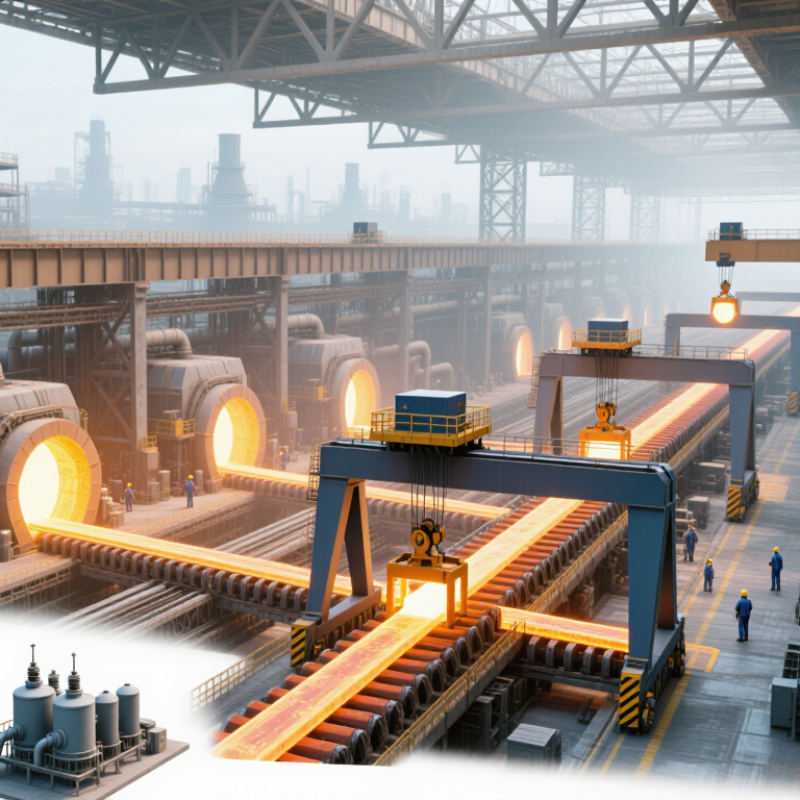
Identify Production Goals and Steel Types
Choosing steel mill equipment starts with a clear production brief: annual tonnage, product dimensions, grade range, and required tolerances. A mill making coil for construction needs different rolling and finishing capacity than one producing narrow stainless strip. Specify whether output will be slabs, billets, bars, or flat products; each choice affects casting, reheating, and rolling equipment.
World Steel Association’s World Steel in Figures 2024 reports global crude steel production of 1,892.2 million tonnes in 2023. That scale varies enormously. It is context, not a sensible target for an individual plant.
Define the steel types before comparing furnaces. Carbon, alloy, and stainless grades differ in chemistry, temperature control, and contamination risks; those differences shape melting, refining, and inspection needs. A high-mix operation may value flexible changeovers more than peak throughput, while steady production can justify specialized lines.
The International Energy Agency’s Iron and Steel Technology Roadmap (2020) estimates the sector emitted about 2.6 gigatonnes of CO2 in 2019, roughly 7% of global energy-system emissions. This makes energy use worth measuring alongside output.
Ask equipment suppliers to model your actual grade mix, scrap share, yield, and operating hours. I would still treat early forecasts cautiously: product demand often shifts, and a neat spreadsheet cannot capture every bottleneck.
