


What Is Food Packaging and What Types Are Available?
Food Packaging is the material and container system used to protect food, carry it, and share essential product information. A Food Pack might be a paper carton, glass jar, metal can, plastic tray, or flexible pouch. Some packs touch the food directly. Others group products for storage and transport. Simple idea. Many details.
The right format depends on the food, its journey, and how people will use it. A crisp snack needs a different barrier from fresh berries or soup. Packaging can help limit moisture, light, air, leakage, and handling damage, but no single material solves every problem. A sealed pouch may save space on a shelf, while a sturdy carton may stack more easily. These choices also affect opening, storage, and disposal.
This guide looks at common food packaging types and what each is designed to do. It considers rigid and flexible formats, familiar materials, and practical features such as closures and labels. Real-world performance depends on the product and the full packaging design, not just the material name. That distinction is easy to miss. Environmental impact also varies with material sourcing, production, food waste, and local recycling options. A package described as recyclable may not be accepted everywhere. Readers can use these basics to compare options and ask better questions about protection, convenience, and end-of-life handling. The trade-offs are not always tidy.
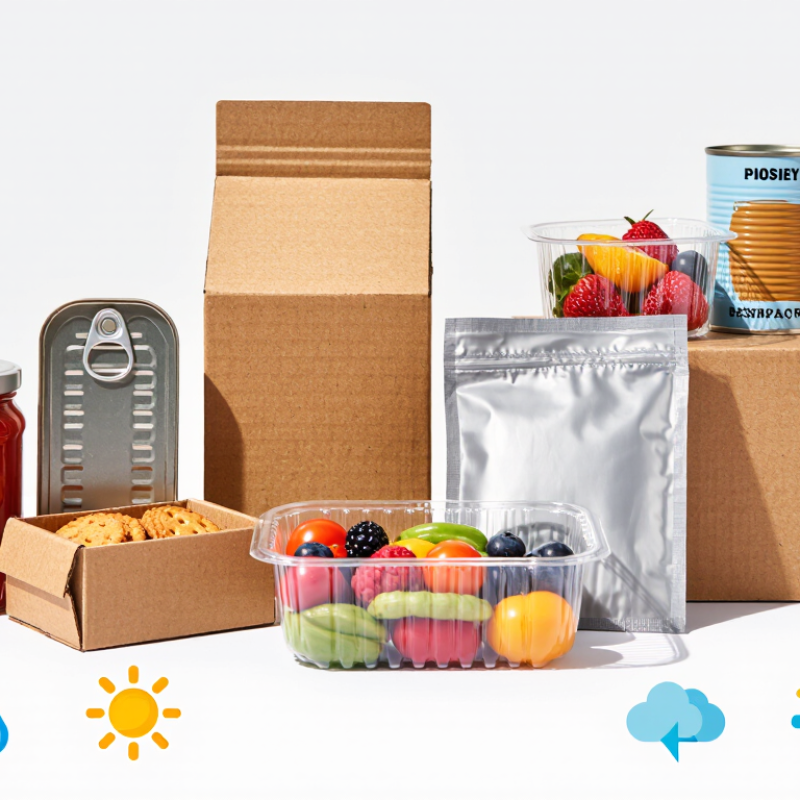
What Food Packaging Is and Why It Is Used
Food packaging is the material that surrounds food during storage, transport, sale, and use. It may be a thin film around bread, a paperboard carton, a glass jar, or a sealed tray. Packaging can touch the food directly or provide an outer layer for handling and information. Its basic job is practical: keep food contained and make it easier to move, store, and identify.
Protection matters. A tight seal can limit moisture loss and exposure to air, while a sturdy container can reduce crushing during delivery. Packaging can also show ingredients, storage instructions, and dates. The Food and Agriculture Organization’s 2019 report estimated that 14% of food is lost between harvest and retail. Packaging is only one possible tool for reducing losses; it cannot fix poor storage or weak transport systems. Small details count.
There are trade-offs. A package that protects food may use more material, and not every local recycling system accepts every format. The United Nations Environment Programme’s Food Waste Index Report 2024 estimated that 1.05 billion tonnes of food were wasted in 2022 across households, food services, and retail. That figure does not measure packaging’s effect, but it shows why protection and waste prevention deserve attention. Packaging is not magic. Its value depends on the food, the journey, and what happens after use.
