


10 LED Tri-Proof Light Buying Tips for Global Buyers
Buying an LED Tri-Proof Light for global projects requires more than comparing wattage and unit price. Harsh environments expose weak decisions quickly: condensation enters a poorly sealed housing, mounting clips loosen, or heat reduces lumen output. This guide introduces ten practical buying tips for warehouses, parking areas, food-processing facilities, tunnels, and other demanding spaces.
The market evidence supports careful evaluation. The International Energy Agency reports that lighting remains a major electricity-use category, while efficient LED adoption continues expanding worldwide. The U.S. Department of Energy states that quality LEDs can use up to 75% less energy and last substantially longer than incandescent lighting. However, that comparison does not guarantee equal performance among commercial fixtures. Numbers can mislead. A high lumen claim may ignore glare, thermal conditions, driver losses, or depreciation over time.
Professional buyers should examine ingress protection, impact resistance, tested efficacy, power factor, total harmonic distortion, flicker, beam distribution, and operating temperature. Reports such as LM-80 and TM-21 can support LED lifetime claims, but they should not replace complete product testing. Certifications also vary by destination market, including UL, DLC, CE, RoHS, and other applicable requirements. Verify each certificate with its issuing body.
Real purchasing experience adds another lesson: warranty wording matters as much as the advertised lifespan. Ask whether replacement drivers, lenses, and mounting accessories remain available after installation. A small sample test can reveal more than a polished datasheet. These ten tips will help global buyers balance safety, performance, compliance, maintenance, and total cost, while recognizing that no single LED Tri-Proof Light fits every project.
Understanding LED Tri-Proof Lights and Their Core Applications
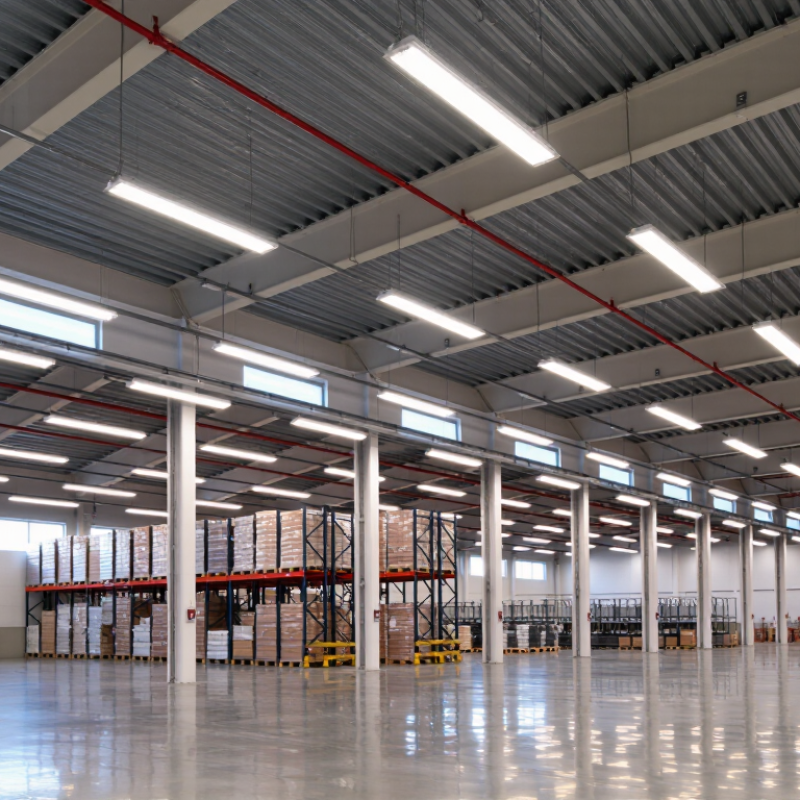
LED tri-proof lights are sealed fixtures designed for wet, dusty, and demanding spaces. The name refers to protection against water, dust, and corrosion. Their common applications include warehouses, food-processing areas, parking structures, workshops, tunnels, and outdoor loading zones. In a warehouse, a wide beam can illuminate aisles evenly. In a humid facility, a reliable housing prevents moisture from reaching the driver and circuit board.
Buying tip: Check the IP rating, not only the word “waterproof.” IP65 may suit dusty indoor areas, while IP66 offers stronger water protection. Consider impact resistance where forklifts or tools operate nearby. Also review the operating temperature, housing material, diffuser strength, and mounting method. These details often matter more than advertised wattage.
Buying tip: Match light quality to the task. Neutral white light around 4000K often supports clear warehouse visibility. Food inspection or detailed assembly may require stronger color accuracy. Ask for photometric files, flicker information, driver efficiency, and tested lifetime data. A long warranty is useful, but it cannot replace credible test reports and regional compliance documents. I have seen projects choose the brightest fixture, then struggle with glare and uneven spacing. That decision looked efficient at first. It was not. Check the actual ceiling height, beam angle, cleaning schedule, and local electrical requirements before placing a global order.
