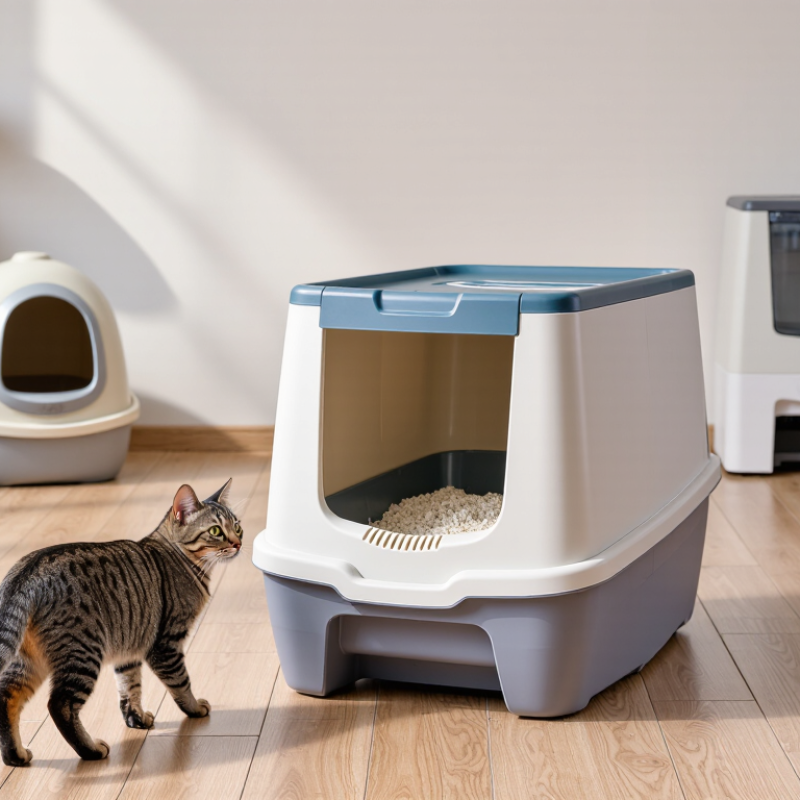
| Box Size | The box should be about 1.5 times the cat’s body length, excluding the tail. | Check whether the cat can enter, turn around, dig, and cover waste without touching the sides. | A box that is too small can cause discomfort and may lead to avoidance or accidents outside the box. | Replace the box with a larger model as the cat grows or if waste regularly lands near the edges. |
| Box Height | Use low entry points for kittens, senior cats, and cats with limited mobility; higher sides can help contain scattered litter. | Observe whether the cat can step over the entrance without hesitation, slipping, or jumping excessively. | Easy access improves safe, consistent use while higher walls reduce mess. | Keep the entrance clear and consider a lower-entry box for cats with arthritis or weakness. |
| Open or Covered Design | Begin with an open box unless the cat clearly prefers privacy and the enclosure provides adequate ventilation. | Offer the preferred box alongside an alternative for several days and compare use, hesitation, and accidents. | Some cats dislike confined spaces or trapped odors, while others feel more secure with privacy. | Clean covered boxes more frequently because odors can accumulate inside. |
| Number of Boxes | Provide one box per cat plus one additional box; place them in separate, accessible locations. | Track whether every cat can reach a box without passing another cat or encountering a blocked route. | Multiple boxes reduce competition, waiting, and territorial stress in multi-cat homes. | Scoop all boxes daily and avoid removing a box suddenly after cats have become accustomed to it. |
| Location | Choose quiet, well-ventilated areas that are easy to reach and away from food and water. | Check for loud appliances, heavy foot traffic, blocked exits, or sudden disturbances near the box. | Cats may avoid boxes located in frightening, noisy, or difficult-to-access areas. | Keep the route open and maintain a stable location whenever possible. |
| Litter Depth | Start with approximately 5–7 cm of litter, adjusting for the cat’s digging and covering habits. | Observe whether the cat can dig comfortably and whether urine reaches the bottom of the box. | Too little litter may allow waste to stick to the base; too much can feel unstable or wasteful. | Top up as needed and maintain a consistent depth after cleaning. |
| Litter Texture | Many cats accept a fine, sand-like, unscented texture, but individual preferences vary. | Introduce a new texture gradually by placing separate boxes side by side rather than changing abruptly. | Paw sensitivity and texture preferences strongly influence acceptance. | Remove heavily soiled material and change texture only through a gradual transition. |
| Scent Level | Choose unscented or lightly scented litter when possible, especially for cats sensitive to odors. | Watch for hesitation, rapid exit, scratching near the box, or elimination elsewhere after changing scent. | A cat’s sense of smell is highly sensitive, and strong fragrances may discourage use. | Avoid air fresheners and strongly scented cleaning products around the litter area. |
| Clumping Performance | Clumps should form firmly enough to remove without breaking apart, while remaining easy to scoop. | Scoop several hours after use and check whether the clump stays together and leaves minimal residue. | Firm clumping supports hygiene and reduces the amount of clean litter removed. | Scoop solid waste and urine clumps at least once daily, preferably more often in multi-cat homes. |
| Dust Control | Select a low-dust litter and pour it slowly to reduce airborne particles. | Look for visible dust during pouring and observe whether the cat coughs, sneezes, or avoids the box. | Reduced dust helps keep the surrounding area cleaner and may improve comfort for sensitive cats. | Pour gently, clean surrounding dust, and consult a veterinarian if respiratory signs continue. |
| Tracking Control | Use a textured, washable mat outside the box and place the box away from sleeping areas. | Check the floor around the box after use and note how much litter is carried on the cat’s paws. | Tracking spreads litter through the home and can create an unpleasant surface for people and pets. | Shake or vacuum the mat regularly and wash it according to its material instructions. |
| Initial Acceptance Test | Keep the setup stable and observe behavior for at least several days after introduction. | Record box visits, digging, elimination, covering, hesitation, and accidents outside the box. | Behavioral observations reveal preferences more reliably than appearance alone. | Change one feature at a time so the cause of acceptance or rejection can be identified. |
| Daily Cleaning | Remove feces and urine clumps at least once every day; more frequent scooping may be needed. | Check the box at a consistent time and remove all visible waste. | Clean litter encourages regular use and limits odor buildup. | Replace removed litter and keep the litter depth within the cat’s preferred range. |
| Complete Washing | Empty and wash the box regularly, using mild unscented soap and warm water. | Inspect the base for stuck waste, cracks, strong odor, or a rough surface. | Residue and absorbed odors can make a cat reject the box. | Rinse thoroughly and dry completely before adding fresh litter; avoid harsh fragrances. |
| Replacement Timing | Replace plastic boxes when they become cracked, deeply scratched, permanently odorous, or difficult to clean. | Run a hand over the interior and inspect for damage or persistent odor after washing. | Damaged surfaces retain waste and bacteria more easily than smooth, intact surfaces. | Replace damaged accessories promptly and maintain a spare box during transitions. |
| Safety Monitoring | Sudden box avoidance, straining, frequent attempts, blood, diarrhea, or no urine requires prompt attention. | Monitor elimination frequency and appearance without disturbing the cat while using the box. | Changes in litter-box behavior can signal urinary, digestive, pain, or stress-related problems. | Contact a veterinarian promptly, especially if a cat strains or cannot urinate. |