


Go to Main Content Go to Footer

How to Choose the Best Outdoor Trampoline

Choosing an Outdoor Trampoline is less about finding the biggest model and more about matching it to your space, users, and routine. Start with a tape measure. Allow room around the frame, and check the recommended clearance in the manufacturer’s instructions. A trampoline that fits on paper may feel crowded beside a fence or low branch.

Small details matter. Look for a clearly stated weight limit, a well-fitted safety enclosure, covered frame padding, and materials described for outdoor use. Check how the net attaches and whether the entry closes securely. These features can reduce common hazards, but they cannot remove risk. Read the setup and safety instructions before buying, not after the boxes arrive.

Think about the ground, too. A level, open area is easier to assess than a sloped lawn, and anchoring may be important where strong winds occur. Follow the manufacturer’s guidance for placement and anchoring. Measure twice. It sounds obvious, but people miss this.

The right choice also depends on who will use it. Consider the manufacturer’s age guidance, capacity, and rules for one jumper at a time. Supervision still matters, even with an enclosure. Inspect the mat, springs, net, and frame regularly, especially after rough weather. Compare warranty terms and replacement-part availability, since wear is ordinary. I would not choose by price alone; a low-cost model can become frustrating if a small part is difficult to replace. There is no perfect trampoline for every yard. A careful fit is a better starting point.
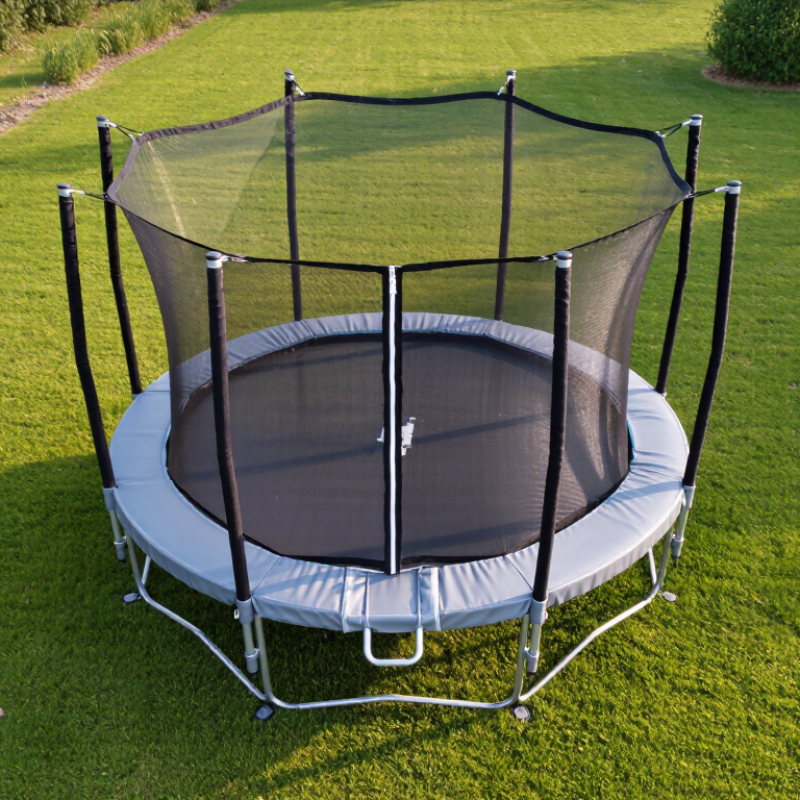
How to Choose the Best Outdoor Trampoline

Identify Who Will Use the Trampoline and How

Before comparing frame size or bounce, picture the actual users. A preschooler needs a different setup from two teenagers practicing turns. Ask who will jump, their ages and sizes, and whether they are likely to share the mat. Be honest about household habits. “One jumper at a time” may sound simple, but busy afternoons can make that rule hard to maintain.

The American Academy of Pediatrics’ 2012 policy statement, drawing on U.S. injury surveillance, reported an estimated 98,000 trampoline-related injuries in 2009 and 3,100 hospitalizations. The statement also noted that about three-quarters of injuries occurred when multiple people jumped together. These figures are historical, not a prediction for one household, but they make user count a practical buying question. If several children will take turns, prioritize clear entry access, a visible enclosure, and a layout that lets an adult watch from nearby. If an adult plans to use it too, check the product’s stated user and weight limits rather than assuming a larger mat is automatically suitable. I’d also reconsider whether a trampoline fits your family if supervision is often unavailable. The plan matters as much as the equipment.

Compare Trampoline Sizes, Shapes, and Weight Limits

How to Choose the Best Outdoor Trampoline

Compare Trampoline Sizes, Shapes, and Weight Limits

Choosing an outdoor trampoline starts with the space you can safely reserve, not the largest model that fits on paper. Round frames guide jumpers toward the center and often suit shared family use. Rectangular frames offer a longer jumping lane, but need more clear room and may feel springier. Measure the full frame and leave a clear buffer around it. Check for overhead branches, fences, and uneven ground. Small yards matter.

Tips: Measure twice. Include room for access and anchoring. Keep the area clear.

Compare the listed weight limits carefully. Some manufacturers state a maximum total load, while others also give a per-jumper limit. Follow the manual for the exact model; do not assume the figures mean the same thing across trampolines. Check who will use it, including growing children, and allow for their combined weight if the limit applies to all users. A higher limit alone does not make a trampoline safer. Inspect the frame, mat, springs, and enclosure regularly, and follow the maker’s guidance on how many people may jump at once. I have found that measurements can look generous on a sketch, then feel tight once the enclosure is assembled. Check the label.

Evaluate Frame, Mat, Springs, and Enclosure Materials

A sturdy outdoor trampoline starts with a frame that suits its location. Check the steel tubing, welds, and leg connections, not just the listed weight. Galvanized or well-coated steel can resist moisture, but chipped coating may still rust. Look closely at joints for rough edges or uneven welds. A heavy frame is not automatically a better frame; stability and sound construction matter more.

The mat should feel taut and lie evenly across the frame. UV-resistant polypropylene can handle sun exposure better than ordinary fabric, though it still wears over time. Inspect the stitching around the V-rings, where repeated bouncing concentrates stress. Springs should be consistent in length and firmly attached, with protective padding covering them fully. Small gaps matter.

For the enclosure, check that the net is tightly woven, securely fastened, and easy to close. A zipper that catches or a loose strap is easy to overlook in a showroom. Materials can look durable when new, so check care instructions and replacement-part availability before buying. Even good materials need regular inspection, especially after wind, rain, or long periods outdoors.

Check Safety Features and Suitability for Your Yard

How to Choose the Best Outdoor Trampoline

Before comparing sizes, measure the usable part of your yard. Leave clear space around the trampoline, and check for branches, fences, sheds, and sloping ground. A flat, open area is easier to supervise and less likely to create awkward hazards. The lawn may look spacious until the frame is assembled. That is an easy detail to miss.

Check the safety features closely. A well-fitted enclosure net should close securely, while frame padding should cover exposed springs and hard edges. Look for sturdy frame joints and weather-resistant materials, but inspect them regularly; outdoor equipment can wear, loosen, or rust over time. Follow the maker’s instructions for weight limits, assembly, and anchoring. Wind can shift a trampoline, even when it seems heavy. Keep the entrance closed during use, and allow only one jumper at a time to reduce collisions.

Suitability also depends on who will use it and how often. A large model may sound more fun, but it can crowd a small yard and leave little room for safe access. Consider storage, maintenance, and whether an adult can see the jumping area from nearby. Supervision matters. I might still underestimate the space needed for everyday use, so mark the proposed footprint with a hose or chalk before buying. Then walk around it. If access feels tight, reconsider the size.

Compare Costs, Warranties, and Maintenance Needs

Compare the full ownership cost, not just the price on the box. A lower-priced trampoline may need a replacement net, mat, or spring sooner. Ask for separate replacement-part prices before buying. Small parts add up. Check whether delivery, anchoring, and seasonal storage supplies are included.

Read warranty terms by component: frame, mat, springs, net, and padding may have different coverage periods. Look for exclusions involving rust, UV exposure, wind, and ordinary wear.

The U.S. Consumer Product Safety Commission’s 2014 NEISS estimate recorded 104,691 trampoline-related emergency-department injuries. That historical figure is not a measure of product quality, but it underscores why intact padding and enclosure parts matter.

Inspect seams, hooks, and frame joints regularly; replace damaged components rather than relying on a warranty to cover wear. Maintenance is easy to underestimate.

I still find warranty wording confusing, so compare the written terms side by side and ask the seller to clarify anything vague. A little paperwork now can prevent a costly surprise later.

Logo Access 360