


How to Choose a Lithium Ion Battery Pack
Choosing a Lithium Ion Battery Pack is no longer just a matter of comparing voltage and price. Battery demand is growing quickly. The International Energy Agency reported that demand for electric-car batteries reached about 750 gigawatt-hours in 2023, roughly 40% above 2022 levels. BloombergNEF’s 2023 Battery Price Survey also put the average lithium-ion pack price at $139 per kilowatt-hour, a 14% year-on-year decline. These figures show a fast-moving market, but they do not identify the right pack for every application.
Start with the job the battery must do. Match its nominal voltage and usable capacity to the equipment, then check continuous and peak discharge current. A pack for a daily delivery vehicle faces different demands from one powering a cabin backup system. Temperature range, cycle life, charging limits, enclosure size, and battery-management-system protections also matter. Ask for test conditions and supporting documentation, not just headline specifications. Small details count: a connector, a few millimeters of clearance, or an unexpected cold start can affect real-world performance.
The best choice balances safety, service life, performance, and total cost—not just the lowest quoted price. Confirm that the supplier can explain cell chemistry, warranty coverage, and quality controls in plain terms. Compare like with like. Even a neat specification sheet can mislead when test methods differ. And one point deserves reflection: a higher capacity may look reassuring, yet it can add weight and cost without solving the actual need. A careful shortlist makes those trade-offs visible before purchase.
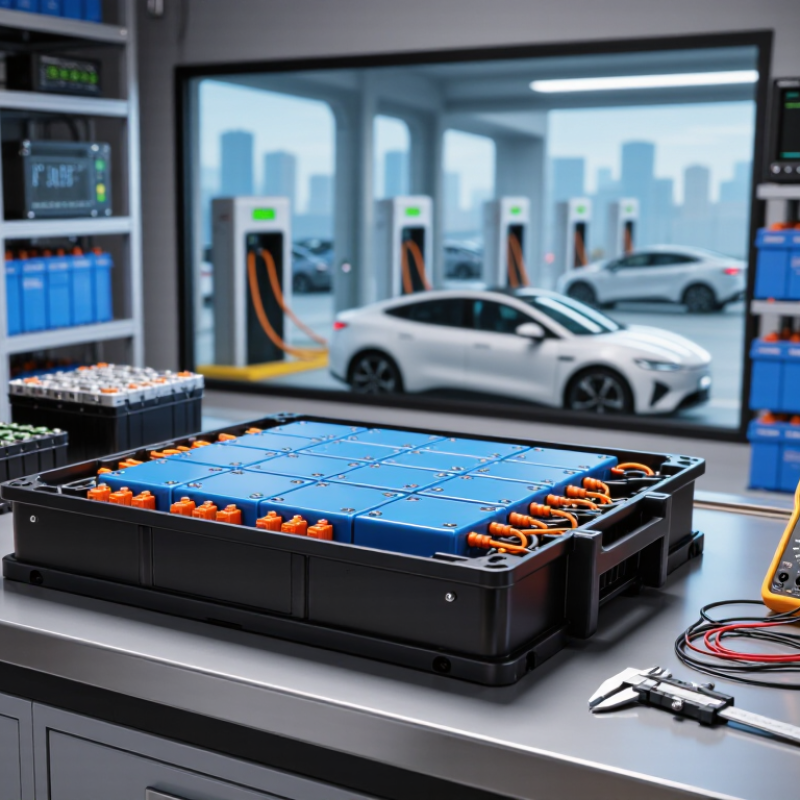
Define the Application and Power Requirements
Start with the job. A lithium-ion battery pack should match the load’s real operating profile, not just its nameplate wattage. Record the required voltage, continuous current, peak current, and peak duration. A motor, for example, may demand a brief surge when starting. Measure it. Estimate energy as average power in watts multiplied by operating hours, then allow for conversion losses, reserve capacity, and battery aging. A 100-watt device running for five hours needs 500 watt-hours before those allowances.
The application also sets practical limits. A handheld tool needs a compact pack that can deliver high current; a sensor running for months may prioritize low standby drain. Note the enclosure space, ambient temperatures, charging schedule, and whether the load runs continuously or intermittently. Cold matters. The International Energy Agency’s Global EV Outlook 2024 reports that electric-car battery demand reached about 750 GWh in 2023, roughly 40% higher than in 2022. That market figure is not a sizing formula, but it shows why battery requirements vary across applications. In practice, measured load data beats a neat spreadsheet assumption. I still see runtime estimates miss the mark when startup surges or cold conditions are ignored.
