


How to Choose the Right Panel Light in 2026?
Choosing the right Panel Light in 2026 means more than comparing wattage and price. In real projects, a bright fixture can still create glare, uneven desks, or tired eyes. Office ceilings, hospital corridors, classrooms, and retail displays need different optical behavior. A useful decision begins with the room, not the product page. Measure ceiling height, mounting space, working-plane needs, daylight exposure, and control requirements. Then compare lumens, efficacy, color temperature, CRI, UGR, flicker performance, and lifetime ratings. Small details matter. A 4000K panel may feel crisp in a workshop but cold in a waiting room.
Reliable selection also depends on evidence. Request photometric files, test reports, warranty terms, and clear information about drivers and replacement parts. Check certification marks against recognized regional requirements, and ask a qualified electrical professional to confirm installation compatibility. In 2026, smart controls, occupancy sensing, tunable white, and recyclable materials may improve value, but they can also increase complexity. Do not assume every connected feature saves energy. Review standby consumption, software support, privacy practices, and maintenance access. I have seen attractive panels underperform because installers ignored driver quality or ceiling depth. That mistake is easy to repeat. Budget pressure matters too, yet the cheapest unit may cost more through early failures and frequent labor. A careful choice balances visual comfort, verified performance, safety, serviceability, and long-term operating cost. The best answer is not universal. It is the one that fits the space honestly.
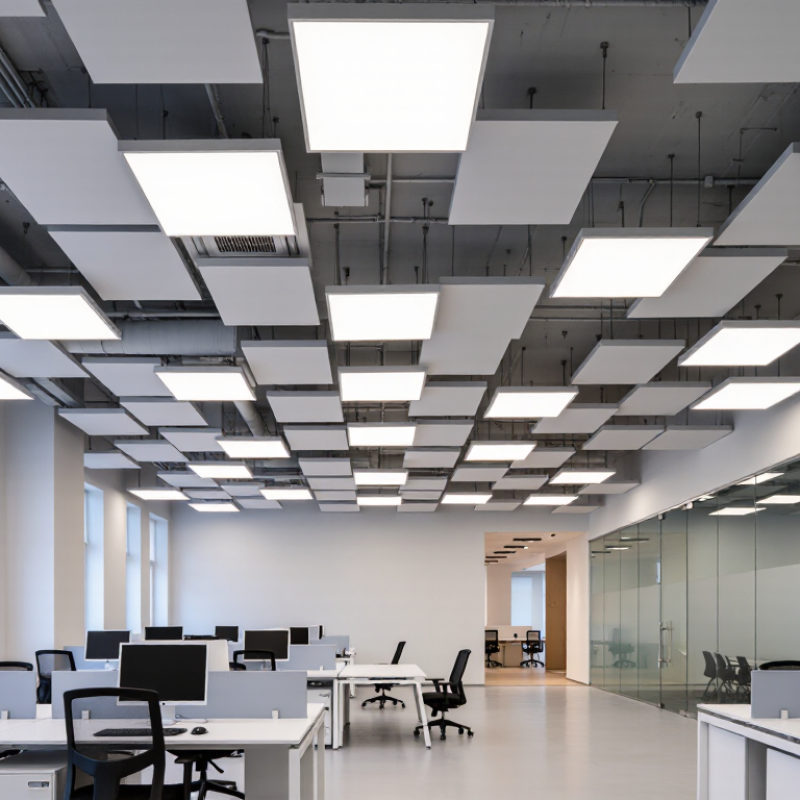
Define Required Light Levels: 500 Lux for Offices Under EN 12464-1
How to Choose the Right Panel Light in 2026?
For office work, EN 12464-1:2021 identifies 500 lux as the maintained illuminance for reading, writing, and data processing. Maintained matters. Dust, ageing, and lumen depreciation gradually reduce light on the desk. A panel rated at 500 lux on day one may deliver less later. Specify the target at the end of its useful life, not only during installation.
Check the complete lighting package. The standard commonly pairs 500 lux with uniformity of at least 0.60, glare control around UGR 19, and colour rendering of Ra 80 or higher. These figures affect comfort as much as brightness.
The International Energy Agency’s Energy Efficiency 2023 report estimates that lighting uses about 15% of global electricity. Efficient panels therefore need useful lumens, not impressive wattage alone. Compare delivered lumens per watt, maintenance factors, and measured photometric files.
Walk through the room before choosing.
Dark ceilings, deep shelves, and glossy monitors can change the result. A simple lux survey at desk height often reveals uneven corners. I have seen installations meet the average while leaving individual workstations visibly dim. That is a design warning.
Daylight controls, occupancy sensors, and adjustable output can reduce waste, but commissioning is often overlooked. Leave room for adjustment; real offices rarely match the original drawing.
