Top Multi Axis Motion System Manufacturers in China
China’s manufacturing base is driving demand for precise, dependable motion control. The International Federation of Robotics’ World Robotics 2024 report recorded 541,302 industrial robot installations worldwide in 2023. China accounted for 276,288 installations, about 51 percent of the total. These figures describe industrial robotics, not the Multi Axis Motion System market itself. Still, they show the scale of automation projects that rely on coordinated movement, repeatable positioning, and reliable components.
Precision matters. A gantry moving a camera over a production line has different requirements from a compact stage positioning a laser head. Buyers comparing Chinese manufacturers should therefore examine more than axis count or advertised speed. Check positioning accuracy, payload limits, controller compatibility, service access, and the availability of technical documentation. Ask how the system performs under the actual duty cycle, not just in a showroom demonstration. Small details matter, too: cable routing, encoder feedback, and how quickly replacement parts can be supplied.
This overview introduces notable Multi Axis Motion System manufacturers in China and the capabilities buyers should verify. Rankings can vary with application, budget, and integration needs; a supplier strong in standard stages may not suit a custom machine. No shortlist replaces testing. Product specifications can also be incomplete, so request written performance data and confirm it against your operating conditions. That extra check takes time, but it may prevent costly rework later.
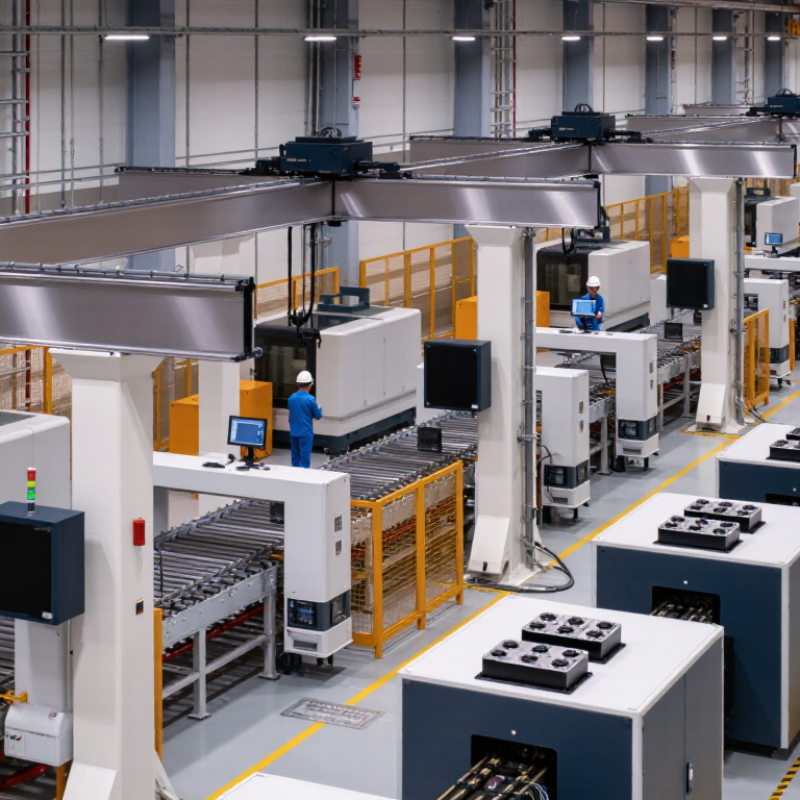
How Multi-Axis Motion Systems Are Defined and Classified
A multi-axis motion system coordinates movement along two or more axes to position a tool, part, or sensor. It typically combines motors, mechanical guides, a controller, and sometimes position feedback. In practical terms, an XYZ stage can move a camera above a workpiece while maintaining a repeatable path. Add a rotary axis, and the system can approach angled surfaces. That matters.
Systems are commonly classified by their mechanical layout. Cartesian systems use straight-line axes arranged at right angles; gantry designs support wider work areas with a bridge structure. Articulated systems use rotating joints, while hybrid designs combine linear and rotary movement. The number of axes describes available directions of motion, but it does not alone indicate accuracy or capability. Payload, travel range, speed, and workspace also shape performance.
Control provides another useful distinction. Coordinated systems move several axes together along a planned path, while simpler setups may move axes independently. Feedback-based systems use encoders or other sensors to compare actual position with the commanded position. Open-loop systems generally do not measure position in the same way. In real projects, categories can blur: a machine may be Cartesian mechanically yet highly coordinated in software. Classification is a starting point, not a substitute for checking the actual motion requirements.