


What Is a Lithium RV Battery and How Does It Work?
A lithium RV battery stores electrical energy in rechargeable lithium-ion cells, commonly lithium iron phosphate (LiFePO4) in recreational vehicles. It can power lights, a refrigerator, and other 12-volt equipment without an engine running. The battery’s chemistry is only part of the story. A battery management system (BMS) monitors cell voltage and temperature, and can limit charging or discharging when conditions move outside safe operating ranges. When a charger supplies power, ions move within the cells; when appliances draw power, that stored energy becomes usable electricity. The details matter.
BloombergNEF’s 2024 Battery Price Survey reported an average lithium-ion pack price of $115 per kilowatt-hour, down 20% from 2023. That figure describes a broad global market, not the installed cost of an RV battery. RV systems also require compatible chargers, wiring, and protection, which affect the final price and performance. A useful perspective, paraphrased from Argonne battery scientist Dr. Venkat Srinivasan’s work, is that cell chemistry, controls, and operating conditions must be considered together.
In this guide, we’ll look at how a lithium RV battery works, what its BMS does, and how charging differs from simply connecting a battery to a load. We’ll also separate common claims from practical limits: cold temperatures can restrict charging, and a larger capacity does not automatically solve every power problem. That distinction matters. Real-world use depends on the whole system, including appliances, solar input, and charging habits. A lithium battery can make camping power quieter and more convenient, but it still needs careful sizing and compatible equipment.
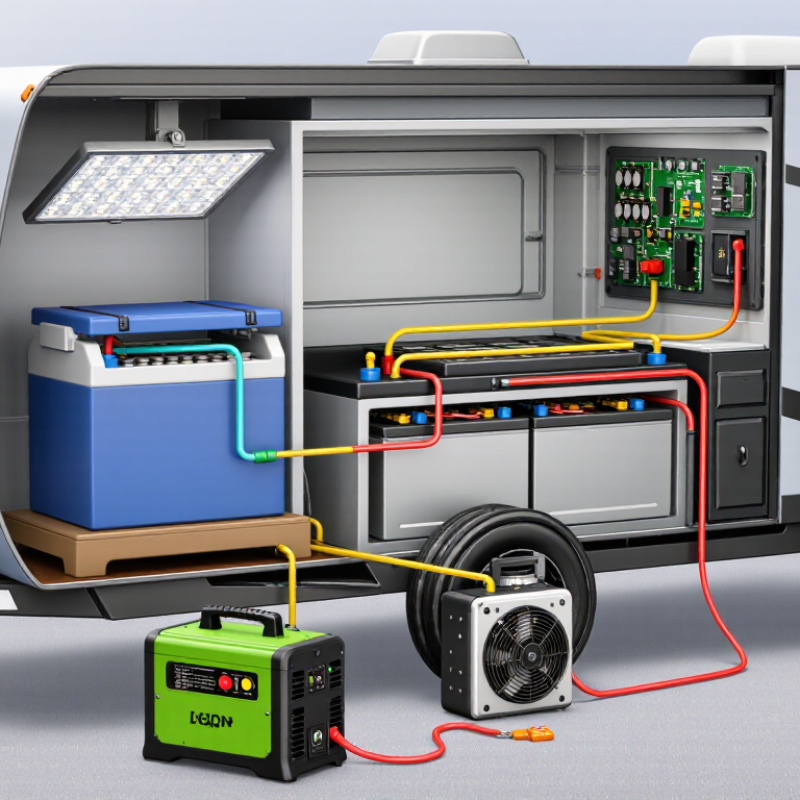
What a Lithium RV Battery Is
A lithium RV battery is a rechargeable energy-storage unit built from lithium-based cells. It supplies electricity to lights, fans, pumps, and other onboard equipment when shore power is unavailable. Many deep-cycle RV models use lithium iron phosphate chemistry, often called LiFePO4, though not every lithium battery has the same chemistry or specifications.
Compared with a lead-acid battery of similar capacity, a lithium model is often lighter and can provide more usable energy. The exact difference depends on the battery’s design and operating limits. That distinction matters. A battery’s rated capacity does not always equal the energy an RV owner should plan to use.
Most RV lithium batteries include a battery management system, or BMS. It monitors conditions such as voltage and temperature, and may limit charging or discharging when readings move beyond safe operating ranges. In practical terms, it is a safeguard, not a substitute for a compatible charger or correct installation. Cold weather deserves attention: some batteries restrict charging below certain temperatures. Check the specific battery’s manual before choosing equipment or changing a system. Not every setup fits. A heavier battery bank, existing charger, and available mounting space can all affect whether a lithium replacement is suitable.
