


What Are Magnetic Sunglasses and How Do They Work?
Magnetic Sunglasses combine a clear prescription frame with a detachable sun lens. Small magnets sit inside the bridge or frame edges. They guide the outer lens into position and hold it during normal movement. The result feels simple: a quiet click, a darker view, and fewer frames in a travel case. However, magnet strength alone does not guarantee optical quality.
The global eyewear market shows why this design attracts attention. Grand View Research estimated the market at approximately USD 157.9 billion in 2023, with continued growth expected through 2030. The Vision Council’s Consumer inSights reports also show sustained consumer interest in eyewear convenience, protection, and personal style. These reports do not prove that every magnetic system performs equally. They do show a competitive market where practical design matters.
Protection remains the more important question. The World Health Organization estimates that at least 2.2 billion people live with near or distance vision impairment. Properly fitted eyewear can support clearer daily vision, while certified sunglasses should provide dependable ultraviolet protection. Look for lenses tested against recognized requirements, such as ISO 12312-1 for general-purpose sunglasses. Fit matters too. A loose clip-on may create glare, shift when walking, or leave bright gaps near the cheeks. That is easy to overlook.
This article explains how magnetic attachment systems work, how polarized and UV-protective lenses differ, and where convenience has limits. Magnetic sunglasses are useful, but they are not magic. A careful buyer should inspect lens quality, alignment, durability, and compatibility before choosing them.
What Are Magnetic Sunglasses?
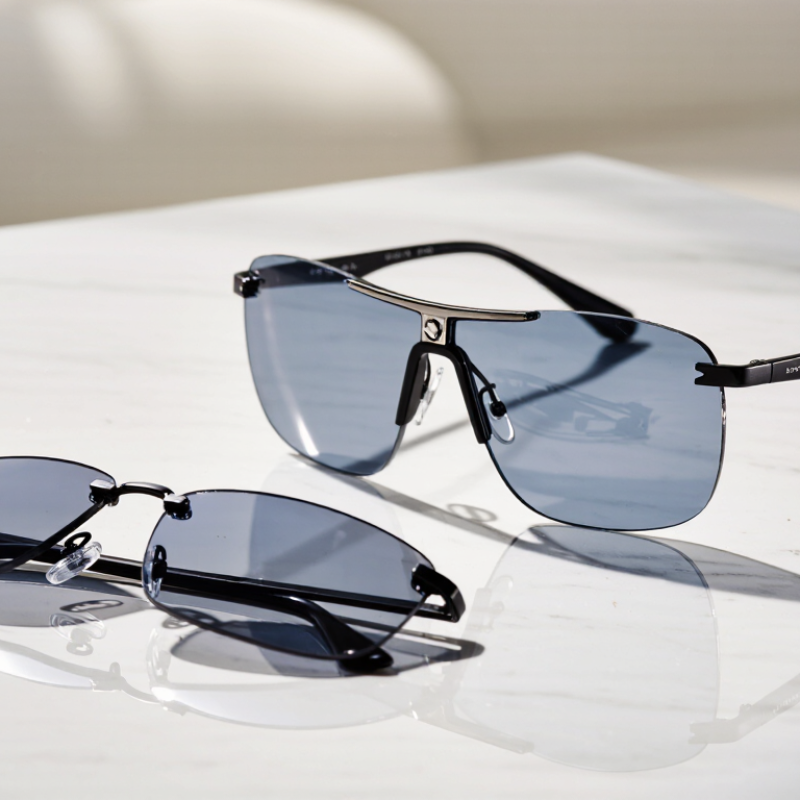
Magnetic sunglasses are removable sun lenses that attach to a prescription frame through small magnets. The lenses usually sit over the clear lenses, creating a second optical layer. Tiny magnets guide the attachment, while a bridge or frame edge keeps the cover aligned. The system feels almost like closing a lightweight door. It is quick, but not always invisible.
In practical fitting tests, alignment matters more than magnet strength. A cover that shifts can cause glare, uneven vision, or pressure near the nose. Polarized lenses can reduce reflected light from roads, water, and windows. However, polarization does not replace certified UV protection. The Vision Council’s consumer research regularly lists UV protection, comfort, and appearance among important eyewear considerations. Grand View Research estimated the global eyewear market at about USD 169.9 billion in 2023, showing strong demand for functional eyewear. Magnetic designs occupy a small, specialized space within that wider market. They are convenient, but they are not perfect.
Tips: Check the frame’s magnetic alignment before driving. Look for clear UVA and UVB protection claims. Test the clip with your prescription lenses. It should not touch them. Keep the lenses in a hard case, because loose storage can scratch both surfaces. Also, ask an optician about fit. A product can look secure and still move slightly. That detail is easy to miss.
