


7 Tips for Choosing a Shoulder Press Machine
Choosing a Shoulder Press Machine is not just a matter of picking the largest frame or heaviest weight stack. The right machine should fit your body, move smoothly, and feel stable throughout each repetition. A few minutes of careful checking can reveal problems that a product photo will not show.
Start with the seat and back pad. Your feet should rest firmly on the floor, while the handles begin near a comfortable shoulder height. Small details matter. A grip that feels fine at the start may become awkward as the handles rise. Check whether the machine allows a natural range of motion without forcing your elbows or shoulders into uncomfortable positions. People have different proportions, so no single design suits everyone.
These seven tips will help you compare machines with practical questions in mind: Does the frame feel steady? Can you adjust the seat easily? Is the resistance smooth, and are the grips comfortable? Look closely at welds, cable routing, weight-stack increments, and the space needed around the unit. If possible, try a few controlled repetitions before buying. A showroom test is useful, though it cannot tell you how the machine will feel after months of use. That uncertainty is worth remembering. The best choice is one that matches your training needs, available space, and budget—not simply the most impressive specification sheet.
Set Your Training Goal with ACSM’s 8–12-Rep Strength Guidance
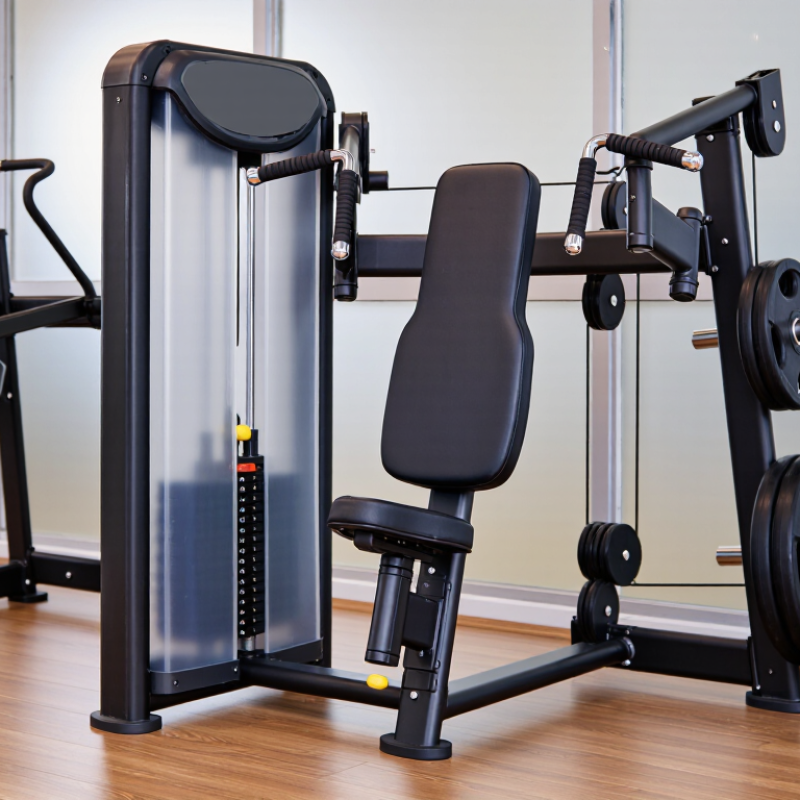
Choosing a shoulder press machine starts with your training goal, not its size or display. For general strength, use the American College of Sports Medicine’s 8–12-repetition guidance as a practical starting point. Its position stand on resistance training recommends this range for novice and intermediate adults. Choose a load you can press for at least eight controlled repetitions, but not far beyond twelve. Keep your back against the pad and your wrists stacked over your elbows. That matters. If your shoulders pinch or your lower back arches, reduce the load or adjust the seat.
Check that the handles begin around shoulder height and move smoothly through your comfortable range. A machine with adjustable seat height can help align the handles with your shoulders, rather than forcing an awkward start. Rest, then repeat your set with steady control; the last few repetitions should feel challenging, not painful. ACSM’s guidance is a useful baseline, not a rule for every lifter. Advanced trainees or people managing shoulder discomfort may need different loads and ranges. I still find machine fit easy to overlook. Test the setup before choosing, and ask a qualified trainer to check your position if the movement feels uncertain.
