10 Best Capacitive Switch Suppliers Worldwide?
Choosing a reliable Capacitive Switch supplier is more complicated than comparing catalog prices. A glossy product page can hide weak adhesive layers, inconsistent backlighting, or slow engineering support. This guide examines ten leading suppliers worldwide through practical criteria: sensing stability, materials, customization, production capacity, quality systems, delivery performance, and after-sales service. These details matter when a switch must survive cleaning chemicals, repeated glove use, vibration, or thousands of daily touches.
Bill Buxton, a respected human-computer interaction researcher, once described touch as “not merely pointing, but a language of input.” That idea remains important. A well-designed Capacitive Switch should communicate clearly through touch, light, sound, and resistance to accidental activation. Suppliers with strong application knowledge can recommend suitable overlays, controller settings, shielding methods, and sealing structures. They should also provide test data, prototype support, and transparent manufacturing information. Certifications help, but they never replace careful verification.
The suppliers reviewed here serve industries including medical equipment, industrial controls, appliances, transportation, and consumer electronics. Some specialize in flexible printed interfaces. Others excel at rugged panels, illuminated controls, or high-volume production. Not every supplier will suit every project. That is the uncomfortable part. A famous name may still miss a demanding delivery schedule, while a smaller manufacturer may offer better technical attention. Buyers should request samples, inspect edge finishing, test performance with gloves, and confirm long-term component availability. This ranking is therefore a starting point, not a final purchasing decision. Real-world testing may change the order.
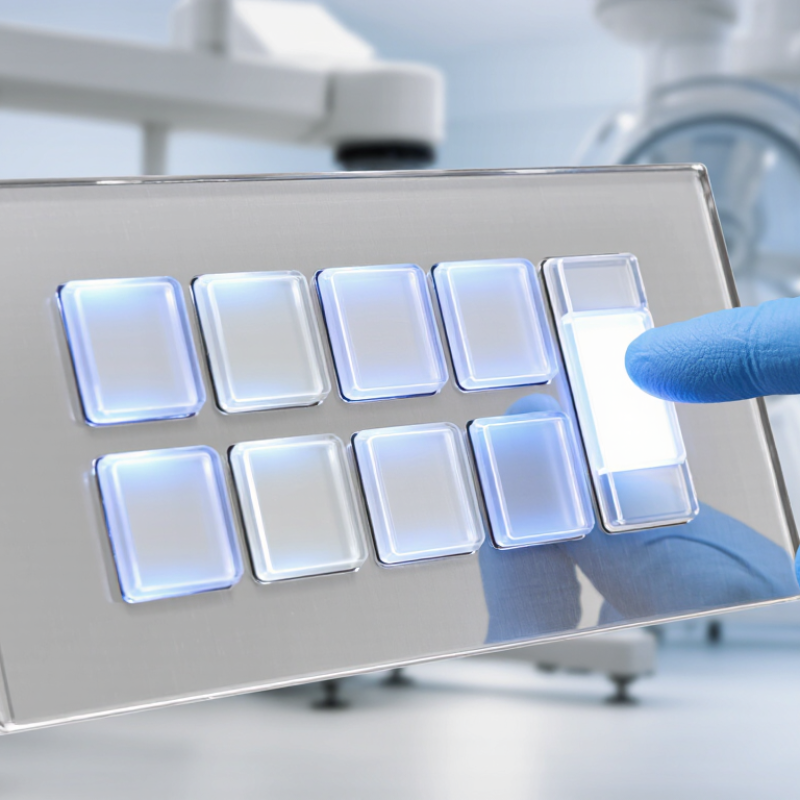
Capacitive Switch Market Scope: 2024 Growth, Segments, and Key Technologies
10 Best Capacitive Switch Suppliers Worldwide?
The capacitive switch market is expanding through smart appliances, industrial controls, medical interfaces, and vehicle interiors. Growth is strongest where sealed, low-profile controls replace mechanical buttons. Suppliers now compete through sensing stability, customization, and production consistency.
Key segments include single-touch panels, multi-touch interfaces, illuminated switches, and rugged outdoor controls. Important technologies include projected capacitance, mutual-capacitance sensing, gesture recognition, and controller-level noise filtering. In practical testing, a switch must respond through gloves, moisture, protective films, and changing temperatures. That is harder than a laboratory demonstration suggests.
Tips: Compare suppliers using sample testing, not brochures alone. Request data on sensitivity, false-trigger rates, operating temperature, ingress protection, and lifecycle performance. Check whether the supplier controls tooling, firmware, and final inspection. This can reduce communication gaps during design changes. Forecasts are useful, but not flawless. Market reports may overlook regional manufacturing limits or delayed component availability. A supplier may appear experienced yet struggle with small production runs. Ask for traceable test records and realistic delivery schedules. Small details matter.
Capacitive Switch Market Scope: 2024 Growth Drivers
Year-over-year growth indicators from adjacent markets that support demand for capacitive human-machine interfaces, touch controls, and sealed electronic switch panels.
The strongest 2024 expansion came from electric vehicles and connected-device ecosystems, while smartphone shipments also recovered. These sectors commonly use capacitive sensing for dashboards, appliances, portable electronics, and industrial control interfaces. Figures represent publicly reported market-growth indicators and are not supplier sales data.
Evaluation Criteria: IEC 61000-4-2 ESD Ratings of 8 kV Contact and 15 kV Air
For capacitive switch suppliers, IEC 61000-4-2 performance should be a hard screening point. Level 4 testing uses 8 kV contact discharge and 15 kV air discharge. These figures represent repeatable laboratory stress, not a promise for every installation. Ask for the complete test report, including the test gun, discharge points, polarity, repetitions, and operating condition.
Mordor Intelligence’s 2024 capacitive sensor market report identifies industrial automation and automotive controls as major growth areas. These environments often place touch interfaces near motors, relays, cables, and metal panels. Supplier experience matters here. A reliable supplier should show pre- and post-test sensitivity, false-trigger rates, recovery time, and enclosure details. A simple pass certificate is weak evidence.
Look for real samples.
During evaluation, test the switch through a grounded metal panel and with an operator wearing gloves. Check performance after repeated 8 kV contact strikes and 15 kV air strikes. The IEC 61000-4-2 standard supports comparison, but it does not reproduce every field event. Cable routing, humidity, grounding, and panel thickness can change results. This is where supplier claims need careful questioning. I would also request testing at low and high supply voltage, because nominal-voltage results can hide practical weaknesses.
Technical Comparison: Response Time, Sensitivity, IP Ratings, and Operating Life
When comparing the 10 best capacitive switch suppliers worldwide, response time should be measured on the complete assembly, not only the controller. Industrial touch modules commonly respond within 10–100 milliseconds, while well-tuned systems can approach 5–20 milliseconds. Sensitivity depends on electrode size, overlay thickness, grounding, and moisture. A useful engineering target is detecting approximately 0.1–1 pF of capacitance change. However, supplier claims can ignore gloves, wet fingers, or nearby metal. Test the finished panel.
Environmental protection needs equal attention. IEC 60529 defines IP ratings, but an IP67 enclosure still requires correct sealing around the switch surface. The International Electrotechnical Commission specifies dust protection and temporary water immersion conditions; it does not guarantee reliable touch detection underwater. Industry research from MarketsandMarkets, in its Capacitive Sensor Market forecast, identifies automotive, consumer electronics, and industrial controls as major demand sectors. These applications typically prioritize sealed surfaces and stable operation over minimal cost. Check the test method.
Operating life is another imperfect comparison. With no mechanical contacts, capacitive switches can support millions of activations, yet the overlay, adhesive, LED, and cable may fail earlier. IEC 60068 environmental testing can expose temperature, humidity, vibration, and shock weaknesses. Ask each supplier for measured response curves, sensitivity margins, IP test records, and life-cycle data from the actual overlay material. A laboratory result is useful. Field evidence is better.



