


China Top 10 Emergency EV Charger Suppliers?
China’s EV market is expanding, and reliable roadside charging is becoming more important. Buyers researching China’s top 10 emergency EV charger suppliers should look beyond attractive product photos. An Emergency Ev Charger can be a portable unit, a vehicle-mounted system, or temporary charging equipment. These options serve different needs.
A careful comparison starts with practical specifications. Check power output, connector options, battery capacity, charging time, and weather protection. Ask whether the equipment supports the vehicle models in your fleet. Small details matter. Cable length can affect roadside setup, while unit weight can shape how easily one technician handles it. For fleet managers, response time, service coverage, spare-part availability, and warranty terms deserve equal attention.
This guide introduces ten suppliers for closer evaluation, not as a guaranteed ranking. Supplier capabilities and product ranges can change, so confirm current details directly. Request technical datasheets, test records, and clear explanations of applicable certifications. If possible, see a demonstration under realistic operating conditions. A specification sheet cannot show every setup difficulty. Some advertised performance figures may also depend on temperature, vehicle compatibility, or charging state. That deserves scrutiny. The most suitable supplier is the one whose equipment, support, and documented performance match your actual routes and response requirements. No single option fits every operator.
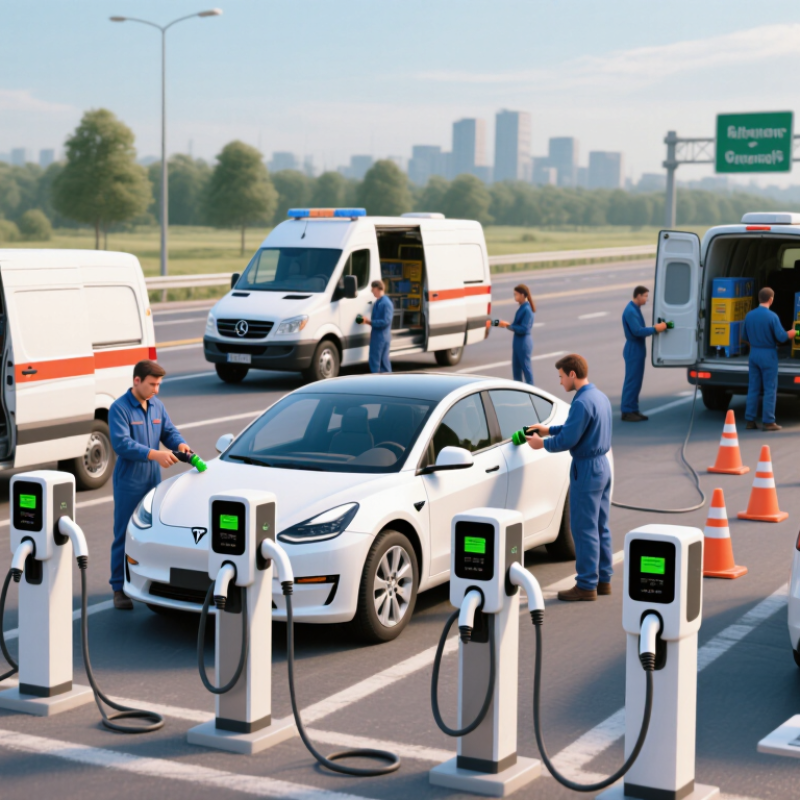
What Emergency EV Chargers Are and How They Work
An emergency EV charger provides temporary power when a vehicle cannot reach a regular charging point. It may be a portable unit carried by a roadside service vehicle or a mobile battery system brought to the car. Depending on its design, it supplies alternating current or converts stored energy into direct current. The vehicle and charger communicate before power flows, checking connection and charging limits. A brief session may add enough range to reach a fixed station. Not a full refill.
The IEA’s Global EV Outlook 2024 reports that public charging points grew by about 40% worldwide in 2023. Fast chargers grew faster, at roughly 55%. This wider network helps, but gaps remain on remote roads and during outages. Emergency charging fills a practical gap rather than replacing dependable infrastructure.
Operators should check the vehicle’s connector, battery condition, and safe parking space before connecting equipment. Wet ground, poor visibility, or a damaged cable can complicate a roadside stop. One detail is easy to overlook: a rescue charge may be slow, limited by the unit’s stored energy, or unavailable for some vehicle configurations. That limitation deserves plain disclosure.
