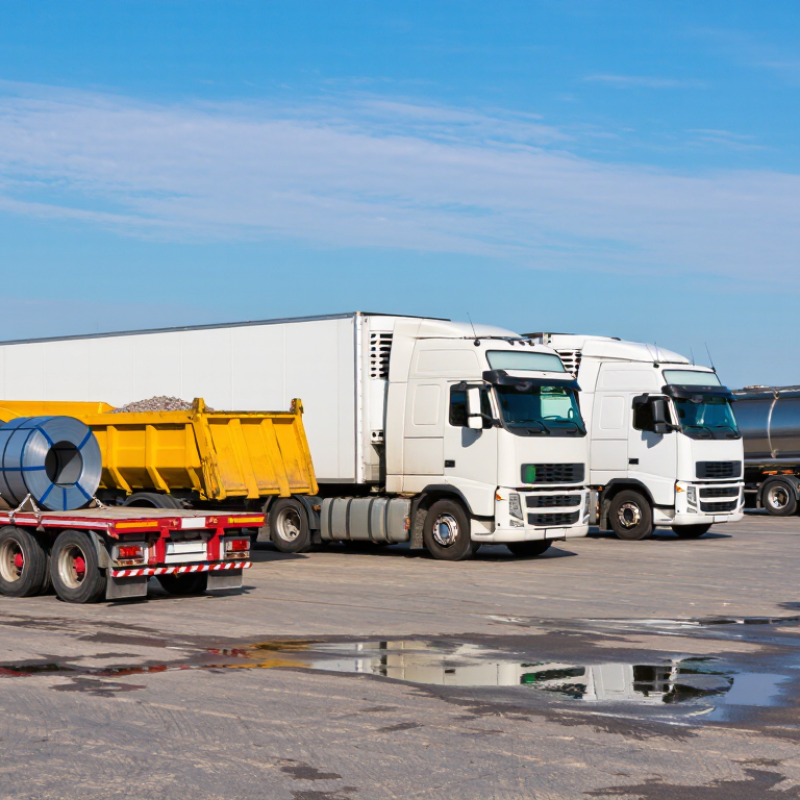
| Vehicle Concept | One permanently integrated vehicle with the cab, chassis and load body mounted on a single frame. | A powered tractor couples to a detachable semi-trailer through a fifth-wheel connection. | Choose by route structure
Rigid trucks suit fixed-body operations and frequent delivery stops. Tractor units suit trailer interchange, long-haul work and return-load flexibility. |
| Typical Legal Gross Vehicle Weight | Approximately 7.5–32 tonnes, depending on axle count, road rules and market segment. | Common international combinations are approximately 40–44 tonnes gross combination weight, subject to local axle and road regulations. | Verify local limits.
Permitted gross weight, axle load and dimensions differ substantially between countries and road networks. |
| Typical Payload Potential | Approximately 3–19 tonnes after accounting for chassis, body, equipment, fuel and crew. Medium-duty bodies normally carry less than heavy-duty configurations. | Approximately 20–28 tonnes for many standard dry-freight combinations, depending on tractor tare weight, trailer design, equipment and legal limits. | Use a rigid truck for moderate loads and urban access. Use a tractor-trailer combination when high payload volume or long-distance freight productivity is the priority. |
| Common Axle Configurations | 4×2, 6×2, 6×4 and 8×4 are widely used configurations. | 4×2 and 6×2 tractor units are common for road freight; 6×4 is used where higher traction or demanding terrain is required. | 4×2 supports lower tare weight and efficient highway use. More driven axles improve traction but generally increase purchase cost, tare weight and fuel consumption. |
| Body and Cargo Options | Box body, curtain-side, dropside, tipper, tanker, refrigerated body, refuse body, crane body and flatbed. | Dry van, curtain-side, refrigerated, tanker, skeletal container, low-loader, tipper and specialized semi-trailers. | Rigid bodies are permanently matched to the chassis. Tractor units provide greater operational flexibility because one tractor can work with multiple trailer types. |
| Urban Distribution | Strong fit because of compact overall length, easier maneuvering and simpler access to loading bays and narrow streets. | Usually less suitable in dense city areas because of longer combination length and wider turning requirements. | Preferred: Rigid Truck
Consider a short wheelbase, rear-steer option or lift axle where local access and loading-zone restrictions are severe. |
| Regional Distribution | Effective for multi-drop deliveries, construction supply and routes where the same body is used throughout the day. | Effective when freight is consolidated, delivery points are fewer and trailer exchange or overnight line-haul is required. | Choose by stop frequency
Frequent stops favor a rigid truck; depot-to-depot or hub-and-spoke work often favors a tractor unit. |
| Long-Haul Highway Freight | Capable of long-distance work, but the fixed body may reduce trailer interchange and cargo-volume flexibility. | Generally the preferred format for high-mileage highway freight, especially when standardized trailers and return-load planning are available. | Preferred: Tractor Unit
Prioritize aerodynamic cab and trailer design, fuel-efficient gearing, driver comfort and service support along the route. |
| Construction and Off-Road Access | Heavy-duty 6×4 or 8×4 rigid trucks are suitable for tippers, mixers, crane bodies and other equipment requiring strong chassis integration. | 6×4 tractor units with suitable trailers can move heavy machinery, but combination length and site maneuverability may be limiting. | Preferred: Heavy Rigid Truck
For quarry, site-delivery and uneven-ground work, evaluate ground clearance, frame strength, axle ratings and traction systems. |
| Container Transport | Possible with a rigid chassis, but container lengths and handling flexibility may be restricted by the fixed vehicle layout. | Well suited to interchangeable container chassis and port-to-depot operations. | Preferred: Tractor Unit
Confirm compatibility with 20-foot, 40-foot and 45-foot container equipment, including twist-lock positions and axle limits. |
| Refrigerated Freight | Suitable for local and regional temperature-controlled deliveries, particularly when the body remains dedicated to one vehicle. | Suitable for long-haul temperature-controlled freight and trailer pooling, provided refrigeration equipment and service coverage are available. | Rigid refrigeration bodies are often efficient for multi-drop routes. Tractor units are advantageous when reefer trailers are exchanged or loaded at multiple hubs. |
| Turning and Site Maneuverability | Usually easier to maneuver because there is no articulation point and the overall vehicle length can be shorter. | Requires additional space for articulation, reversing and trailer swing, particularly with long or specialized trailers. | Tight access: Rigid Truck
Check swept path, wheelbase, cab-to-body clearance and loading-bay geometry before purchase. |
| Trailer Interchangeability | Low to moderate; the body is normally fixed to the vehicle chassis. | High; the tractor can be assigned to dry, refrigerated, tanker, container or flatbed trailers as required. | Preferred: Tractor Unit
Best for fleets that balance seasonal demand, different cargo types or cross-border trailer exchange. |
| Operational Utilization | Vehicle utilization depends on the availability of the integrated body and may be reduced during loading, unloading or maintenance. | The tractor and trailer can be separated, allowing loading, unloading or maintenance activities to occur in parallel. | Tractor-trailer fleets can improve asset utilization where loading dwell time is high and trailer parking or drop-and-hook procedures are available. |
| Initial Fleet Investment | Usually simpler for a single dedicated operation because one vehicle includes the required body. | Requires a tractor plus one or more compatible trailers, increasing the initial fleet investment but expanding operational flexibility. | Compare total cost per delivered tonne, not only vehicle purchase price. Include trailers, body equipment, insurance, tires, maintenance and driver productivity. |
| Maintenance Considerations | Body and chassis maintenance are integrated; downtime can affect the complete delivery unit. | Tractor and trailer maintenance can be managed separately, but the fleet has more components and coupling equipment to inspect. | Assess local workshop capability, spare-parts availability, trailer service capacity and roadside support before selecting the configuration. |
| Payload Planning | Payload is constrained by the fixed body weight, chassis rating, axle distribution and available body volume. | Payload depends on tractor tare, trailer tare, trailer length, equipment, axle spacing and the permitted combination weight. | Do not size by volume alone.
Calculate payload using actual cargo density, axle loading, body tare, fuel, accessories and regional legal limits. |
| Best Overall Application | Urban distribution, regional multi-drop delivery, construction, municipal services and specialized body-mounted equipment. | National and international line-haul, container transport, trailer pooling, high-volume freight and cross-border logistics. | Practical rule: Select a rigid truck when access, body integration and maneuverability dominate. Select a tractor unit when payload volume, route distance and trailer flexibility dominate. |