China Top 250cc Dirt Bike Manufacturers for Global Buyers?
Choosing among China’s leading 250cc dirt bike manufacturers takes more than comparing prices. Buyers need to assess engine consistency, frame quality, parts availability, and factory communication. A polished product photo is not enough. Ask for clear specifications, component brands, and inspection records.
The wider motorcycle market provides useful context, but it is not a direct measure of dirt-bike demand. Fortune Business Insights estimated the global motorcycle market at USD 106.8 billion in 2023 and projected continued growth through 2032. That broad estimate includes many motorcycle types, so it should not be mistaken for a 250 Cc Dirt Bike sales forecast. It does, however, underline why buyers should verify a supplier’s real production capability rather than rely on market hype.
Soichiro Honda, the engineer and founder associated with Honda Motor, is often linked to the maxim, “Racing improves the breed.” For buyers, that idea points to practical questions: How does a machine handle repeated vibration? Are welds even around the swingarm? Can replacement filters and brake parts be supplied reliably? These details matter more than a dramatic horsepower claim. And yes, sourcing still involves uncertainty. Samples may differ from bulk units, and published specifications need independent checking. This guide examines Chinese manufacturers through the details global buyers can verify.
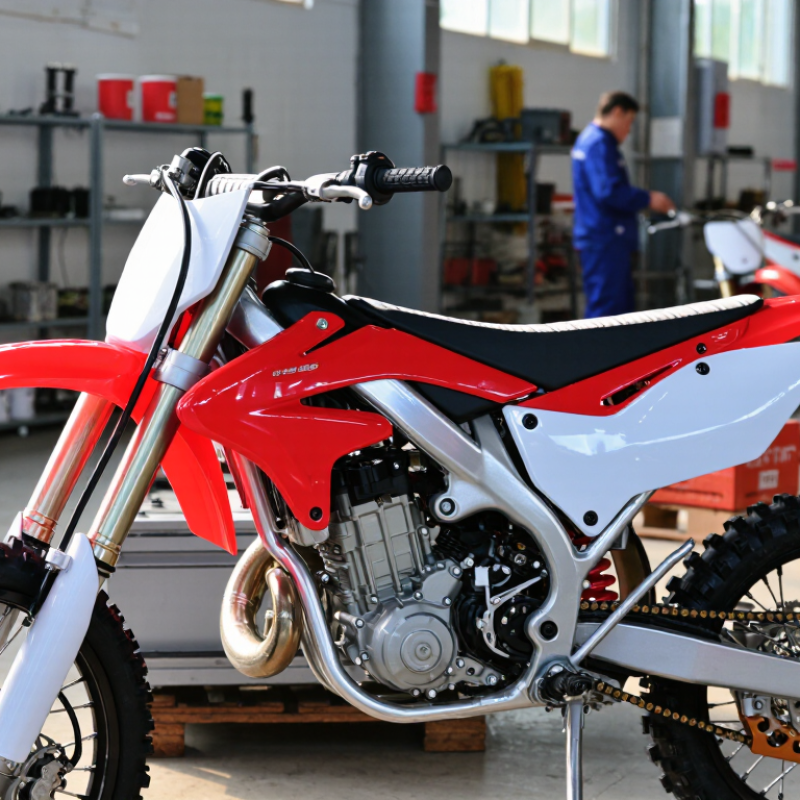
Understanding China’s 250cc Dirt Bike Manufacturing Landscape
China’s 250cc dirt bike manufacturing landscape includes factories with different strengths, production volumes, and quality-control routines. Some handle frame fabrication and final assembly in one facility; others rely on specialist suppliers for engines, suspension, or electrical components. The distinction affects lead times and how easily a buyer can trace parts. A detailed catalog helps, but it cannot show every production difference. Not quite enough.
Compare specifications carefully. A 250cc engine description alone says little about cooling, starting systems, suspension travel, or intended terrain. Ask for current drawings, component lists, and written inspection criteria. Check whether sample units match the proposed production configuration, including weld finish, cable routing, and fastener access. Small details matter. Request records for in-process checks and final testing, and clarify how defects are reported and addressed. Independent inspections can add confidence, especially before a large order. Still, no checklist removes all uncertainty; documents may lag behind a factory’s actual process. Buyers should confirm changes directly and keep agreed specifications in writing. This takes time, and sometimes the answers are incomplete. That, too, is useful information when assessing a supplier.
Leading Chinese 250cc Dirt Bike Manufacturers and Their Specialties
Chinese 250cc dirt-bike manufacturers often specialize in practical, export-ready machines rather than one universal design. Some focus on air-cooled engines, steel frames, and straightforward maintenance. Others offer liquid cooling, longer-travel suspension, or configurable components for importer specifications. At a factory visit, useful checks include weld consistency, cable routing, and access to routine service parts. Small details matter.
The market context is large, but not dirt-bike-specific.
Grand View Research estimated the global motorcycle market at about US$106.8 billion in 2023 and forecast a 6.5% compound annual growth rate from 2024 to 2030.
This figure covers motorcycles broadly; it should not be treated as a 250cc off-road sales estimate. Public reports rarely separate this engine class clearly, so buyers should request factory production records and destination-market shipment data.
For global buyers, compare manufacturers by engineering depth and repeatability, not brochure features alone. Ask for engine test procedures, suspension specifications, parts lead times, and documented quality-control checks. A sample unit can reveal vibration, cold-start behavior, and how easily a mechanic reaches the air filter. Yet one sample cannot prove batch consistency. That limitation is easy to overlook.
Comparing Models, Components, and Production Capabilities
A 250cc dirt bike should be compared by intended terrain, not engine size alone. Trail-focused models often favor predictable low-speed power, while competition-oriented versions may use firmer suspension and sharper throttle response. Check seat height, ground clearance, and curb weight against the rider and local trails. Fit matters.
Component details reveal how a model may perform over time. Ask for suspension travel, fork adjustment options, brake-disc dimensions, and the type of air filtration used. Inspect weld consistency, cable routing, and protection around the engine. A parts list is useful, but it cannot replace a close look at a finished bike.
Production capability deserves the same scrutiny as specifications. Request typical monthly output, lead times, and inspection records for engines, frames, and final assembly. Ask how the manufacturer handles replacement parts and technical questions after delivery. Ask for records. A polished sample can still hide uneven batch control, and factory capacity figures may change with seasonal demand. Request recent production evidence, but remember that one visit or document may not show the whole picture.
Assessing Quality Standards, Certifications, and Export Support
For global buyers comparing 250cc dirt bike manufacturers in China, quality claims need practical checks. Ask how each factory inspects frame welds, brake response, suspension seals, and engine starts after overnight storage. A short test ride helps, but it cannot replace documented inspections. Request recent production records and sample units from the same specification you plan to order. Small differences matter.
Certifications deserve careful reading. ISO 9001 generally addresses a company’s quality management system, not the performance of every motorcycle. Ask for current certificates, issuing-body details, and a clear explanation of their scope. Then check whether the bike’s documentation and testing match the requirements of your destination market. Paperwork can look convincing. It may still leave important gaps, so verify it independently where possible.
Export support is part of product quality. Confirm who prepares invoices, packing lists, and shipping documents, and ask for sample copies before payment. Discuss crate dimensions, spare-parts availability, warranty response times, and how technical questions are handled across time zones. A written parts list is useful; a vague promise to “support later” is not. Even with careful checks, production batches can vary. Keep that in mind when setting acceptance criteria and planning incoming inspections.
China 250cc Dirt Bike Suppliers: A Buyer Due-Diligence Framework
Suggested evaluation weights for comparing suppliers—not survey results or claims about any manufacturer. Verify vehicle type approval, emissions and noise requirements against the destination market; ISO 9001 relates to quality management and is not vehicle approval. Confirm export documents, spare-parts availability, and warranty support before ordering.
Choosing a Manufacturer for Your Market and Business Needs
Choosing a 250cc dirt bike manufacturer starts with your market, not a catalogue photo. Define how customers will ride: on farm tracks, recreational trails, or supervised training grounds. These uses affect suspension setup, gearing, tires, and maintenance needs. Ask for technical specifications, production capacity, quality-control steps, and realistic lead times. A polished sample is useful, but repeated production quality matters more. Request inspection records and check welds, fasteners, cable routing, and cold-start behavior on a sample unit. Details can reveal more than a sales presentation.
Tips: Compare two or three manufacturers using the same checklist. Ask how quickly common replacement parts can be supplied, and whether manuals and parts lists are available in your required languages. Confirm packaging dimensions and shipping arrangements before placing an order. Small delays add up.
Also assess communication and after-sales support. Send a few specific questions about warranty handling, spare-parts availability, and changes between production batches. Clear answers are a good sign; vague promises deserve follow-up. If possible, arrange an independent factory or product inspection. It costs time, and sometimes the process feels excessive, but assumptions can be expensive. Leave room in your budget for freight, duties, assembly, and local service training. A low unit price may not mean a lower total operating cost.