China Top 10 Chest Band Heart Rate Monitor Manufacturers
China has become a major source of wearable fitness technology, including the Chest Band Heart Rate Monitor. Manufacturers now serve runners, cyclists, sports teams, clinics, and equipment brands worldwide.
This guide examines China’s top ten manufacturers through practical and verifiable criteria. These include product accuracy, sensor stability, electrode design, battery life, connectivity, waterproof protection, and production capability. A reliable chest strap should remain secure during intervals, sweat heavily, and sudden movement. It should also transmit data consistently through Bluetooth or ANT+ connections.
Real-world performance matters.
Factory experience is equally important. We consider quality-control procedures, testing equipment, certifications, customization services, and after-sales support. A supplier may offer an attractive price, yet weak documentation can create problems during purchasing, integration, or compliance reviews. Buyers should request test reports, sample units, firmware details, and clear warranty terms before making decisions.
No ranking can represent every buyer’s priorities. Some manufacturers publish limited technical information, and specifications may change between product generations. That limitation deserves attention. Our assessment therefore focuses on available evidence rather than promotional claims alone. It also encourages independent testing with a reference device, especially for professional training or health-related applications. This introduction provides a practical starting point for comparing China’s leading manufacturers and identifying suppliers that combine engineering knowledge, manufacturing consistency, and dependable customer support.
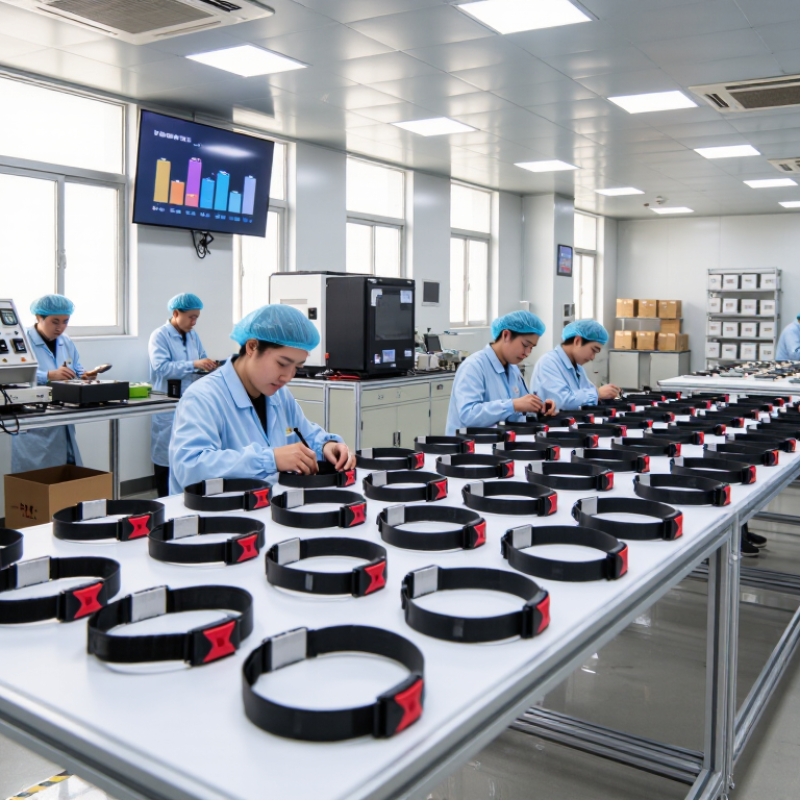
What Chest Band Heart Rate Monitors Are and How They Work
Chest band heart rate monitors measure electrical signals from the heart, rather than estimating pulse from skin movement. Two conductive electrodes sit against the chest and detect each heartbeat’s electrical pattern. The transmitter then converts these signals into beats per minute and sends them through Bluetooth or ANT+.
The signal resembles a simplified ECG trace. During intervals, cycling, or rowing, this method usually responds faster than wrist-based optical sensors. A 2023 systematic review in Sensors reported that chest-worn ECG monitors often showed strong agreement with clinical electrocardiography during exercise.
Accuracy still depends on contact. A dry strap, loose fit, or heavy body movement can create missing beats and strange spikes.
The market is expanding quickly. IDC recorded 520.5 million wearable-device shipments worldwide in 2023, covering watches, bands, and related products. That figure does not represent chest monitors alone, but it shows the scale of connected fitness hardware.
A chest monitor also needs a compatible receiver, stable skin contact, and sensible data interpretation. It cannot diagnose heart disease. This point is easy to overlook.
In practical testing, slightly moistening the electrode areas and placing the band below the chest muscles can improve readings. Yet every user’s physiology differs, and manufacturer accuracy claims may not match outdoor training conditions.