


10 Best Copper Foil Tape Suppliers for Global Buyers
Copper foil tape looks simple: a thin copper strip, an adhesive layer, and a release liner. Yet small differences in thickness, adhesive chemistry, shielding performance, and roll consistency can change how it behaves on a circuit board or inside an equipment enclosure. For global buyers, supplier choice is therefore a technical decision, not just a price comparison.
The supply picture matters. The U.S. Geological Survey’s Mineral Commodity Summaries 2025 estimates global copper mine production at about 23 million metric tons in 2024. The International Energy Agency’s Global Critical Minerals Outlook 2024 also identifies copper as important to expanding clean-energy technologies. IEA Executive Director Fatih Birol has warned, “The world is facing a looming mismatch between the growing demand for critical minerals and the supply of these minerals.” That concern relates to copper supply broadly, not specifically to tape. Still, it gives buyers a reason to examine sourcing resilience and material traceability.
This guide compares 10 Copper Foil Tape suppliers for international purchasing teams. It considers product specifications, customization, quality documentation, export experience, and responsiveness. A datasheet may look complete. The roll may still disappoint. Ask for samples, test adhesion on the intended surface, and confirm performance under real temperature and humidity conditions. Supplier claims are useful, but they are not test results. The comparison is a starting point, not a substitute for application testing.
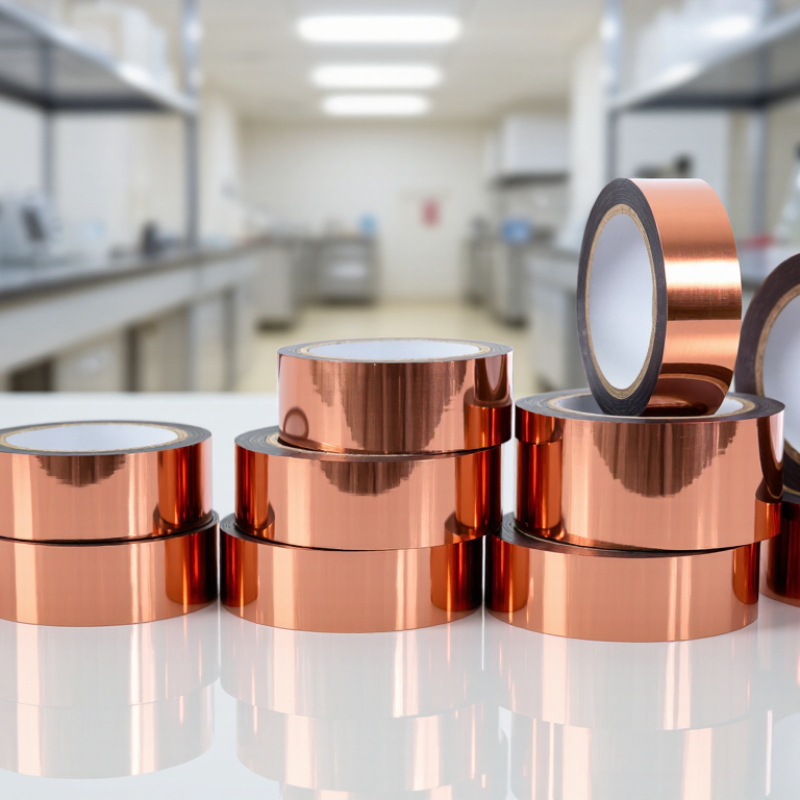
What Copper Foil Tape Is and Where It Is Used
Copper foil tape is a flexible strip of copper with an adhesive backing. It bends around corners and can cover narrow seams. It is used in electronics and equipment enclosures to help reduce electromagnetic interference, especially where gaps could let noise pass through. Some versions also support electrical continuity across a joint. The detail matters: adhesive may be conductive or insulating, so the tape’s appearance alone does not confirm an electrical connection. Check the product specifications.
It bends easily. In practical work, installers often press the foil firmly onto a clean, dry surface, then smooth wrinkles that could leave gaps. Copper foil tape also appears in stained-glass projects, crafts, and repairs to small shielding enclosures. For grounding or other electrical connections, it should not replace a purpose-designed wire, connector, or bonding method. Adhesion can weaken on dusty surfaces, and copper may tarnish over time. I have seen neat-looking seams fail to make reliable contact; visual inspection is not enough. Choose tape by foil thickness, adhesive type, temperature range, and intended use, then test the finished assembly where performance matters.
