


What Are the Top Digital Watch Types in 2026?
In 2026, a Digital Watch can be a compact fitness tracker, a feature-rich smartwatch, or a tough outdoor companion with buttons you can use in gloves. The categories overlap. Some watches handle calls and maps, while others focus on steps, sleep, or long battery life. That makes choosing one less obvious than comparing screen sizes.
This guide looks at the main types and what they do well in everyday use. A bright display is useful outdoors, but it may drain the battery faster. GPS can help on a walk, though phone-free navigation is not available on every model. Check phone compatibility, charging needs, water-resistance details, and the functions you will actually use. Small print matters.
Fit matters, too. A thick case can catch on a jacket cuff, and a touchscreen may be awkward with wet fingers. There is no single best choice for everyone. A runner’s priorities differ from those of someone who wants quick notifications at work. Even familiar labels can be fuzzy: one “fitness watch” may offer smartwatch features, while another keeps things simple. That is worth questioning. By comparing real-world strengths and trade-offs, readers can identify which Digital Watch type suits their routine—not just the most impressive feature list.
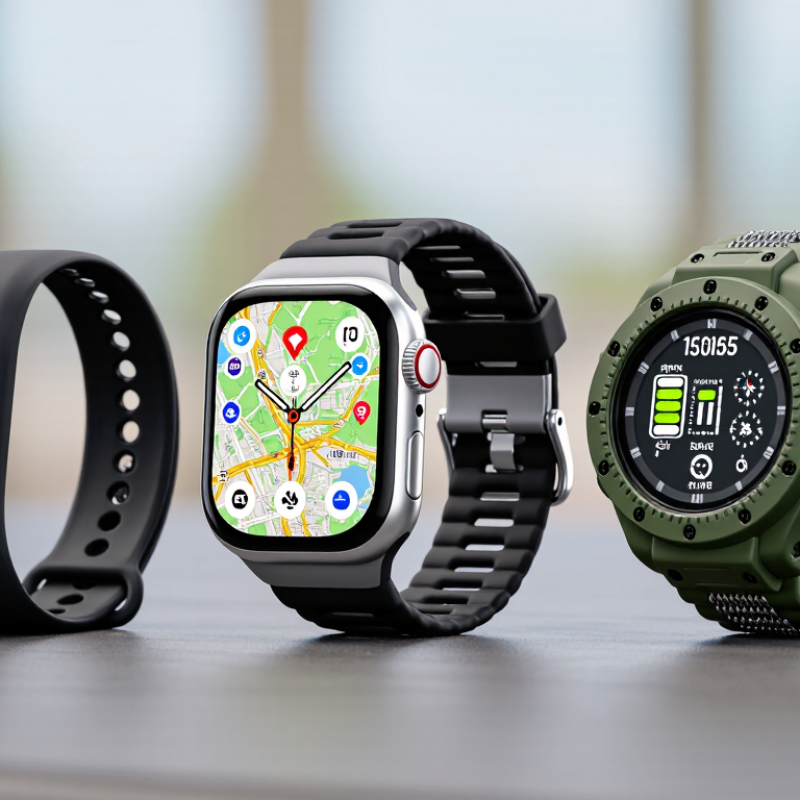
Core Features Used to Classify Digital Watches in 2026
Digital watches in 2026 are best classified by what they do, not by how futuristic they look. Start with the display: transflective screens remain easy to read outdoors, while bright color displays suit maps and detailed alerts. Check readability in direct sunlight and at a shallow angle. A screen that looks sharp indoors may become hard to read on a sunny walk. That matters.
Sensors are another useful dividing line. Some watches track heart rate, sleep, and daily movement; others add navigation, elevation, or recovery estimates. These readings can guide routines, but they are not medical diagnoses. Connectivity also shapes the category: basic models handle time and notifications, while more connected watches may support calls, payments, or offline route guidance. Battery life, water resistance, button controls, and strap comfort help reveal the intended use. Categories overlap, and a watch can be capable without being right for every wrist.
Tips: Try the controls with damp fingers, check the screen outdoors, and compare battery claims with your own settings. Ask which features you will actually use. More sensors do not always mean a better watch; I still find some menus needlessly fiddly.
What Are the Top Digital Watch Types in 2026? — Core Features Used to Classify Digital Watches in 2026
Digital watch categories can overlap: a single watch may combine fitness tracking, GPS, and smart notifications. Features and battery life vary by model, settings, and usage.
| Digital Watch Type | Core Features Used for Classification | Display and Controls | Typical Connectivity or Sensors | Common Uses | Key Considerations |
|---|---|---|---|---|---|
| Basic Digital | Time, date, alarm, stopwatch, countdown timer, and often a backlight. | Usually a segmented LCD with physical buttons; some models add an illuminated display. | Typically none; functions operate directly on the watch. | Everyday timekeeping, alarms, and simple timing tasks. | Generally simple to use and power-efficient, but usually lacks activity tracking and phone features. |
| Sports and Fitness | Activity tracking, workout modes, step counts, heart-rate tracking on equipped models, and training summaries. | LCD or color display, often designed for quick viewing during exercise. | May include an optical heart-rate sensor, accelerometer, and Bluetooth synchronization with a phone. | Running, gym workouts, daily activity monitoring, and recreational sports. | Sensor availability and measurement accuracy vary; frequent tracking can increase charging needs. |
| GPS and Outdoor | Positioning, route recording, pace or distance metrics, and navigation features on some models. | Often a high-contrast display; some models use color maps or route guidance. | May use satellite positioning systems, an altimeter, a barometer, a compass, and wireless phone links. | Hiking, trail running, cycling, and other activities where location or route data is useful. | Satellite reception can be affected by terrain and surroundings; GPS use typically consumes more power. |
| Smart and Connected | Phone notifications, app-linked features, configurable watch faces, and, on some models, calling or voice assistance. | Commonly a color touchscreen, though button-operated designs also exist. | Usually Bluetooth; some models also support Wi-Fi, cellular connectivity, GPS, or health sensors. | Communication, app access, notifications, and combining everyday functions in one device. | Features may depend on a paired phone, compatible software, and an internet connection; charging is often more frequent than for basic digital watches. |
| Outdoor and Rugged | Durable construction, timers, alarms, and, depending on the model, outdoor sensors or activity features. | Often prioritizes legibility and physical controls; displays may be protected by reinforced materials. | May include a compass, altimeter, barometer, GPS, or Bluetooth; equipment differs by model. | Outdoor recreation, field work, and situations involving frequent exposure to impacts or weather. | Water resistance and impact resistance are specified by the manufacturer and do not mean a watch is indestructible. |
| Calculator and Specialty | Built-in calculator or dedicated functions such as data logging, reminders, or specialized timers. | Typically a digital display with dedicated buttons for direct input and operation. | Often works independently; some specialty models can transfer data through a wired or wireless connection. | Quick calculations, task-specific timing, or other focused functions. | Capabilities are purpose-specific, and the keypad or display may be less convenient than a dedicated device for extended use. |
| Hybrid Digital-Analog | Combines a digital display or digital functions with physical analog hands. | Analog hands share the face with a small LCD or another digital readout. | Usually limited on simpler models; connected versions may add phone synchronization or activity features. | Users who want both an at-a-glance hand display and digital functions such as alarms or a second time zone. | Small digital readouts can show less information at once; hand positioning may affect display visibility on some designs. |
